

Maddy summaryHB 72 amends Pennsylvania's 1951 Landlord and Tenant Act to create new protections for tenants facing domestic violence, sexual violence, or stalking. It defines "eligible tenants" as those who are victims themselves or have an immediate family/household member (living with them or within 1,000 feet) who is a victim of these specific violent acts. The bill requires landlords to provide safety options like changing locks or relocating tenants without penalty upon verification from an "attesting third party" (such as a police officer or victim advocate). This directly affects renters in these situations by ensuring they aren't unfairly evicted or penalized for seeking safety due to violence.
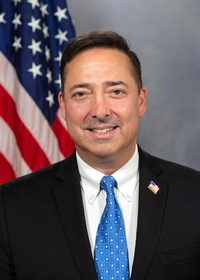
Rep. Chris Pielli
Sponsored bills
Maddy summaryHB 1104 sets specific fees that must be paid to healthcare providers before they produce medical records in response to a subpoena. The bill establishes a detailed fee structure: $20.62 for searching and retrieving records, plus page-based charges (e.g., $1.39 per page for the first 20 pages of paper copies, with lower rates for additional pages), and a $200 maximum for electronic copies. These fees are adjusted annually using the consumer price index. The law directly affects healthcare providers and parties requesting medical records, requiring payment before records are released.
Maddy summaryThis Pennsylvania House Resolution officially designates the week of May 10 through 16, 2026, as "National Police Week" and May 15, 2026, as "Peace Officers Memorial Day" within the state. The measure serves to honor law enforcement officers who have died in the line of duty and aligns with the federal observances established by the U.S. Congress. It does not create new laws or funding but rather establishes a symbolic recognition to acknowledge the service and sacrifices of police officers in Pennsylvania.
Maddy summaryThis House Resolution honors the memory of five law enforcement officers who died in the line of duty in 2025. It specifically names Patrolman Andrew Duarte and Police Officers Mark Baker, Cody Becker, Isaiah Emenheiser, and Andy Chan, listing their departments and dates of death. The measure directs the Pennsylvania House of Representatives to express sympathy to the families and friends of these fallen officers. As a commemorative resolution, it does not create new laws or change existing policies.
Maddy summaryHB 973 creates a grant program to support municipal police departments in Pennsylvania. It provides funding for police department consolidation, achieving accreditation standards, officer training, and community outreach programs. Grants range from $5,000 to $100,000 per department depending on the purpose, with special provisions for small departments (under 10 officers). The program, administered by the Pennsylvania Commission on Crime and Delinquency, is funded through a new Municipal Police Enhancement Consolidation Grant Program Fund. This directly affects cities, boroughs, and townships with their own police departments.
Maddy summaryThis bill strengthens Pennsylvania's existing hazardous waste laws by creating a new chapter focused on immediate spill response and protecting residential areas. It defines hazardous substances to include petroleum products and other dangerous materials, then imposes strict liability on responsible parties to immediately contain and clean up any discharge that threatens public health or the environment. The Department of Environmental Protection gains expanded authority to issue directives, enter private property, and recover cleanup costs from those who cause spills, ensuring rapid action in residential communities.
Maddy summaryThis resolution directs Pennsylvania's Joint State Government Commission to study current diversion programs and recommend improvements or new programs. It requires the commission to examine barriers to existing programs, analyze successful models from other states, and provide a report to the House within one year. Diversion programs - which offer alternatives to incarceration for low-level offenses, mental health crises, or substance use issues - would be the focus of this review. The resolution does not create new law but aims to inform future policy changes.
Maddy summaryHB 2151 requires Pennsylvania's Center for Local Government Services to create a model zoning ordinance for data centers within six months. The model must include specific rules like building size limits, minimum distances from residential areas, landscape buffers, noise restrictions, and requirements for water/energy use. This helps local governments (townships, boroughs, cities) regulate data center development to address community concerns. Municipalities can request the Center's assistance when updating zoning rules for data centers, and the model must be updated annually.
Maddy summaryHB 2150 requires data centers in Pennsylvania to annually report their energy and water usage, including monthly consumption, energy sources, water sources, efficiency measures, and waste heat recovery, starting July 1, 2027. Data centers must submit detailed reports to the Department of Environmental Protection, covering specifics like peak energy use, water for cooling, and future projections. Non-compliant data centers face daily penalties of $10,000 until reports are submitted, with collected fines funding low-income energy assistance programs. The Department will publish an annual summary of consumption trends and environmental impacts for public and legislative review.
Maddy summaryHB 1522 requires building owners to install and maintain fuel gas detectors in specific types of buildings, primarily affecting commercial and multi-family residential properties. The bill mandates regular inspections and proper functioning of these detectors to prevent gas leaks. Building owners who fail to comply face fines or other penalties as outlined in the legislation. The bill is currently under review by the Consumer Protection, Technology & Utilities committee.