

Maddy summaryHB 390 creates a $1,000 annual tax deduction for Pennsylvania health care providers who volunteer to supervise clinical training for students. It directly affects licensed physicians, nurses, physician assistants, and nurse anesthetists who provide uncompensated, volunteer-based clinical training (minimum 80 hours annually per student) to eligible students in approved programs. The bill establishes a Preceptor Certification Committee within the Department of Health to verify eligibility, process applications within 30 days, and issue certificates confirming the deduction. To claim the deduction, providers must submit this certificate with their tax return, and the deduction cannot exceed the tax owed. The policy change specifically targets volunteer clinical education support without altering tax rates or creating new tax credits.
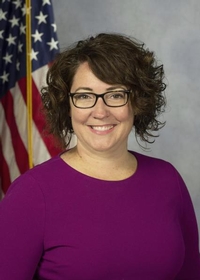
Rep. Danielle Otten
Sponsored bills
Maddy summaryHB 389 establishes the New Nursing Faculty Grant Program to support nursing education in Pennsylvania. It provides $10,000 grants to eligible nursing faculty members at accredited medical colleges who are PA residents, employed full-time (or have a pending offer), and have no more than three years of experience. The Pennsylvania Higher Education Assistance Agency (PHEAA) will administer the program, prioritizing positions historically difficult to fill, with applications submitted by nursing program deans. Grants cover professional expenses and aim to increase enrollment capacity at nursing programs.
Maddy summaryHB 374 amends Pennsylvania's Election Code to strengthen reporting requirements for campaign finance. It requires any individual or organization (including 501(c) groups) making independent expenditures over $100 in a year to report the candidate or ballot question they support, using the same forms as political committees. Additionally, it mandates that candidates, political committees, or organizations making contributions or independent expenditures over $500 after the final pre-election report must file a report within 24 hours via fax, mail, or in-person appearance. This bill directly affects candidates, political committees, and entities making significant campaign expenditures. The changes aim to increase transparency around late contributions and independent spending.
Maddy summaryHB 386, the "Repairability Index Act," requires original equipment manufacturers (OEMs) selling digital electronic equipment in Pennsylvania to provide a public repairability score (1-10, with 10 being most repairable) based on criteria like parts availability, ease of disassembly, technical documentation, and repair costs. This score must appear on product packaging or via QR codes linking to detailed information on the Attorney General’s website, including model numbers, pricing, and software update policies. The bill directly affects OEMs (e.g., smartphone or laptop manufacturers) selling such products in Pennsylvania, mandating they report scores 90 days before sale. Enforcement is handled by the Attorney General under Pennsylvania’s Unfair Trade Practices law, with penalties for false reporting.
Maddy summaryHR 41 is a resolution directing Pennsylvania's Joint State Government Commission to study emergency child care needs and develop recommendations. The study will examine current availability (including Pennsylvania's 12 crisis nurseries), staffing challenges (like low wages averaging $12.43/hour), funding sources (including federal programs), and how other states license facilities. It requires the Commission to form an advisory committee with child care providers, parents, health/human services officials, and county representatives. The Commission must submit its report to the House within 18 months. This resolution does not create new laws but aims to inform future policy decisions.
Maddy summaryHB 335, the Child Day-Care Center Protection Act, requires new child day-care centers in Pennsylvania to obtain two certifications before licensure: an indoor contamination assessment (if the building was previously a high-hazard business like a dry cleaner or nail salon) and an environmental quality certification confirming remediation. It directly affects new day-care centers seeking licensure, particularly those operating in older buildings or sites previously used for industrial or high-hazard purposes. The bill establishes a grant program funded by the Hazardous Sites Cleanup Fund to help offset certification costs and imposes fines up to $50,000 for false statements or failure to comply. Existing licensed centers are exempt from these new certification requirements.
Maddy summaryHB 342 would require all Pennsylvania public schools (including charter and cyber schools) and qualifying nonpublic schools to provide 15 minutes daily of mindfulness instruction for students in kindergarten through grade 12. The bill mandates that schools adopt policies for this instruction, defines "mindfulness" as present-moment awareness of body, mind, and feelings, and explicitly prohibits religious content. The Pennsylvania Department of Education must develop and distribute model policies, curricula, and best-practice guidelines for schools to use. This bill directly affects all K-12 students and school entities across the state.
Maddy summaryHB 317 requires creators and distributors of AI-generated content in Pennsylvania to watermark at least 30% of images, text, simulations, or videos with 50% opacity and the label "Artificial Intelligence Generated Material." It directly affects individuals and businesses producing AI content, with exceptions for film/TV productions using AI for visual effects without involving specific individuals or with their written consent. Violations carry a $1,000 fine for a first offense and $10,000 for repeat offenses within five years. The law takes effect 60 days after enactment.
Maddy summaryHB 341 requires Pennsylvania public schools to install certified point-of-use filters on all drinking water outlets by January 1, 2027, and replace older fountains without filters with bottle-filling stations or filtered fountains (at least one per 100 students/staff). It establishes a $10 million annual Safe Schools Drinking Water Fund to provide grants for filter installation and fountain replacement, prioritizing schools built before 2014 and those serving prekindergarten students. The bill also mandates schools to publicly report their compliance plans, filter maintenance schedules, and lead risk information online, while new outlets must meet strict lead-leaching standards (NSF 61). This directly affects all Pennsylvania public school entities, focusing on reducing lead exposure in drinking water.
Maddy summaryHB 320 amends Pennsylvania's public utility law to strengthen notice requirements for rate changes. It requires utilities to provide 60 days' advance notice to the Public Utility Commission and customers about proposed rate changes, using plain language in all customer communications. The bill mandates that rate change notices must clearly highlight the change on mail envelopes or exteriors, and all changes must be filed as new or updated tariffs. This directly affects utility companies (like gas, electric, and water providers) and their customers by increasing transparency around billing adjustments. The law takes effect 60 days after enactment.