

Maddy summaryThis bill requires emergency medical services providers in Pennsylvania, including paramedics and nurses, to complete specific training on caring for individuals with dementia. The Department of Health must create a program covering how to communicate effectively with these patients, manage behavioral symptoms, and identify signs of abuse. New providers will need three hours of initial training, while all providers must complete one hour of continuing education annually. Those who already finished similar training within the last 18 months will be exempt from the initial requirement but must still take the annual course.
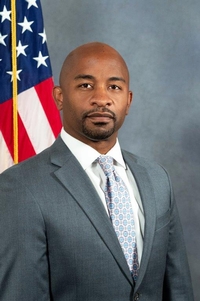
Rep. Napoleon Nelson
Sponsored bills
Maddy summaryThis bill prohibits law enforcement officers from detaining or arresting individuals for civil immigration violations on the property of houses of worship. The only exception allows for arrests if the officer is acting in an official capacity and holds a valid judicial warrant. Additionally, the legislation bars state and local agencies from using taxpayer funds to conduct immigration enforcement and imposes a $10,000 civil penalty for any violations of these rules.
Maddy summaryThis bill would create a state-funded paid family and medical leave program for eligible workers needing time off for health issues, childbirth, or family care. It establishes a dedicated state fund to cover leave costs, creates an advisory board to guide implementation, and assigns oversight to the Department of Labor. The program would directly affect employees in the state who qualify for these leave types, requiring employers to provide the benefits. The bill also specifies penalties for businesses failing to comply with the new requirements.
Maddy summaryThis Pennsylvania House Resolution designates March 25, 2026, as "Prince Hall Mason Day at the Capitol" to honor The Most Worshipful Prince Hall Grand Lodge of Pennsylvania. The resolution recognizes the historical significance of Prince Hall Freemasonry, which traces its roots to 1775 and the establishment of the first African-American Lodge in the United States. It highlights the lodge's contributions to Pennsylvania's history, including its connections to the founding of Mother Bethel AME Church and the Free African Society, as well as the civic and educational achievements of its members. The resolution serves as a commemorative acknowledgment of the lodge's charitable work and community service across the Commonwealth.
Maddy summaryThis bill establishes new Boards of Prison Inspectors at each Pennsylvania State correctional institution to oversee facility conditions and operations. The boards will consist of 18 members including medical professionals, educators, law enforcement officers, county officials, and community representatives, with at least one member being a former inmate or family member of an inmate. Each board will conduct unannounced inspections at least twice annually, review inmate complaints and officer misconduct records, and submit public reports on their findings. Board members serve three-year terms without pay but receive expense reimbursement, and they are prohibited from being current employees of the correctional system.
Maddy summaryThis bill requires law enforcement officers to have a valid judicial warrant before making civil immigration arrests on Pennsylvania state property, which includes state buildings and grounds in Dauphin, Philadelphia, Pittsburgh, and Scranton counties. The legislation mandates that officers must show the warrant to any state employee who asks to see it during such arrests. Violations of these requirements could result in a $10,000 civil penalty for each offense, which would be paid to the Commonwealth and enforced by the Attorney General. The bill does not prevent the investigation or enforcement of criminal immigration laws, and it clarifies that sovereign immunity protections do not apply to lawsuits brought under this new provision.
Maddy summaryThis bill establishes rules for law enforcement actions on courthouse grounds in Pennsylvania, primarily restricting civil arrests related to immigration enforcement without a judicial warrant. It directly affects law enforcement officers, courthouse staff, and individuals seeking access to court proceedings. The key provisions prohibit detaining or arresting people on courthouse property for immigration violations unless the officer holds a valid judicial warrant and must show documentation to any court employee who asks. The law also defines who qualifies as a "court companion" to protect individuals accompanying parties to court and includes penalties of up to $10,000 for violations while providing immunity to courthouse employees acting in good faith.
Maddy summaryThis House Resolution (HR 413) commemorates the 50th anniversary of the closure of Freedom House Ambulance Service, the first U.S. ambulance service staffed by professionally trained paramedics, which operated in Pittsburgh's Hill District from 1967 to 1975. It honors the service's role in pioneering emergency medical care in predominantly Black neighborhoods - where prior response times were slow and medical treatment was unavailable - and its influence on modern emergency medical systems nationwide. The resolution recognizes the service's 1968 founding (training 25 Black paramedics), its high response standards, and its legacy of advancing community health equity. As a commemorative resolution, it does not create new laws but formally acknowledges this milestone during Pennsylvania's Black History Month.
Maddy summaryThis resolution designates February 2026 as "Black History Month" in Pennsylvania, symbolically recognizing the century-long observance of African American contributions to the Commonwealth and nation. It directly affects all Pennsylvania residents by formally honoring the historical achievements, resilience, and sacrifices of African Americans, marking the 100th anniversary of the movement founded by Dr. Carter Godwin Woodson. The resolution includes historical context about the origins of Black History Month and Pennsylvania's connections to Black labor and civil rights history, but it has no binding policy effects.
Maddy summaryHB 2168 amends Pennsylvania's Early Intervention Services System Act to clarify how state funds support early intervention services for children in private special education schools. It specifies that for children not eligible for public kindergarten programs, the state covers the full cost of their services, while for children eligible for public kindergarten, the state covers only the extra cost (above what public schools would pay). This change ensures funding aligns with each child's eligibility for public school services. The bill directly affects children receiving early intervention services and the Department of Education's budgeting for these programs.