

Maddy summaryHB 2098 establishes a new Office of Manufactured Home Ombudsman to help residents resolve disputes with community operators. It creates a Manufactured Home Hearing Board to handle formal disputes (like eviction cases) and sets up a Restricted Account for program funding. The bill consolidates existing manufactured home community laws under a single chapter and requires the Department of Community and Economic Development to oversee implementation. These changes apply to all Pennsylvania manufactured home communities - defined as sites with three or more homes for residential use - directly affecting residents, operators, and community owners.
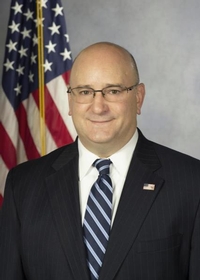
Rep. Ben Sanchez
Sponsored bills
Maddy summaryHB 2085 requires public water systems serving over 100 connections to maintain minimum disinfectant levels (0.5 mg/L chlorine or 1.0 mg/L chloramine) to prevent Legionella bacteria growth. It mandates these systems to develop annual maintenance plans based on state-developed "best management practices" covering infrastructure monitoring, flushing schedules, and stagnation prevention. The bill also requires public water systems to report disruptions (like treatment changes or infrastructure failures) to the Department of Environmental Protection within 72 hours. Additionally, it creates a Legionnaires' Disease Awareness Fund for public education and imposes duties on both the DEP and Department of Health to manage risk and investigate outbreaks. This directly affects water providers, building owners, and public health agencies across Pennsylvania.
Maddy summaryHB 2086 repeals two existing provisions: Section 704 (which established advisory councils for Pennsylvania's veterans' homes) and Section 1705 (which created a "veterans' home hall of fame"). The bill replaces these with a new State Veterans' Home Board to oversee state veterans' homes. This change directly affects Pennsylvania's veterans' homes by shifting governance from appointed advisory councils to the new board, while removing the commemorative hall of fame program. The bill focuses on structural changes to administration rather than altering resident care policies or admission criteria.
Maddy summaryHB 2065 amends Pennsylvania's pesticide law to prohibit the use of paraquat (identified by CAS number 4685-14-7 and related chemicals like methyl viologen) for any agricultural or pest control purposes within the state. This directly affects farmers, agricultural businesses, and pesticide applicators who currently use paraquat-based products. The bill explicitly bans its application, defines paraquat through specific chemical identifiers, and states that all conflicting regulations are superseded. The prohibition takes effect one year after the bill's enactment.
Maddy summaryHB 2078 limits annual premium increases for private passenger auto insurance in Pennsylvania. It prohibits insurers from raising premiums by more than 5% annually for policyholders without certain traffic violations (listed in Section 1535 of the law). This applies to all policies offered, issued, or renewed in Pennsylvania after the law takes effect. The bill directly affects auto insurance customers by capping annual rate hikes for those with clean driving records.
Maddy summaryHB 2074 amends Pennsylvania’s election laws to clarify voter residency rules for military personnel, state/federal employees, and overseas voters. It ensures military members and their spouses (employed by federal/state governments) retain voting registration in their prior Pennsylvania district without needing a street address, while requiring annual verification of employment status. The bill also tightens the definition of "overseas voter" to require that such voters have a parent or guardian who last resided in Pennsylvania before leaving the U.S. These changes directly affect active-duty military, government employees, and U.S. citizens born abroad with Pennsylvania ties.
Maddy summaryHB 2077 limits parking enforcement in Pennsylvania by prohibiting municipalities, parking authorities, or the Commonwealth from issuing more than one parking ticket per vehicle per day. It also requires a 14-day grace period before fines can be applied for overdue tickets and mandates municipal approval for changes to parking rates or enforcement hours. The bill bans performance-based pay raises, bonuses, or financial incentives for employees tied to the number of tickets issued. These provisions directly affect drivers receiving parking citations, local governments managing parking, and contracted parking enforcement companies. The law takes effect 60 days after passage.
Maddy summaryThis resolution directs Pennsylvania's Legislative Budget and Finance Committee to audit all current incentives for public school district consolidation and shared services. The audit will examine why these incentives aren't being used (as no districts have voluntarily consolidated since 2009), review other states' approaches, and assess how to better incentivize consolidation for districts of specific enrollment sizes. The committee must issue a report with findings and recommendations to the General Assembly within one year. This process does not create new policies but aims to inform future decisions about school district reorganization.
Maddy summaryHB 2079 establishes a program to reimburse eligible entities - such as school districts, counties, human services providers, Pre-K programs, and Head Start providers - for documented financing costs or lost interest income caused by delays in passing the state budget (defined as the period from July 1, 2025, until the 2025-2026 budget takes effect). The program is funded primarily by "impasse-generated interest" (interest earned from delayed state spending during the budget impasse), with the legislature providing additional funds if needed. The Office of the Budget will administer the program, including processing applications and reporting annually on reimbursements, funding sources, and recipient details.
Maddy summaryHB 2060 requires Pennsylvania's Medicaid program and private commercial insurers to provide equal coverage for non-opioid and opioid medications used to treat pain. It prohibits insurers from designating non-opioid pain drugs as "non-preferred" when opioids are preferred, imposing stricter prior authorization requirements on non-opioids, or placing non-opioids in higher-cost tiers than opioids. The law applies immediately to any FDA-approved pain medication, affecting Medicaid beneficiaries and private insurance customers across Pennsylvania. This policy change ensures that patients have equal access to both non-opioid and opioid treatment options without discriminatory coverage barriers.