

Maddy summaryThis bill is a House Resolution that formally recognizes May 2026 as Mental Health Awareness Month in Pennsylvania. It does not change laws or allocate funding, but instead encourages government agencies, schools, businesses, and residents to increase awareness and understanding of mental illness. The resolution calls for communities to promote accessible mental health services and reduce stigma around mental health conditions. It is a symbolic measure intended to highlight the importance of mental health without implementing new policy requirements.
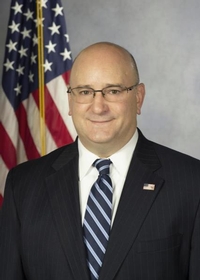
Rep. Ben Sanchez
Sponsored bills
Maddy summaryHB 2214 creates a new annual $5 million fund from Pennsylvania's Motor License Fund to support municipal bridge maintenance. It directs counties to distribute these funds based on the relative size of their county-owned bridges (using data from the National Bridge Inspection Program), and allows counties to use the money for bridges owned by municipalities within their jurisdiction. The bill also adds a 55-mill tax on liquid fuels, with 2% of the proceeds allocated to this bridge maintenance fund using the same size-based distribution method. Counties cannot receive less funding than the previous year unless their bridge size decreases or total tax revenue drops. This bill directly affects all Pennsylvania counties and municipalities responsible for bridge upkeep.
Maddy summaryHB 1611 revises Pennsylvania's Older Adults Protective Services Act to create a uniform statewide system for reporting and investigating abuse, neglect, exploitation, or abandonment of older adults. It directly affects vulnerable elderly Pennsylvanians and their caregivers by establishing mandatory reporting protocols and prohibiting financial exploitation. Key provisions include requiring local agencies to use a standardized reporting system, clarifying definitions of abuse and exploitation, and ensuring protective services are available to those at risk. The bill also updates funding mechanisms and penalties for violations, aiming to improve coordination and response across all counties.
Maddy summaryThis bill creates the RECLAIM Program in Pennsylvania to help juvenile courts improve care and services for young people involved in the justice system. It requires the Department of Human Services to set up an application process where courts can request funding for operational costs related to diagnosis, treatment, and alternative placement facilities. The legislation also mandates that each county establish its own delinquent youth care and custody fund to support these initiatives. Additionally, the bill establishes a RECLAIM Advisory Committee and requires that funded programs ensure equal access for minority youth.
Maddy summaryThis resolution directs state committees to study how Medicaid, Medicare, and private insurance pay for behavioral health crisis services in Pennsylvania. The investigation aims to understand how current payment methods affect the ability of crisis centers to operate sustainably and provide accessible care. The study will analyze specific financial data, compare reimbursement rates across different payors, and review successful models used in other states. Ultimately, the committees will develop recommendations to improve funding and ensure the long-term viability of these essential services.
Maddy summaryThis bill creates a grant program to help Pennsylvania school districts and career and technical schools update their educational materials. Eligible schools can apply for funding to buy digital platforms or printed curricula that include lesson plans, multimedia content, and tools for tracking student progress. The amount each school receives is calculated based on its student enrollment and the total state funding available for the program. To qualify, schools must receive a recommendation from their local occupational advisory committee and certify that the funds will be used for approved curriculum modernization.
Maddy summaryThis bill proposes to update Pennsylvania's vehicle laws by establishing a maximum speed limit of 35 miles per hour on dirt and gravel roads. It applies to all drivers operating vehicles on these unpaved road surfaces, regardless of the specific location. The change clarifies that these limits are maximum speeds, meaning drivers must not exceed them unless a special hazard requires an even slower speed for safety. The legislation would become effective 60 days after passage.
Maddy summaryThis Pennsylvania bill directs the Office of Attorney General to run a public education campaign aimed at increasing consumer understanding of artificial intelligence. The campaign will use various media channels to teach the public how to identify AI-generated content, avoid AI-enabled scams, protect personal data, and recognize potential biases in AI systems. Special attention will be given to vulnerable populations and children, with guidance provided on safe use of chatbots and detection of forged digital likenesses. The Office of Attorney General must submit a report on the campaign's performance within one year of its start, and funding will be provided by the General Assembly as needed.
Maddy summaryHB 2254 adds Chapter 14 to Pennsylvania's Medical Marijuana Act, allowing terminally ill patients to use medical marijuana within specific care facilities (like hospitals, nursing homes, and assisted living residences) under strict conditions. Facilities must create written guidelines within 180 days covering safe storage, patient safety, allowed forms of marijuana, and documentation. The bill imposes a $500 daily civil penalty for noncompliance, with penalties deposited into the Medical Marijuana Program Fund. It does not require facilities to provide certifications, administer marijuana, or permit use in emergency departments. This directly affects terminally ill patients seeking access in regulated care settings and facilities operating under the existing medical marijuana program.
Maddy summaryThis bill amends Pennsylvania's Public School Code to allow students with asthma or severe allergies to possess and self-administer their prescribed asthma medications (including inhalers) and epinephrine auto-injectors at school. Schools must create written policies requiring students to demonstrate self-administration capability and notify the school nurse after use, while ensuring medications are stored safely and accessible only to authorized students. The bill also permits trained school staff, including bus drivers and crossing guards, to administer epinephrine auto-injectors in emergencies for students experiencing allergic reactions or asthma attacks. These changes aim to improve student safety by ensuring timely access to life-saving medications during school hours.