

Maddy summaryHB 1809 changes Pennsylvania's vehicle law to require motorcycle riders to wear protective helmets and eye protection while operating their vehicles. This directly affects all motorcycle riders in Pennsylvania who operate on public roads. The bill imposes penalties for failing to comply with these new safety equipment requirements. It aims to improve rider safety through mandatory protective gear, with enforcement handled through standard traffic violation procedures.
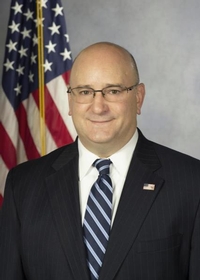
Rep. Ben Sanchez
Sponsored bills
Maddy summaryThis resolution directs the Joint State Government Commission to create an advisory committee and jointly conduct a study. The study will examine barriers to medical research that crosses different specialties and fields, as well as how to best use new technologies in this research. It does not change laws or funding but sets up a formal process to identify challenges and solutions. The study's findings would inform future state efforts in medical research coordination. (Note: As a procedural resolution, this summary focuses on its directive, not policy outcomes.)
Maddy summaryHB 1804 would require the Commonwealth to withhold state payments to the federal government, strengthen claims against federal property, and prohibit sharing personal data with federal agencies. It creates a legal pathway for the Commonwealth to sue the federal government over withheld payments or data misuse. The bill directly affects how the state interacts with federal agencies on financial transactions and data privacy. Key provisions include blocking state funds to the federal government, allowing legal action for property claims, and banning the sharing of personally identifiable information.
Maddy summaryHB 1805 would freeze penalties, fines, and fees for taxpayers using deferred payment or installment plans under Pennsylvania's Tax Reform Code of 1971. This means no additional charges would accrue on state tax balances paid through these arrangements during the freeze period. The bill directly affects individuals and businesses that have set up installment or deferred payment agreements for their Pennsylvania tax obligations. It modifies the existing tax code to temporarily halt extra fees without altering the underlying tax amounts owed.
Maddy summaryHB 1802 requires all health insurance policies issued in Pennsylvania to cover FDA-approved COVID-19 vaccines with no cost-sharing for enrollees. This applies to insurers offering policies covering medical care (excluding accident-only, dental, or Medicare supplement plans), and mandates that government programs like Medicaid must also provide this coverage without deductibles, copays, or coinsurance. The bill defines "cost-sharing" to exclude premiums but includes standard out-of-pocket expenses, ensuring vaccines remain fully covered. It takes immediate effect and prevents insurers from reducing or eliminating this coverage for existing policies. This directly affects Pennsylvania residents with health insurance and the insurers providing those plans.
Maddy summaryHB 1801 amends Pennsylvania's criminal code to update requirements for medical consultation and informed consent in abortion procedures. It directly affects healthcare providers performing abortions and patients seeking the procedure by mandating specific medical information be discussed during the consent process. The key provision requires providers to offer detailed, non-coercive information about the medical aspects of abortion, including risks, alternatives, and available resources, to ensure patients make informed decisions. This bill modifies existing informed consent standards under Title 18 of Pennsylvania law, focusing on clarifying provider obligations. The bill was referred to the Health committee on August 14, 2025, and remains pending further action.
Maddy summaryHB 1798 requires contractors performing home improvement work on properties adjacent to other properties (adjoining properties) to obtain a $500,000 surety bond per adjoining property. The bond must cover damages to the neighboring property and proof must be submitted to the municipality when applying for a building permit. Contractors without the bond face civil penalties of $10,000 for the first violation and $20,000 for each subsequent offense. The law applies to most home improvement contractors but excludes small projects under $5,000 and large home improvement retailers with over $50 million in net worth.
Maddy summaryHB 1799 amends Pennsylvania's 1992 Tuition Account Programs law to create the Keystone Scholars Grant Program, which provides financial assistance to students attending eligible postsecondary institutions. It establishes a dedicated Keystone Scholars Grant Program Account to fund this new scholarship initiative, directly affecting students and families participating in tuition savings programs. The bill updates existing program definitions, governance structures, and federal tax provisions while adding this new grant option to support educational access. This change expands the state's existing tuition savings framework without altering current program requirements.
Maddy summaryHB 1794 creates a Waterfront Redevelopment Fund to provide grants for revitalizing waterfront areas across the state. It requires the Department of Community and Economic Development to manage the fund and distribute grants to eligible local projects, such as public access improvements or environmental upgrades. This bill directly affects municipalities, community groups, and developers working on waterfront sites by providing dedicated funding for redevelopment initiatives. The program establishes clear administrative procedures for grant applications and disbursement under the department's oversight.
Maddy summaryHB 1795 requires payroll processing businesses to provide proof of fidelity insurance and surety bonds. This bill directly affects payroll processors by mandating these financial safeguards to cover potential losses from errors or misconduct. The legislation also establishes penalties for processors who fail to meet these requirements. The bill is currently pending in the Labor & Industry committee.