

Maddy summaryThis bill expands the authority of Pennsylvania's intermediate units to acquire and lease property for school facilities and establishes a funding mechanism for these capital projects. It creates a program that allows nonpublic schools to receive grants for safety and security enhancements, which can be used for violence prevention, mental health initiatives, and hiring security personnel. Additionally, the legislation sets a minimum funding level for these targeted grants and clarifies that intermediate units can only use a small percentage of the funds for administrative costs.
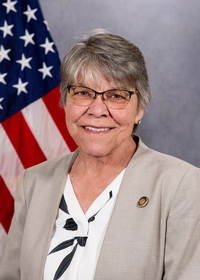
Rep. Nancy Guenst
Sponsored bills
Maddy summaryThis bill updates Pennsylvania laws to clarify how medical records can be obtained and the fees associated with them. It directly affects patients, their attorneys, and healthcare providers by setting specific prices for copying and retrieving medical charts. Under the new rules, patients and their representatives can access their own records without needing a subpoena, while other parties must pay a set fee for search, retrieval, and copying services. The act also establishes different rates for paper copies versus electronic records and requires these fees to be adjusted annually based on inflation.
Maddy summaryThis bill amends Pennsylvania's domestic relations laws to redefine marriage as a civil contract between two individuals, removing the previous legal requirement that it be between one man and one woman. It directly affects couples by eliminating state barriers to same-sex marriage and repeals the specific provision that declared such unions void within the Commonwealth. The legislation also updates the statutory definition of marriage to reflect this inclusive language while removing the section that stated it was public policy to restrict marriage to opposite-sex couples.
Maddy summaryThis bill amends the Administrative Code to update definitions and powers for Pennsylvania's Energy Development Authority. It clarifies what counts as a "project" and "cost" for energy initiatives, specifically including expenses for energy audits, environmental surveys, and infrastructure resilience. The legislation also changes how the Authority's board is structured, reducing the number of governor-appointed members from nine to five and adjusting the voting requirements for board decisions. These changes aim to streamline the Authority's governance while expanding its scope to support various energy-related activities.
Maddy summaryThis bill amends Pennsylvania's Election Code to regulate political spending by corporations, specifically targeting those with significant foreign ownership or influence. It defines a "foreign-influenced corporation" as one where a single foreign investor owns at least 1% of equity, multiple foreign investors collectively own 5% or more, or a foreign entity participates in political decision-making. Under the new rules, these specific corporations are prohibited from making any contributions or expenditures to support or oppose candidates, ballot measures, or political parties. To ensure compliance, any corporation making a political contribution must certify within seven days that it does not meet the foreign-influenced criteria, with penalties including fines up to $10,000 for individuals who violate these restrictions. The law explicitly excludes domestic corporations from these restrictions and does not limit news media reporting or editorial content.
Maddy summaryThis bill establishes an independent Office of Child Advocate within Pennsylvania's Human Services Code to protect the interests of children. The Governor will appoint a Child Advocate who must have at least six years of relevant experience and a bachelor's degree, and the office will operate independently of the department regarding decision-making. The Advocate and their staff are required to complete specific trainings on topics like trauma-informed care and crisis intervention, and they are designated as mandated reporters for suspected child abuse. Additionally, the bill defines the scope of child health, safety, and well-being programs, which include preventing abuse, providing foster care, and offering early intervention services.
Maddy summaryThis bill requires all Pennsylvania public and private schools to have automated external defibrillators (AEDs) available at every interscholastic athletic event, including practices. It mandates that schools create a written emergency action plan for sudden cardiac events, which must include a list of trained staff and detailed steps for responding to a medical emergency. The legislation also updates teacher certification requirements to include CPR and AED training, replacing previous rules that focused on CPR instruction alone.
Maddy summaryThis Pennsylvania House resolution urges the U.S. Congress to update federal copyright laws to protect human creative workers from displacement by artificial intelligence. The bill proposes that only works created primarily by humans should be eligible for copyright protection, while works generated mainly by non-human entities would be considered public domain. Additionally, it suggests that using copyrighted material to train AI systems should not qualify as fair use because it harms the market value of the original works. The resolution does not become law itself but serves as a formal request to the federal government to consider these specific legal changes.
Maddy summaryThis Pennsylvania House Resolution designates September 2024 as "Military Suicide Prevention and Awareness Month" to highlight the high suicide rates among veterans in the state. The measure aims to raise public consciousness about the issue by officially setting aside the month for recognition and support rather than implementing new laws or funding. It expresses support for ongoing federal and state efforts to assist veterans and their families while acknowledging the specific challenges they face.
Maddy summaryThis bill establishes the Pennsylvania Artist Fellowship Grant Program to provide financial support to artists living in the state. To qualify, applicants must be at least 18 years old, reside in Pennsylvania, actively practice in visual, media, film, or performing arts, and not be currently enrolled in school. The program awards up to 25 grants of $100,000 each annually, which recipients can use for a wide range of expenses including housing, studio rentals, materials, travel, and student loans, provided the funds are not used for political campaigns or regular employment. The Pennsylvania Council on the Arts is responsible for managing the application process and administering the program, which is funded by a $2.5 million appropriation for grants and an additional $250,000 for administrative costs.