

Maddy summaryHB 950 amends Pennsylvania's 1921 Insurance Company Law to regulate long-term care insurance premiums. It prohibits insurers from increasing premiums based on the policyholder's age or how long they've held the policy, and caps annual renewal increases at 15% of the prior year's premium. The state insurance commissioner must disapprove increases deemed excessive, unjustified, or unfairly discriminatory, or if they exceed the 15% annual cap. Insurers may request a higher increase (over 15%) only if they demonstrate unexpected high usage of policy benefits, with commissioner approval. This directly affects long-term care policyholders and insurers operating in Pennsylvania.
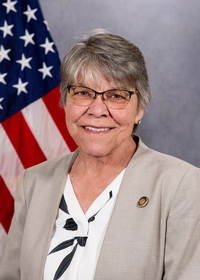
Rep. Nancy Guenst
Sponsored bills
Maddy summaryHB 895 establishes a process for Pennsylvania citizens to report specific federal consumer protection violations to the Office of Attorney General through a public website, email, or phone line. The bill requires the Attorney General to create this system and assign each citizen a unique identifier and password, along with collecting contact details for potential testimony. If the Attorney General secures a monetary recovery based on a citizen's information about violations like fraud, privacy breaches, or consumer credit issues, a witness award must be requested. This law directly affects citizens with knowledge of the listed federal offenses and the Office of Attorney General.
Maddy summaryHB 890 amends Pennsylvania's Veterans' Trust Fund rules to restrict how funds can be spent. It prohibits using the fund for administrative staff salaries (defined as non-clinical personnel at veterans' organizations) and limits single-entity grants to $250,000 over three consecutive years. These changes directly affect the State Veterans' Commission and the Department managing the Trust Fund, ensuring funds are used for direct veteran services rather than administrative costs or large single grants. The bill takes effect immediately upon passage.
Maddy summaryHB 876 proposes a constitutional amendment to change how civil officers in Pennsylvania can be removed from office. It replaces the current requirement of "conviction of misbehavior in office" with a standard requiring a "finding or verdict of guilt" (including pleas of nolo contendere) for crimes related to an officer's official duties. This affects appointed civil officers (excluding judges of record courts) and elected officials like mayors or county officials, but not the Governor, Lieutenant Governor, legislators, or judges of record courts. The amendment would require removal by the Governor for "reasonable cause" after a hearing, with approval from two-thirds of the Senate. The bill also outlines the procedural steps for submitting the constitutional change to voters.
Maddy summaryHB 860 amends Pennsylvania's Public School Code to prohibit public schools from removing library books or instructional materials based on specific reasons, such as an author's race, gender identity, political views, or content about sexuality. It directly affects public school entities (including districts, charter schools, and libraries) by banning "soft censorship" - removing materials outside formal review processes - and requires schools to publicly report such removals. The bill mandates that materials can only be removed following a defined procedure, ensuring decisions are based on educational appropriateness, not personal views. It also requires schools to provide online complaint forms for students or parents who experience unauthorized removals, referencing data showing 457 book challenges in Pennsylvania from 2021-2022. The law aims to protect students' access to diverse learning resources while aligning with First Amendment principles.
Maddy summaryHB 833 proposes a constitutional amendment to add a 4% tax on Pennsylvania residents with annual taxable income exceeding $1 million. This tax would apply only to income above the $1 million threshold, directly affecting high-income earners in the state. The amendment includes an annual cost-of-living adjustment for the income threshold, aligning it with federal tax bracket methodology. This is a policy change to the state constitution, not an immediate law, requiring approval through the constitutional amendment process.
Maddy summaryHouse Resolution 103 designates April 2025 as "National Volunteer Month" in Pennsylvania. The resolution encourages all residents to engage in volunteer activities, highlighting community benefits such as building social connections, supporting local resilience, and providing personal fulfillment as outlined in the resolution's preamble. It does not create new laws or require specific actions, serving as a symbolic recognition of volunteerism's value.
Maddy summaryHB 850 requires hydraulic fracturing service providers and chemical vendors to include a specific tracer substance in the fluid used for unconventional oil and gas well fracturing. The Pennsylvania Department of Environmental Protection must specify tracers that are traceable to the operator and safe for public health and the environment. The Environmental Quality Board will create regulations to implement these requirements. The law applies to all fracturing activities performed on or after its effective date.
Maddy summaryHB 845 creates a new administrative process for Pennsylvania residents to legally change their name, allowing applications to be submitted directly to the Department of Health (online or at driver's license centers) instead of requiring court petitions for most cases. It requires applicants to provide background information and a county-level criminal record check to confirm no outstanding judgments. The bill maintains court oversight for name changes involving minors when a parent or guardian does not consent, requiring additional documentation to demonstrate reasonable efforts to obtain consent. This change primarily affects individuals seeking name changes, streamlining the process for adults while preserving judicial review for minor-related cases.
Maddy summaryHB 826 amends Pennsylvania's Human Relations Act to require public venues (like theaters, sports arenas, and events charging admission) to provide free admission for personal care attendants accompanying eligible individuals with disabilities. It defines "attendant care services" to include daily living support such as bathing, mobility assistance, and managing transportation, and specifies that "eligible individuals" are those needing such services due to a disability. The bill prohibits venues from charging personal care attendants for entry when their presence is necessary for the eligible individual to access the event. This directly affects people with disabilities who rely on attendants to participate in public activities and the venues hosting those events.