

Maddy summaryThis resolution designates September 21, 2025, as "Sun Day" in Pennsylvania. It is a symbolic observance with no binding policy changes or direct impact on residents, businesses, or state programs. The bill was referred to the Energy committee, but it does not establish new laws, funding, or regulations. (1 sentence)
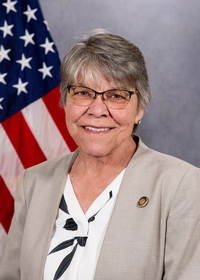
Rep. Nancy Guenst
Sponsored bills
Maddy summaryThis resolution directs the Joint State Government Commission to study whether current continuing medical education requirements adequately prepare healthcare providers to address women's health issues, specifically perimenopause and menopause. It examines existing training standards for providers and their readiness to care for patients experiencing these conditions. The study focuses on concrete education requirements, not on changing laws or policies. This resolution affects healthcare providers who require continuing education, but it does not enact new requirements itself. The Commission will conduct this study as the next step.
Maddy summaryThis bill is a commemorative resolution designating July 26, 2025, as "Americans with Disabilities Act Day" within Pennsylvania. It does not create new laws or policies but formally recognizes the anniversary of the federal Americans with Disabilities Act (ADA) through a symbolic observance. The resolution directly affects Pennsylvania residents by designating a specific day for community recognition of the ADA's impact. As a procedural resolution, it has no binding legal effect and is referred to the Human Services committee for consideration.
Maddy summaryHB 1778 establishes a pilot program called the Essential Energy Stability Fund to provide limited financial assistance for utility bills to eligible low-income households during off-season periods (outside regular peak billing cycles). The fund would use a dedicated state appropriation to help households manage unexpected energy costs when they might face financial strain. This temporary program is designed to test whether targeted off-season support can improve energy affordability for vulnerable residents. The bill focuses on concrete funding for direct assistance, not broader policy changes.
Maddy summaryHB 1756 allows volunteer fire companies, nonprofit rescue squads, ambulance services, and senior citizen centers in Pennsylvania to apply for electricity rates matching residential service costs instead of commercial rates. To qualify, these organizations must sign a one-year contract with their utility provider. The bill amends Pennsylvania's Public Utilities code (Title 66) to require utilities to offer this rate option upon request. This change directly affects eligible nonprofit organizations by potentially lowering their electricity costs through simplified rate access. The bill takes effect 60 days after enactment.
Maddy summaryHB 1760 establishes a 5% minimum annual participation goal for veteran business enterprises (including service-disabled veteran-owned small businesses) in Pennsylvania's state procurement contracts. It requires the Department of General Services to verify business certifications, maintain a directory of qualified veteran-owned businesses, and provide assistance to help these businesses compete for contracts. The bill also creates an "aspirational target" for participation that can be adjusted every five years after a disparity study, and allows agencies to request waivers for specific contract goals. This applies to Commonwealth agencies purchasing goods or services under Titles 51, 62, and 74 of Pennsylvania law.
Maddy summaryHB 1299 amends Pennsylvania's Unfair Trade Practices and Consumer Protection Law to regulate automatic renewal and continuous service offers. It requires businesses to clearly disclose renewal terms, pricing after trials, and cancellation options in a way consumers can retain, and to allow online cancellation. The law applies to most subscription-based goods/services but excludes health clubs, federally regulated utilities, natural gas/electricity contracts, and insurance entities. Violations would be treated as unfair trade practices under existing enforcement mechanisms.
Maddy summaryHB 1748 amends Pennsylvania's Public School Code to establish a Pilot Program supporting homeless youth pursuing higher education. The bill directly affects homeless youth in Pennsylvania who are seeking or enrolled in post-secondary education programs. Key provisions include providing state funding for supportive services like housing assistance, counseling, and academic support through designated educational institutions. The program aims to address barriers to higher education access for this vulnerable population by creating a structured, state-supported pathway. The bill was recently referred to the Education committee for further review.
Maddy summaryHB 1739 would create a statewide "All Payor Claims Database" under Pennsylvania's health laws, requiring healthcare providers and insurers to submit claims data to this centralized system. The Health Care Cost Containment Council would be responsible for managing the database and ensuring compliance, with penalties for failure to report data accurately. The bill includes funding ("makes an appropriation") to support the database's development and operation. This directly affects healthcare providers, insurers, and the Council, as they would be required to submit, manage, and use the claims data for oversight purposes.
Maddy summaryHB 1733 adds art therapy to Pennsylvania's regulated health professions by creating specific licensure requirements for "licensed professional art therapists" and "licensed associate art therapists." It defines "art therapy" as a clinical practice using art-based techniques to address mental health needs, requiring therapists to meet education standards from accredited institutions. The bill restricts the use of the title "licensed professional art therapist" to those holding a valid license, while "licensed associate art therapists" must work under supervision and cannot practice independently. This directly affects art therapists seeking to legally use the title or provide services in Pennsylvania, establishing new standards for training, supervision, and scope of practice.