

Maddy summaryHB 1963 amends Pennsylvania's driver licensing rules to clarify the role of the Medical Advisory Board in reviewing medical conditions that may affect driving safety. It directly affects drivers with health conditions requiring medical evaluation and the Board itself, requiring the Board to provide specific guidance for license decisions. The bill establishes a formal process where the Board reviews medical documentation and advises the state on fitness-to-drive determinations. This changes current procedures by making the Board's input a mandatory step in certain licensing cases under Title 75.
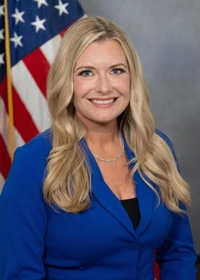
Rep. Missy Cerrato
Sponsored bills
Maddy summaryHB 1600 amends Pennsylvania's Human Services Code to establish specific requirements for the Keystone STARS Program, a quality rating system for child-care facilities. The bill requires participating child-care centers and family child-care homes to display their STAR-level rating on their public website and provide it to parents at enrollment. It also mandates that the state department issue visible placards with facilities' ratings and develop a rubric outlining how providers can improve their rating through staff training, program quality, family partnerships, and leadership. This directly affects licensed child-care providers and parents seeking early childhood education services.
Maddy summaryHB 2254 adds Chapter 14 to Pennsylvania's Medical Marijuana Act, allowing terminally ill patients to use medical marijuana within specific care facilities (like hospitals, nursing homes, and assisted living residences) under strict conditions. Facilities must create written guidelines within 180 days covering safe storage, patient safety, allowed forms of marijuana, and documentation. The bill imposes a $500 daily civil penalty for noncompliance, with penalties deposited into the Medical Marijuana Program Fund. It does not require facilities to provide certifications, administer marijuana, or permit use in emergency departments. This directly affects terminally ill patients seeking access in regulated care settings and facilities operating under the existing medical marijuana program.
Maddy summaryThis bill amends Pennsylvania's Public School Code to allow students with asthma or severe allergies to possess and self-administer their prescribed asthma medications (including inhalers) and epinephrine auto-injectors at school. Schools must create written policies requiring students to demonstrate self-administration capability and notify the school nurse after use, while ensuring medications are stored safely and accessible only to authorized students. The bill also permits trained school staff, including bus drivers and crossing guards, to administer epinephrine auto-injectors in emergencies for students experiencing allergic reactions or asthma attacks. These changes aim to improve student safety by ensuring timely access to life-saving medications during school hours.
Maddy summaryHB 1045 requires Pennsylvania school nurses and other school staff with direct student contact to complete Department of Health-approved training on seizure recognition and first aid starting in the 2025-2026 school year, with training required every two years thereafter. The bill mandates specific content about identifying seizures, using seizure action plans, and providing basic first aid. It also clarifies that school staff providing seizure-related care are protected from civil liability under existing Good Samaritan laws (42 Pa.C.S. §§ 8332 and 8337.1). This bill directly affects all public school staff in Pennsylvania who work with students and aims to improve emergency response for students with seizure disorders.
Maddy summaryHB 1106 establishes a certification program for chiropractic assistants in Pennsylvania. To become certified, individuals must be at least 18, have a high school diploma, complete an approved training program, pass an exam, and meet background requirements. Certified assistants can only perform tasks delegated by a licensed chiropractor under direct on-premises supervision and must complete 16 hours of continuing education (including 8 in-person hours) every two years to maintain certification. The bill also makes minor editorial changes to the existing Chiropractic Practice Act.
Maddy summaryHB 2173 updates Pennsylvania's Medical Practice Act of 1985 by adding new definitions and licensing requirements for medical imaging professionals. It specifically creates licensing categories for roles like medical imaging professionals, radiation therapists, radiologist assistants, and trainees, defining their scope of practice (including modalities such as MRI, CT scans, ultrasound, and nuclear medicine). The bill removes outdated provisions about radiologic procedures and education requirements while establishing certification standards through recognized medical imaging certification organizations. This directly affects healthcare workers performing imaging procedures, requiring them to obtain board licenses based on their certified modalities. The changes clarify professional responsibilities and ensure consistent training standards for these healthcare roles.
Maddy summaryThis resolution directs the Joint State Government Commission to study Pennsylvania's disability waiver programs. It specifically examines how to improve experiences for individuals receiving Home and Community-Based Services waivers through the Office of Long-Term Living (OLTL) and Office of Developmental Programs (ODP). The study will assess medical care access, healthcare support barriers, and staffing challenges for waiver participants. The findings will inform future improvements to these services, focusing on people with disabilities who rely on community-based care instead of institutional settings. (HR 134, 2025)
Maddy summaryHR 56 is a resolution directing Pennsylvania's Joint State Government Commission to study voting wait times and resource distribution. The study will examine poll worker staffing, polling locations, voting compartments, and machines across counties to identify ways to reduce voting time and prevent disparities based on race, income, geography, or other factors. The commission must report findings within one year, including wait time data broken down by demographic factors and recommendations for improving in-person voting efficiency. This is a procedural resolution requiring analysis, not a policy change.
Maddy summaryHouse Bill 993 creates an official logotype for veteran-owned businesses in Pennsylvania. The Department of Military and Veterans Affairs will develop this logotype and establish an application process and eligibility guidelines for businesses to use it. A veteran-owned business is defined as one where at least 51% of the ownership is held by a veteran. The bill also establishes a penalty for fraudulently claiming veteran status to use the logotype and creates a Veteran-Owned Business Coordinator to assist veteran entrepreneurs.