

Maddy summaryHB 1087 establishes Pennsylvania's Active Volunteer First Responder Education Tax Credit Program under the Tax Reform Code of 1971. It allows businesses to claim a tax credit for donating to eligible schools, with funds used to provide scholarships for certified volunteer firefighters and emergency medical services workers. To qualify, applicants must be Pennsylvania residents, certified volunteers with at least one year of service, enrolled in approved educational programs at participating institutions, and provide proof of membership from their agency. The Department of Community and Economic Development administers the program, requiring eligible schools to submit accreditation details and ensuring donations directly fund tuition and school-related fees for qualifying students. This program directly affects volunteer first responders seeking higher education and businesses contributing to their scholarships.
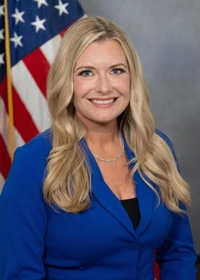
Rep. Missy Cerrato
Sponsored bills
Maddy summaryHB 1097 creates a new minor criminal offense in Pennsylvania for organizing or operating events where live pigeons are used as targets for shooting contests, either for amusement or skill testing. This applies to anyone who willfully runs such events at a designated location, including using mechanical aids to present pigeons to shooters. The bill explicitly excludes legal hunting under state game laws, dog training activities, or permitted special events. It takes effect 60 days after enactment.
Maddy summaryHB 1064 amends Pennsylvania's Health Care Facilities Act to require all health care facilities - including hospitals, clinics, mental health centers, urgent care centers, and dental offices - to establish and publicly share written policies regarding firearms on their premises. The bill mandates that facilities either permit firearms with safety procedures (e.g., storage guidelines) or outline specific steps for staff if someone enters with a firearm. These policies must address both permitted and prohibited firearm scenarios, applying to all locations providing medical services as defined by Pennsylvania law. The bill takes effect 60 days after enactment.
Maddy summaryHR 150 is a Pennsylvania House resolution designating April 11-17, 2025, as "Black Maternal Health Week" to highlight the disproportionate maternal health disparities affecting Black women and birthing persons in the state. It references Pennsylvania data showing Black women face maternal mortality rates twice as high as White women (148 vs. 74 deaths per 100,000 live births in 2020) and higher morbidity rates. The resolution does not create new laws or funding but aims to raise public awareness about preventable maternal health outcomes. It specifically targets state-level attention to this crisis, citing local statistics from Philadelphia and Allegheny Counties. As a symbolic resolution, it has no binding effect but seeks to spur broader discussion and action.
Maddy summaryThis bill creates a $100 tax credit for Pennsylvania taxpayers who adopt cats or dogs from animal shelters, humane societies, or rescue organizations. The credit applies to state income taxes, with a maximum annual benefit of $300 (covering up to three adopted animals). To claim the credit, taxpayers must submit proof of spaying/neutering and adoption during the tax year. The program directly affects individuals adopting shelter animals, aiming to incentivize pet adoption through tax relief.
Maddy summaryHB 1074 amends Pennsylvania's Dog Law to regulate contracts for the sale and lease of dogs and cats. It makes void any contract where ownership or repossession of the animal depends on future payments after the buyer takes possession (except for unsecured loans for the purchase), and voids leases offering an option to buy the animal at the end of the term. Consumers who enter such contracts are deemed the owners and can reclaim all payments made. The law applies to contracts entered into 60 days after the bill takes effect.
Maddy summaryThis bill establishes a grant program to provide free menstrual products (such as pads and tampons) in Pennsylvania public schools. Schools with 25% or more students eligible for free or reduced-price lunch programs can apply for grants to purchase these products and install dispensers or disposal units. Recipients must report annual spending on products and dispenser maintenance to the state. The program is funded by a state appropriation for the 2025-2026 fiscal year.
Maddy summaryHB 1068 creates a licensing program allowing family members (such as parents, grandparents, or adult siblings) to provide Medicaid-covered skilled care to children with medical needs. To qualify, applicants must complete training, pass background checks, and meet state nursing standards. The bill requires Medicaid agencies to cover the cost of training and licensure renewal, and it mandates that licensed family caregivers receive compensation for services like skilled monitoring. This directly affects Medicaid recipients (children under 21 with diagnosed conditions) and their eligible family caregivers, with oversight by the State Board of Nursing.
Maddy summaryHB 1065 creates a new felony offense for selling unmarked firearm components in Pennsylvania. It specifically targets the sale of firearm frames/receivers, silencer frames, split/modular frames, or partially complete frames without serial numbers registered to a federal firearms licensee. The bill defines "privately made firearm" as one assembled by non-licensed individuals without federal serial markings. This law directly affects sellers of homemade or unlicensed firearm parts, making such sales a third-degree felony. It does not change laws regarding firearm ownership or purchase, only penalizing the sale of unmarked components.
Maddy summaryHB 1056 requires employers in Pennsylvania’s traveling sales industry (groups selling goods/services door-to-door or in public places) to classify workers as employees - not independent contractors - unless specific conditions are met. It mandates employer registration with the Department of Labor and Industry, prohibits misclassification for benefits like workers’ compensation and unemployment insurance, and imposes fines for violations. The bill directly affects businesses employing traveling sales crews, with penalties including administrative fines and potential stop-work orders for noncompliance. Key provisions include mandatory registration, proof of employee status, and prohibitions against retaliation for workers reporting violations.