

Maddy summaryHB 1030 designates Hershey's Kisses as the official State candy of Pennsylvania. This symbolic bill does not impose any new laws, taxes, or regulations, nor does it directly affect any individuals or businesses. It serves solely as a ceremonial recognition of Hershey's Kisses, a candy brand produced by Hershey Foods Corporation in Pennsylvania. The bill passed through committee review and final passage in 2025 but has no practical policy impact beyond the designation.
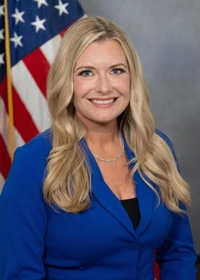
Rep. Missy Cerrato
Sponsored bills
Maddy summaryHR 257 is a non-binding resolution designating November 2025 as "Diabetes Awareness Month" in Pennsylvania. It formally recognizes the need for public education about diabetes prevention, management, and support services during that month. This resolution does not create new laws, allocate funding, or directly affect any specific individuals or programs - it serves solely as a symbolic designation to encourage awareness efforts.
Maddy summaryHB 1043 amends Pennsylvania's Public School Code to expand access to emergency allergy and asthma treatments in schools. The bill specifically allows school staff, including bus drivers and crossing guards, to possess, use, and administer epinephrine auto-injectors (like EpiPens) and asthma inhalers for students in medical emergencies. It updates definitions and procedures to ensure authorized personnel can act quickly during allergic reactions or asthma attacks without requiring individual physician orders each time. This directly affects students with life-threatening allergies or asthma and school staff who may need to provide immediate care.
Maddy summaryHB 804 expands Pennsylvania's existing Automobile Lemon Law (originally enacted in 1984) to cover recreational vehicles (RVs), including campers and motorhomes. It requires dealers to repair persistent defects in new RVs after a specified number of attempts, aligning RV repair obligations with those for automobiles. The bill updates definitions and repair procedures within the law to apply directly to RV buyers and dealerships selling new recreational vehicles. This change ensures RV purchasers have similar protections as car buyers when facing repeated, unresolved defects.
Maddy summaryHB 1540 creates a "Buy America, Buy Union" grant program and fund under Pennsylvania's Department of Community and Economic Development. It requires state-funded projects to prioritize American-made materials and union labor by offering grants to qualifying contractors. The bill establishes a dedicated fund to finance these grants, directly affecting state agencies and contractors working on public projects. Key provisions mandate that projects receiving grants must meet specific union labor and domestic sourcing standards, altering how state procurement contracts are awarded. This policy change shifts procurement incentives toward union workers and U.S. manufactured goods for eligible state projects.
Maddy summaryHB 749 updates Pennsylvania's public welfare laws to streamline assistance programs and improve service access. It requires copayments for subsidized child care, changes reporting for SNAP benefits, and mandates reports on transitioning to chip-enabled access cards for benefits. The bill removes regulatory barriers for outpatient behavioral health services provided within clinic facilities, allowing services to be billed as part of the clinic visit. It also requires additional reports to the General Assembly regarding medical assistance eligibility and nonemergency medical transportation services.
Maddy summaryHB 2022 amends the Insurance Company Law of 1921 to require casualty insurance policies to cover scalp cooling systems. The bill directly affects insurance companies and policyholders by mandating coverage for this specific medical technology. However, the provided context does not specify the exact mechanisms for implementation, affected insurance types, or patient eligibility details. The bill was referred to the Insurance committee on November 12, 2025, but no further provisions or impacts are described in the available information. The context lacks sufficient detail to describe key mechanisms or concrete policy changes beyond the title.
Maddy summaryHB 2025 amends Pennsylvania's Public School Code to address financial strain on school districts during budget disputes with the state. It requires the Commonwealth to reimburse school districts for costs incurred when borrowing money to cover operating expenses during a budget impasse. The bill establishes a new "School District Impasse Recovery Fund" to manage these reimbursements. This directly affects school districts facing funding delays and the state budget office responsible for disbursing funds. The provision creates a concrete mechanism for financial relief during budget standoffs, without altering existing funding formulas.
Maddy summaryHB 2009 would amend Pennsylvania law to establish rules for utility reconnection fees charged by municipal authorities. The bill requires that fees for reconnecting electricity, water, or gas services after disconnection be reasonable and prohibits excessive or unfair charges. It directly affects residents and businesses that have had utility services disconnected, as well as municipal authorities managing those services. The key provision creates a clear standard to prevent municipalities from imposing unreasonable fees during reconnection.
Maddy summaryHB 2007 mandates a specific $62 million transfer from Pennsylvania's Budget Stabilization Reserve Fund by November 1, 2025, to address the loss of federal SNAP benefits. The funds are allocated as follows: $50 million to the Department of Agriculture for food bank grants under existing state food programs, $10 million to the Department of Human Services for senior meal assistance, and $2 million for administration and outreach. This bill directly affects food banks, senior assistance organizations, and state agencies managing these programs. It requires the transfer to occur regardless of the usual emergency funding process outlined in Section 1703-A(b), which typically requires a two-thirds legislative vote for reserve fund appropriations. The bill takes effect immediately upon enactment.