

Maddy summaryHB 1394 proposes to repeal the inheritance tax in Pennsylvania, directly affecting estates and beneficiaries who would no longer be subject to this tax on inherited assets. The bill also modifies procedures for taxpayers to petition for a reassessment of taxes. Additionally, it updates existing provisions related to how government-issued obligations are treated for tax purposes.
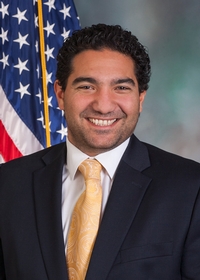
Rep. Josh Kail
Sponsored bills
Maddy summaryHB 1273 repeals Pennsylvania's requirement that taxpayers make payments of $15,000 or more electronically for personal income tax, along with related penalties for non-compliance. It replaces these rules by adding a new provision requiring the Department of Revenue to accept all payment methods without penalties for taxpayers. This bill directly affects individuals and businesses paying Pennsylvania personal income tax, removing a specific electronic payment mandate and associated fines. The changes take effect for taxable years beginning after December 31, 2025, making all payment methods equally acceptable without penalty.
Maddy summaryHB 1310 amends the Human Services Code to modify how medical assistance payments are determined for institutional care in nursing facilities. The bill specifically adjusts the application of a "revenue adjustment neutrality factor" to payment rates for county and nonpublic nursing facilities. Beginning July 1, 2025, the factor for nonpublic facilities must be equal to or greater than 0.90, while for county facilities, it will be 1.00 plus the percentage rate of change applied to nonpublic facilities. This change directly affects these nursing facilities and the eligible individuals receiving care within them.
Maddy summaryHB 1134 requires food products containing specific synthetic colors (Blue 1, Blue 2, Green 3, Red 40, Yellow 5, or Yellow 6) to display a warning label on the front of the package. The warning must state: "WARNING: This product contains synthetic colors, which may have an adverse effect on activity and attention in children," in bold type at least as large as the "serving size" declaration. This law directly affects food manufacturers and retailers selling products with these dyes in Pennsylvania. The requirement applies to all such products sold within the state and takes effect one year after enactment.
Maddy summaryHB 1131 amends Pennsylvania's Public School Code to prohibit public schools from selling or offering competitive foods containing specific artificial dyes during the school day. The bill bans six dyes (Blue 1, Blue 2, Green 3, Red 40, Yellow 5, and Yellow 6) in foods sold on school grounds that compete with federally reimbursable meals like school lunches. It defines "competitive food" as any food sold during school hours that competes with National School Lunch Program meals. The prohibition applies to all public schools in Pennsylvania and takes effect July 1, 2027. This is a direct policy change restricting certain food additives in school food sales, not a health recommendation.
Maddy summaryHB 1132 prohibits Pennsylvania public schools from selling or offering "unhealthy ultra-processed foods" as competitive foods during the school day. It defines "ultra-processed food" as items containing specific additives like artificial colors, stabilizers, non-nutritive sweeteners, or flavor enhancers (excluding natural seasonings), and "unhealthy" as failing FDA standards for the term "healthy" on labels. Competitive foods - such as vending machine snacks or cafeteria items sold alongside school meals - are banned if they contain these unhealthy items. The law takes effect July 1, 2027, directly affecting public school food vendors, students, and school nutrition programs across Pennsylvania.
Maddy summaryHB 1133 amends Pennsylvania's food protection laws to require a specific cancer warning on food products containing Butylated Hydroxyanisole (BHA). The bill mandates that any food bearing BHA (identified by CAS number 25013-16-5) must display the warning "WARNING: This product contains BHA, which may cause cancer" in bold type on the principal display panel, using a font size no smaller than the required "serving size" declaration. This directly affects food manufacturers and retailers selling products with BHA, requiring them to update labeling to comply with the new rule. The policy change focuses on enhancing consumer transparency about a specific ingredient's potential health risk through mandatory labeling.
Maddy summaryHB 1130 requires food manufacturers to report "Generally Recognized as Safe" (GRAS) substances used in food to Pennsylvania's Department of Agriculture, including safety data. This affects companies adding GRAS substances to food products, with exemptions for small businesses and certain FDA-approved substances. The bill mandates a searchable public database on the state website where all submitted reports will be accessible to consumers. It creates new transparency requirements for substances deemed safe without full FDA food additive approval, aligning with federal GRAS reporting standards.
Maddy summaryPennsylvania's House Resolution 125 is a petition to Congress requesting an Article V constitutional convention to propose amendments focused on three specific areas: imposing fiscal restraints on the federal government, limiting federal power and jurisdiction, and setting term limits for federal officials and members of Congress. The resolution specifies that any convention must be limited to these topics only, cannot consider changes to the Bill of Rights, and requires two-thirds of states to apply for the same purpose before Congress acts. It details Pennsylvania's delegate selection process (five members chosen by the legislature with voting rules) and includes conditions like Congress only setting the convention's time/place, states having equal voting power, and delegates disqualifying if accepting gifts. The resolution explicitly recommends ratification of any amendments through state legislatures rather than conventions.