

Maddy summaryHB 1150 raises Pennsylvania's minimum wage to $15 per hour starting January 1, 2026, with annual increases thereafter. It also establishes a phased timeline for tipped employees: requiring higher base cash wages starting in 2025 (e.g., $5.00/hour after June 2025) and mandating that by July 1, 2029, employers must pay the full minimum wage without relying on tips. The bill ensures all tips received by employees remain their property and cannot be used by employers to meet minimum wage requirements. This directly affects most private-sector employers and tipped workers in Pennsylvania, particularly in hospitality and service industries.
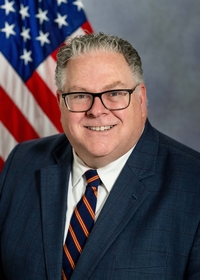
Rep. Tim Briggs
Sponsored bills
Maddy summaryThis bill establishes a grant program to provide free menstrual products (such as pads and tampons) in Pennsylvania public schools. Schools with 25% or more students eligible for free or reduced-price lunch programs can apply for grants to purchase these products and install dispensers or disposal units. Recipients must report annual spending on products and dispenser maintenance to the state. The program is funded by a state appropriation for the 2025-2026 fiscal year.
Maddy summaryThis bill establishes the Constable William Davidson Reward Fund to provide rewards of up to $50,000 for information leading to the arrest and conviction of individuals who kill or cause the death of a law enforcement officer in Pennsylvania. It amends the Pennsylvania Commission on Crime and Delinquency Law to authorize the commission to administer the fund and offer these rewards for crimes covered under state murder and criminal homicide statutes targeting officers. The fund, which will be non-lapsing and funded by state appropriations, is intended to encourage public cooperation in solving violent crimes against law enforcement personnel.
Maddy summaryThis bill amends Pennsylvania's 1929 Administrative Code to clarify the maximum size of the Pennsylvania State Police (4,310 total officers and enlisted members) and specifies that personnel assigned to the Pennsylvania Turnpike Commission, Delaware River Bridge Commission, and gaming enforcement do not count toward this limit. It also repeals an outdated reference in the Fiscal Code (Section 1733-E(3)) to align with this clarification. The change directly affects the State Police's staffing structure and reporting requirements. The bill makes a technical correction to existing law without creating new policies or changing operational responsibilities.
Maddy summaryHB 404 amends Pennsylvania's Insurance Company Law to extend health insurance coverage for children under family policies. It requires policies to cover dependent children up to age 26 (previously 19) and prohibits insurers from denying or restricting coverage based on a child's financial dependency, residency, marital status, school enrollment, or employment. The bill also allows group health plans to extend coverage for adult children up to age 29 if they meet specific conditions, such as not being married, having no dependents, and residing in Pennsylvania or attending school full-time. This affects all health insurance policies sold in Pennsylvania that provide dependent child coverage.
Maddy summaryHB 410 allows certain Pennsylvanians with disabilities, 100% service-connected veterans, and active-duty military members or their dependents living abroad to renew driver's licenses using their most recent photo and signature on file instead of providing new photos. The bill applies to individuals who qualify under existing disability plate rules (Section 1338), have a 100% service-connected disability certification, or are active military personnel or their dependents. Renewal using existing records is prohibited if no current photo/signature exists, if record changes (like name or eye color) are needed, or if the photo is over 16 years old. The law takes effect 33 months after enactment.
Maddy summaryHB 1004 amends Pennsylvania's 1971 Tax Reform Code to increase annual limits on research and development (R&D) tax credits. It raises the total annual credit cap from $60 million to $120 million, with $24 million specifically reserved for small businesses (up from $12 million). Unused allocations for either small businesses or other qualifying businesses can roll over to the other group within the same fiscal year. The changes take effect 60 days after the bill's passage.
Maddy summaryThis resolution designates March 19, 2025, as "The Pennsylvania State University IFC/Panhellenic Dance Marathon (THON) Day" in Pennsylvania. It honors THON for raising over $17 million during its 2025 event to support the Four Diamonds Fund at Penn State Hershey Children's Hospital, which provides financial and emotional aid for pediatric cancer patients and funds cancer research. The resolution recognizes THON's role as the world's largest student-run philanthropy event, which has raised over $200 million since 1977 for childhood cancer care.
Maddy summaryHB 777 requires Pennsylvania public school districts to pay education support professionals (like aides and clerical staff) a minimum hourly wage of $20 or a living wage based on cost-of-living adjustments, starting in the 2025-2026 school year. School districts must make supplemental payments to cover wage gaps for existing contracts below this rate through 2029-2030, with the Department of Labor setting and annually adjusting the living wage using the Consumer Price Index. The Department of Education will reimburse districts for these supplemental payments, adding the reconciled amount to their annual funding allocation. This applies directly to over 500 school districts and their education support staff, ensuring wage standards align with inflation.
Maddy summaryHouse Resolution 98 designates March 2025 as "National Athletic Training Month" in Pennsylvania. It recognizes the work of athletic trainers who provide specialized health care services - including injury prevention, emergency care, and rehabilitation - and acknowledges their role in settings like schools, hospitals, and sports organizations. The resolution urges Pennsylvania residents to learn more about athletic training as a health care profession, though it does not create new laws or requirements.