

Maddy summaryHB 169 creates a program allowing local and regional police departments in Pennsylvania to purchase used pursuit vehicles (police patrol vehicles) from the state at fixed prices. The Department of General Services must allocate up to 10% of the Pennsylvania State Police's used pursuit vehicle inventory for this program, requiring payment via organization check before purchase. Police departments must submit a form detailing desired vehicles, and the state will notify them when matching vehicles become available. The bill specifies that prices are set by the department and not subject to negotiation, with rules for administration to be developed by the department. This applies only to existing state-owned patrol vehicles, not new purchases.
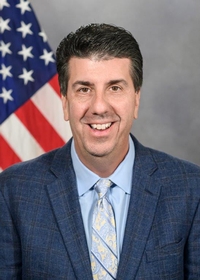
Rep. Joe Ciresi
Sponsored bills
Maddy summaryHB 184 amends Pennsylvania's Tax Reform Code of 1971 to exempt books sold at retail by public libraries from state sales tax. This policy change directly affects public libraries across Pennsylvania, removing a sales tax burden on book sales to patrons. The bill adds a new exclusion (section 204(77)) to the tax code, specifying that sales of books by public libraries are not subject to the state's sales tax. The provision takes effect 60 days after enactment.
Maddy summaryHB 185 adds a temporary sales and use tax exemption in Pennsylvania for Energy Star and WaterSense products sold or used during a specific annual period. The exemption applies to products certified by the EPA for energy efficiency (Energy Star) or water efficiency (WaterSense) during the week of April 22-29 each year, starting in 2025. This directly affects retailers selling these products and consumers purchasing them during that week, as they would not pay state sales tax on qualifying items. The change modifies the Tax Reform Code of 1971 to exclude these products from taxation during this designated timeframe. The bill takes effect 60 days after enactment.
Maddy summaryHB 199 creates the State Emergency Supplemental Grant Program to provide additional financial assistance to Pennsylvania residents and businesses after they receive the maximum federal disaster aid. The program, administered by the Pennsylvania Emergency Management Agency, offers grants covering the gap between federal assistance and actual disaster damage (up to $10,000 for federally declared disasters) or a state-determined amount for state-declared disasters. It establishes a dedicated fund financed by an annual $5 million transfer from the Pennsylvania Liquor Control Board, with funds limited to essential items like housing, medical care, and temporary rental - excluding home improvements, luxury goods, or pre-existing damage.
Maddy summaryHB 119 permanently prohibits Pennsylvania from observing daylight saving time, requiring all timekeeping in the state to follow Eastern Standard Time year-round. The bill amends an 1887 law to remove the existing provision allowing daylight saving time (which previously shifted clocks forward between April and October) and declares Eastern Standard Time as the sole legal standard. This directly affects all residents, businesses, and government operations across Pennsylvania, eliminating the need for biannual clock changes. The policy change would take effect 60 days after the bill's passage.
Maddy summaryHR 10 is a resolution directing Pennsylvania's Joint State Government Commission to study how Home and Community-Based Services (HCBS) waivers can be improved to better serve individuals with disabilities. It directly affects over 2 million Pennsylvanians with disabilities who rely on HCBS waivers administered by the Office of Long-Term Living (OLTL) and Office of Developmental Programs (ODP), including those excluded from eligibility despite meeting federal disability criteria. The study will examine five key areas: whether waivers meet medical needs, compare payment rates across programs, analyze service menus, address barriers to community living, and investigate low employment rates (16% in integrated settings) for waiver participants. The goal is to identify concrete changes to improve access, affordability, and outcomes for people using these programs.
Maddy summaryHB 168 amends Pennsylvania's Taxpayer Relief Act to update the definition of "income" for senior citizens' property tax and rent rebate eligibility. It adds a provision allowing seniors who were eligible for these rebates as of December 31, 2018, to retain benefits if household income temporarily exceeds limits solely due to Social Security cost-of-living adjustments (COLAs). This replaces a previous temporary rule that expired in 2016 for seniors eligible as of December 31, 2012. The bill directly affects Pennsylvania seniors receiving property tax or rent rebates who experience automatic income increases from Social Security COLAs.
Maddy summaryHB 186 amends Pennsylvania's 1936 Unemployment Compensation Law to adjust appeal deadlines for unemployment benefit disputes. It extends the standard appeal window from 21 to 30 days for claimants and employers challenging benefit determinations, and adds a 60-day appeal period when a decision date is revised more than one year after the original notice. These changes directly affect unemployed workers (claimants) and employers who dispute benefit awards or payment decisions. The bill takes effect 60 days after enactment.
Maddy summaryHB 192 repeals outdated language requiring psychological services to be provided on school premises for nonpublic school students. It updates the definition of "professional employees" to explicitly include school social workers, counselors, psychologists, and nurses in Pennsylvania schools. The bill mandates that school social workers must hold a new educational specialist certificate issued by the Department of Education, which must be created within 60 days. Additionally, it adds rules requiring schools to share student health records when students transfer and to retain those records for at least two years after a student leaves.
Maddy summaryHB 195 establishes Pennsylvania's Mental Health Workforce Retention Program under the Human Services Code. It provides $5,000 grants to mental health workers who are Pennsylvania residents and have worked with adolescents for at least seven consecutive years, using a lottery system to select recipients. The program allocates up to $1 million annually from a $5 million appropriation (continuing from the General Fund), with grants exempt from income tax. The program expires on June 30, 2030, and is open to workers in psychology, counseling, social work, or human services.