

Maddy summaryHB 699 requires Pennsylvania's Public Utility Commission to create new rules governing double utility poles (where multiple companies share one pole). It mandates annual registration for companies attaching infrastructure to poles, sets timelines for migrating facilities to new poles, and establishes procedures for compensating pole owners for relocation costs and removing abandoned attachments. The bill directly affects utility companies (electric, cable, telecom) and pole owners, requiring them to follow standardized processes for pole use, migration, and removal. Key provisions include annual registration, surety bonds for cost reimbursement, and civil penalties for noncompliance with the new rules. The legislation aims to address safety, efficiency, and aesthetics concerns related to long-term double-pole use.
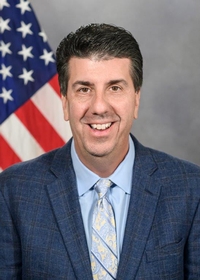
Rep. Joe Ciresi
Sponsored bills
Maddy summaryHB 623 amends Pennsylvania's Tax Reform Code of 1971 to clarify the definition of "compensation" for personal income tax purposes. It adds a new subsection defining "domestic abuse" to include physical, psychological, sexual, emotional, or economic abuse, including control tactics and abuse targeting family members. This change specifically allows tax-free withdrawals from retirement benefits (under 26 U.S.C. § 72) for individuals who have self-certified as victims of domestic abuse within the past five years, without triggering standard penalties. The bill directly affects Pennsylvania taxpayers who qualify under this new definition and access retirement funds for domestic abuse-related hardship.
Maddy summaryHB 612 amends Pennsylvania's Scrap Material Theft Prevention Act to require scrap processors and recycling facilities to collect specific identification details from sellers during scrap material transactions exceeding $100 or involving catalytic converters. Key provisions include collecting driver's license copies, vehicle license plate numbers, seller signatures, and for catalytic converters, vehicle details (year/make/model/VIN), photographs of the converter, and the seller. The bill also mandates a 48-hour payment hold on catalytic converter transactions until law enforcement or a judge authorizes release, with facilities required to keep converters intact during this period. Violations carry fines starting at $5,000 for catalytic converter non-compliance and up to $2,500 for other failures, with repeat offenses classified as misdemeanors.
Maddy summaryHB 609 requires builders to notify residential property owners about construction defects they discover. Builders must send a written notice within 30 days via certified mail, including a description of the defect, the reason for knowing about it, and their contact information. This applies only to residential properties and does not apply if 15+ years have passed since construction. Builders who fail to notify (without reasonable cause) must pay the owner’s actual damages, but the notice itself doesn’t create liability or limit other legal remedies. The bill takes effect in 60 days.
Maddy summaryHB 637 establishes Pennsylvania's Youth Summer Employment Grant Program, administered by the Department of Labor and Industry. The program provides grants to eligible employers (including businesses, nonprofits, and municipalities) who hire residents aged 15-18 for at least eight weeks during summer, pay at least $15/hour or the state minimum wage, and offer work or educational experiences. Grants amount to $5,000 for 10-20 youth, $10,000 for over 20 youth, with an additional $5,000 if 50% of hired youth live in historically disadvantaged communities (defined as areas with ≥20% poverty for 30+ years). Funding comes from a new nonlapsing Youth Summer Employment Fund in the State Treasury, with the department required to advertise the program to employers and schools.
Maddy summaryHB 629 amends Pennsylvania's 1966 recreational liability law to expand protections for landowners, volunteers, and volunteer organizations that provide unpaid recreational access to the public. It adds definitions clarifying that "volunteers" are unpaid individuals caring for recreational land, and "volunteer organizations" include 501(c)(3) nonprofits or similar groups. The bill states these entities owe no duty to keep premises safe, give warnings about hazards, or assume liability for injuries to recreational users, including during hunting activities. This directly affects landowners who open areas for public recreation through volunteer efforts, ensuring they face no legal liability for ordinary risks. The changes take effect 60 days after enactment.
Maddy summaryHB 669 amends Pennsylvania's Election Code to establish standardized early voting procedures for all county elections. The bill requires counties to offer in-person early voting for 30 days before each election (ending the day before Election Day), with specific operating hours: weekday mornings to mid-afternoon, extended hours on the final weekend, and additional holiday hours. It mandates county boards to set up permanent early voting locations based on population size (e.g., at least one location in each of the three largest municipalities in counties over 250,000 people). This directly affects all registered Pennsylvania voters by expanding access to early voting through structured, location-based provisions.
Maddy summaryHB 98 creates a licensing system for electrical contractors, electricians, and apprentice electricians in Pennsylvania. It establishes the State Board of Electrical Licensure to set qualifications, require continuing education, mandate liability insurance, and enforce standards. The bill directly affects individuals and businesses performing electrical work in buildings, including installation, repair, and maintenance of electrical systems. Key provisions include setting licensing fees, imposing fines for violations, and creating enforcement mechanisms for the Board to suspend or revoke licenses. The bill also includes an appropriation for the Board's operations.
Maddy summaryHB 673, the Riparian Buffer Protection Act, requires property owners and developers to protect existing natural vegetation buffers along rivers and streams and restore damaged buffers. It defines "natural riparian buffers" as vegetation providing ecosystem benefits (like filtering pollution, preventing erosion, and supporting wildlife) and prohibits land development that creates impervious cover (such as roads, driveways, or concrete) within these buffer zones. Municipalities gain authority to issue permits for development, inspect properties, and enforce rules, with penalties for violations. The law also clarifies how it interacts with existing state environmental regulations and local ordinances.
Maddy summaryHB 619 requires Pennsylvania employers to provide employees with up to two hours of paid time off to vote in elections, affecting all public and private sector workers in the state. The bill mandates that employees give employers at least two working days' notice before an election and prohibits employers from asking about voting preferences or party affiliation. Employers must post a uniform notice about this policy (available from the Secretary of the Commonwealth) at least 10 days before an election and face fines of $100-$500 for violations. The law aims to ensure voting access without penalty, with employees required to verify voting attendance to retain paid time off.