

Maddy summaryThis bill adds a new supplemental monthly annuity to certain Pennsylvania state retirees' benefits, effective July 2025. It applies to retirees receiving superannuation, withdrawal, or disability annuities who retired before July 2, 2001, and do not have specific service credits (like Class D-4 or Class AA). The additional payment amount is a percentage of their July 2025 monthly annuity, ranging from 10% to 20% based on their retirement date. The cost will be funded through equal annual installments over 10 years starting July 2026.
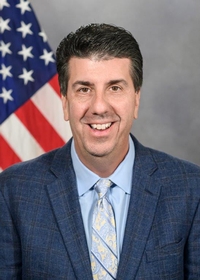
Rep. Joe Ciresi
Sponsored bills
Maddy summaryThis resolution designates September 2025 as "Prostate Cancer Awareness Month" in Pennsylvania. It symbolically raises public attention to prostate cancer, highlighting statistics like an estimated 13,000 new cases and 1,500 deaths in Pennsylvania during 2025. The resolution also urges Congress to support federal legislation (H.R. 1300) that would require health insurance coverage for prostate cancer screenings without cost-sharing for at-risk men. It does not create new laws or funding but aims to promote awareness and encourage preventive care.
Maddy summaryHB 933 increases penalties for construction employers who misclassify workers as independent contractors, raising fines to $2,500 for a first violation and $5,000 for subsequent violations. It expands accountability to include general contractors and other parties who knowingly contract with employers that misclassify workers, subjecting them to the same penalties. The bill also adds a three-year ban on public contracts for intentional violators and clarifies that stop-work orders can require construction to halt within 24 hours for intentional misclassification, applying to successor businesses.
Maddy summaryHB 575 creates new protections for military service members and veterans seeking professional licenses in Pennsylvania. It ensures that individuals holding licenses in fields like healthcare, education, or trades retain their licenses during military service without losing eligibility or facing continuing education requirements. After discharge, veterans can renew licenses within one year by paying only the current renewal fee, without making up for missed requirements. The bill also requires the Department of Education to establish a policy for awarding academic credit at Pennsylvania colleges for military training, helping veterans apply their service experience toward college credits.
Maddy summaryHB 944 allows water and wastewater utilities acquiring other systems to include fees paid to valuation experts in their acquisition costs, with a cap of 5% of the selling utility's fair market value. Utilities must submit detailed documentation of hourly rates to the Pennsylvania Public Utility Commission for approval before paying these fees. The bill directly affects acquiring utilities, valuation experts, and the commission overseeing these transactions. It sets clear limits and approval steps to ensure fees are reasonable and transparent during system acquisitions.
Maddy summaryHB 942 amends Pennsylvania's Game Commission law to change how full-time enforcement officers are paid. It requires that all full-time officers whose duty is to enforce game laws be classified for compensation "in the same manner as members of the Pennsylvania State Police." This change directly affects Game Commission enforcement officers by aligning their pay structure with State Police standards. The bill applies to compensation earned on or after its effective date, 60 days after enactment. (1-2 sentences as it's a procedural pay classification change.)
Maddy summaryHB 111 prohibits life insurance companies in Pennsylvania from denying coverage, limiting benefits, or charging higher rates to applicants or policyholders solely because they have been prescribed an opioid overdose reversal agent (like naloxone). The bill directly affects individuals who use these medications, including those with opioid use disorder or at risk of overdose. It defines "adverse action" to include these discriminatory practices and makes such actions violations of existing laws against unfair insurance practices. The law takes effect 60 days after enactment.
Maddy summaryHB 33 amends Pennsylvania's Medical Marijuana Act to clarify definitions and strengthen oversight of testing labs and practitioners. It defines key terms like "independent laboratory" (requiring no ties to marijuana businesses) and "approved laboratory" (testing medical marijuana samples under department approval). The bill gives the Department of Health new authority to impose conditions on medical practitioners, such as limiting certifications or requiring supervision, to protect patient safety. These changes directly affect medical marijuana patients, healthcare providers who certify them, and labs testing products for quality and safety. The updates aim to improve accountability in the program through clearer rules for lab accreditation and practitioner oversight.
Maddy summaryThis bill amends Pennsylvania's Tax Reform Code to exclude sales and use taxes on firefighting equipment purchased by paid or volunteer firefighters using their own money. To qualify for this tax exemption, firefighters must present a department-issued identification card at the time of purchase, which the Department of Revenue will issue to individuals holding approved certifications. The legislation defines firefighting equipment as items designed to extinguish, control, or stop fires or protect users and property from fire hazards. This change directly affects individual firefighters and retailers selling firefighting gear, while establishing new administrative procedures for identification card issuance.
Maddy summaryHB 894 establishes the Veterans Entering the Sustainability Sector Program (VETSS) to help veterans enter jobs in renewable energy and environmental sectors. The bill creates a Veterans Entering the Sustainability Sector Fund to provide grants to eligible employers - businesses focused on renewable energy (like solar, wind, or bioenergy) that hire veterans who completed approved apprenticeship training in fields such as electrician work, solar installation, or environmental maintenance. The Department of Community and Economic Development will administer the program, overseeing training development and grant applications. This directly affects veterans seeking sustainability-sector careers and employers in renewable energy who hire them, with the goal of addressing environmental concerns like climate change through workforce development.