

Maddy summaryHB 1323 amends Pennsylvania's Professional Nursing Law to establish a formal certification process for Advanced Practice Registered Nurses (APRNs). It requires the Board of Nursing to issue certificates to nurses holding a master's or higher degree who are already licensed as nurse practitioners, clinical nurse specialists, or nurse anesthetists. Certified APRNs may use the title "Advanced Practice Registered Nurse" and "A.P.R.N.," and the Board must maintain a public online registry of all certified APRNs. This bill directly affects nurses seeking APRN certification in Pennsylvania and clarifies their title usage and public recordkeeping.
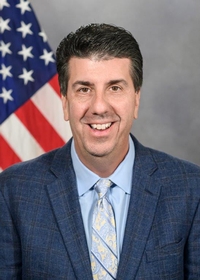
Rep. Joe Ciresi
Sponsored bills
Maddy summaryHB 1305 establishes an independent Office of Child Advocate within Pennsylvania's Department of Human Services to champion children's interests across state care systems. The bill sets qualifications for the Child Advocate (requiring six years in child advocacy/social work, a bachelor's degree, and no conflicts of interest), mandates a four-year term with reappointment options, and requires staff training in trauma-informed care, crisis intervention, and mandated reporter protocols. This office directly affects children in foster care, juvenile justice, early intervention programs, and residential facilities by independently monitoring their welfare and advocating for systemic improvements. The bill amends Pennsylvania’s Human Services Code to formalize this oversight role, ensuring accountability without direct program changes to existing services.
Maddy summaryHB 1325 requires health insurers in Pennsylvania offering dental coverage to report annual "medical loss ratios" (MLRs) for dental policies. This means insurers must calculate the percentage of premium dollars spent directly on dental care (not administrative costs) and submit detailed reports by April 30 each year. The bill applies to all health insurers licensed in Pennsylvania that provide dental policies, whether standalone or bundled with medical coverage. Penalties may be imposed if insurers fail to comply with the reporting requirements or meet the MLR standards.
Maddy summaryHB 1317 increases Pennsylvania's annual cap on entertainment production tax credits from $100 million to $125 million. It also establishes new rules allowing the Department of Revenue to carry forward unused credits: up to 30% for the next fiscal year, 20% for the year after, and 10% for the third year. This directly affects film and entertainment producers seeking tax credits under the Tax Reform Code of 1971. The changes apply to fiscal years beginning July 1, 2025.
Maddy summaryHB 269 amends Pennsylvania's Controlled Substance Act to improve access to overdose response information. It requires the Department of Health to develop free online training materials, posters, and pamphlets about recognizing opioid overdoses and using reversal medications (like naloxone), with the materials available in multiple languages upon request. Specific public entities - including Commonwealth agencies, transit authorities, municipalities, and local transportation organizations - must display the poster in conspicuous public locations, such as bathrooms or lobbies. The Department covers all printing and distribution costs, and entities already displaying equivalent materials may substitute them with prior notice. This bill focuses on education and resource accessibility, not changing drug laws or medication access.
Maddy summaryHB 643 modifies Pennsylvania's realty transfer tax provisions to establish fixed annual transfers of tax revenue. It requires $100 million in transfers for the fiscal year starting July 1, 2027, and $110 million for all subsequent fiscal years. This change directly affects individuals and entities paying real estate transfer taxes in Pennsylvania, as the specified amounts are deducted from the tax revenue pool. The bill specifies the exact dollar amounts and effective dates without altering the tax rate or adding new exemptions.
Maddy summaryHB 316 allows Pennsylvania municipalities to deny building permits to property owners with specific unpaid debts or unaddressed violations. It directly affects owners of real property, particularly corporations or LLCs, who owe unpaid taxes, water/sewer bills, or have serious uncorrected code violations (like failing to fix blight) after six months of notification. The bill requires municipalities to specify the property address and court details in denial notices, prohibits denying permits needed to correct violations, and imposes a $1,000 fine on corporations that fail to disclose such delinquencies when applying for permits. It aims to prioritize blight remediation by linking permit access to property maintenance compliance.
Maddy summaryThis is a symbolic resolution (not a law) designating April 21-25, 2025, as "National Work Zone Awareness Week" in Pennsylvania. It recognizes an existing national campaign focused on promoting driver caution in work zones to reduce crashes, citing data showing 891 fatalities in work zone crashes nationally in 2022. The resolution encourages Pennsylvania motorists to "slow down, pay attention, and use extra caution" in work zones but does not create new laws, funding, or enforceable requirements. It serves purely as a ceremonial acknowledgment of a safety initiative led by transportation organizations.
Maddy summaryThis House Resolution designates April 2025 as "Distracted Driving Awareness Month" in Pennsylvania. It does not create new laws or penalties but formally recognizes and supports existing state and national efforts to reduce distracted driving. The resolution encourages Pennsylvanians to focus on driving safely and discuss distraction risks with others. It aligns with current awareness campaigns led by agencies like PennDOT and the State Police, which already provide safety resources. The designation applies broadly to all residents and drivers in the state.
Maddy summaryThis resolution recognizes April 20-26, 2025, as "National Infertility Awareness Week" in Pennsylvania. It cites statistics showing infertility affects 1 in 8 couples in the U.S., with 9% of men and 11% of women experiencing fertility issues, and notes Pennsylvania lacks state laws requiring fertility treatment insurance coverage (unlike 21 other states). The resolution aims to reduce stigma and increase public understanding of infertility challenges, including emotional and financial burdens. As a symbolic recognition, it does not create new laws or funding but aligns Pennsylvania with national awareness efforts led by groups like RESOLVE.