

Maddy summaryThis bill designates the week of June 7 through 13, 2026, as "Chesapeake Bay Awareness Week" throughout Pennsylvania. It directly affects state residents and officials by encouraging them to hold events and educational programs to highlight the bay's environmental and economic significance. The resolution does not change laws or allocate funds but serves as a symbolic gesture to promote awareness of the Chesapeake Bay watershed.
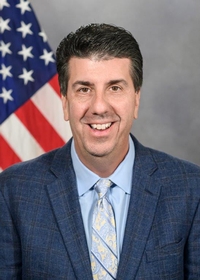
Rep. Joe Ciresi
Sponsored bills
Maddy summaryThis bill designates the week of April 19 through 25, 2026, as "National Infertility Awareness Week" in Pennsylvania. It does not change laws or policies but serves as a symbolic resolution to raise public awareness about infertility issues and reduce associated stigma. The measure is sponsored by multiple state representatives and referred to the Health Committee for consideration. It highlights statistics about infertility prevalence and treatment costs to underscore the importance of awareness, but does not mandate any specific actions or funding.
Maddy summaryThis bill (HR 345) is a symbolic resolution designating July 2026 as "Culinary Arts Month" in Pennsylvania. It does not create new laws or policies, but formally recognizes the culinary arts industry through a commemorative designation. The resolution directly affects no individuals or entities, as it serves only as a ceremonial observance. It was referred to the Labor & Industry committee for consideration.
Maddy summaryThis bill amends Pennsylvania's Tax Reform Code to temporarily exempt the sales tax on protective gear purchased by firefighters, volunteer ambulance workers, and volunteer rescue personnel. The exemption applies specifically to items such as helmets, turnout coats, boots, and respiratory protection units during a six-month period starting on July 1, 2026. To ensure clarity, the legislation requires the Department of Revenue to publish online guidance on how to implement this temporary exclusion. The law defines the equipment and purchaser terms precisely, noting that the tax break applies even if the gear is delivered after the six-month window closes.
Maddy summaryThis bill requires health insurance policies and government programs in Pennsylvania to cover semiannual maintenance and safety checks for complex wheelchairs. It defines complex wheelchairs as custom-designed medical devices that need regular adjustments to meet a user's specific physical needs. The law mandates that these coverage plans pay for the labor and travel costs associated with these evaluations, which can be conducted either in person or via telehealth. By imposing these duties on the Department of Human Services and the Insurance Department, the act ensures that individuals relying on specialized mobility equipment receive consistent care to maintain the device's functionality.
Maddy summaryThis bill introduces a new junior driver's license for 16 and 17-year-olds in Pennsylvania, which automatically converts to a regular license at age 18. Under the proposed rules, junior drivers would generally be prohibited from driving between 11 p.m. and 5 a.m. unless accompanied by a parent, spouse, or guardian. However, the legislation creates an exception allowing these drivers to drive during those hours for school-sponsored activities if they possess a letter from the school confirming the event. If a junior driver is stopped by police without this letter but can later prove they had it, the charges would be dismissed. The law also defines terms like "school-sponsored activity" to include events such as field trips, athletic activities, and club meetings.
Maddy summaryThis bill updates Pennsylvania's State Agency Green Technology Implementation Act to broaden the scope of technologies that state agencies can test, specifically adding "emerging" and "cost-reductive" options alongside existing energy-efficient ones. The legislation grants the Secretary of General Services the authority to approve pilot programs for new technologies that meet high-performance building standards and have been independently certified or previously used by another state government. By requiring proof of energy savings and independent assessments for cost-reduction projects, the bill aims to ensure that state agencies only adopt solutions that are validated for their effectiveness before wider implementation.
Maddy summaryThis House Resolution designates the week of March 9 through 13, 2026, as "Civic Learning Week" throughout Pennsylvania to highlight the importance of civic education. The measure is a symbolic recognition that does not create new laws, funding, or mandatory requirements for schools or government agencies. It acknowledges the role of civic education in preparing students for democratic participation and notes that Philadelphia will host a national forum on civic learning during that week. The resolution is introduced by multiple legislators and referred to the Committee on Education for consideration.
Maddy summaryHB 1780 amends Pennsylvania's Commerce and Trade laws to require businesses accepting electronic payments to clearly disclose all associated fees to consumers. It directly affects merchants and service providers who process credit/debit card transactions, mandating transparent fee structures. The key provision requires payment processors to list all fees (like interchange, assessment, or processing fees) upfront during checkout or in billing statements. This aims to prevent hidden costs for consumers by making fee information readily available and understandable.
Maddy summaryHB 1600 amends Pennsylvania's Human Services Code to establish specific requirements for the Keystone STARS Program, a quality rating system for child-care facilities. The bill requires participating child-care centers and family child-care homes to display their STAR-level rating on their public website and provide it to parents at enrollment. It also mandates that the state department issue visible placards with facilities' ratings and develop a rubric outlining how providers can improve their rating through staff training, program quality, family partnerships, and leadership. This directly affects licensed child-care providers and parents seeking early childhood education services.