

Maddy summaryThis bill creates a new program allowing Pennsylvania drivers to voluntarily add emergency contacts and specific medical conditions to their official records. Participants can list up to two emergency contacts and report conditions such as deafness, autism spectrum disorder, or other communication impediments certified by a healthcare provider. The information is intended to assist law enforcement during official encounters, and the program is free of charge with no fees for enrollment. While the data is protected from public inspection under state law, the department must notify police agencies about the program's existence.
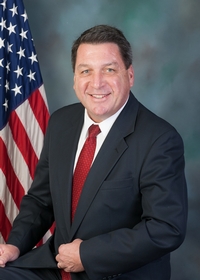
Rep. Craig Staats
Sponsored bills
Maddy summaryThis bill amends the Pennsylvania Election Code to require the Secretary of the Commonwealth to create a public website for reporting election results. The site must display data for each race showing how many precincts have reported their votes and how many remain unreported, with this information available from the election day until all results are certified. The change directly affects the Secretary of the Commonwealth's duties and provides voters with real-time visibility into election progress. The law is set to take effect 60 days after being signed.
Maddy summaryThis bill proposes adding a new crime in Pennsylvania that makes it illegal to use social media platforms to commit, encourage, or help others commit a felony. It defines social media sites as online spaces where users primarily post their own content, while excluding traditional news websites and email services. If someone is convicted of using these platforms to facilitate a felony, they could face a fine of up to $15,000, imprisonment for up to seven years, or both. The law treats each separate instance of using social media for this purpose as a distinct crime.
Maddy summaryThis bill establishes a curfew law for minors under 18 in Pennsylvania municipalities, making it a summary offense for them to remain in public places during designated curfew hours. The legislation allows minors to avoid penalties if they are accompanied by an adult, traveling by motor vehicle or public transit, going to or from work without detours, responding to an emergency, or attending or returning from school, religious, or recreational activities. Local governments will have the authority to set specific curfew times and enforce these rules within their jurisdictions. The law defines "minor" as anyone under 18 and "adult" as anyone 18 or older, and it will become effective 60 days after passage.
Maddy summaryThis bill creates a new crime called looting in Pennsylvania, specifically targeting theft that occurs during or right after natural disasters, lawful protests, or civil disobedience demonstrations. It defines looting as committing burglary, retail theft, or organized retail theft during these specific events and classifies the offense as a second-degree felony. The legislation includes a detailed list of what counts as a natural disaster, such as hurricanes, floods, fires, and earthquakes. If passed, the law will take effect 60 days after it is signed.
Maddy summaryThis bill amends the existing Pharmacy Audit Integrity and Transparency Act to refine how pharmacy audits and fees are handled. It clarifies that certain insurance supplements are excluded from specific terms and changes the notice period for additional fees from the time of claim adjudication to thirty days before the fees are applied. The legislation also updates definitions to refer to "generic" drugs instead of "general" ones and expands the scope of federal employee benefit protections. Additionally, it adjusts reporting requirements for pharmacy benefit managers and the state agency overseeing these audits.
Maddy summaryHB 2064 amends the Older Adults Protective Services Act to update how financial institutions handle accounts for older adults. The bill removes specific language regarding beneficiaries and adjusts numerical limits on account protections from fifteen to seven. These changes directly affect banks and other financial entities by modifying the rules they must follow when managing funds for elderly clients.
Maddy summaryThis resolution designates February 11 through 17, 2024, as Future Business Leaders of America Week in Pennsylvania. It directly honors the nonprofit organization FBLA, which supports students in developing business and leadership skills through various chapters across the state. The measure serves as a commemorative recognition of the group's history and mission rather than enacting new laws or policies.
Maddy summaryThis bill requires private health insurers and state-managed health plans to cover biomarker testing when it is used to diagnose, treat, or monitor a specific disease or condition. The legislation defines biomarker testing as the analysis of tissue, blood, or other biological samples to identify indicators of biological processes, while explicitly excluding coverage for general screening purposes. Coverage for these tests must follow the same rules as other medical services, including standard cost-sharing and medical necessity reviews, and the changes will take effect 180 days after the bill is signed.
Maddy summaryThis bill modifies Pennsylvania's game laws to protect the privacy of law enforcement officers. It directly affects game wardens and other officers who issue citations by prohibiting them from listing their home addresses on official documents like tickets or special permits. The key provision adds a specific rule to the statute that bans the inclusion of personal residential information on any business issued by an officer. This change aims to mitigate potential safety risks for officers without altering their general enforcement duties or hunter registration requirements.