

Maddy summaryHB 1238 requires Pennsylvania public schools (including charter and cyber charter schools) to adopt policies restricting student mobile device use during instructional time. School boards must create written policies specifying secure storage options (like lockboxes), retrieval procedures, and parent-communication methods during class. Exceptions allow device use for medical needs, disability accommodations, language learning, volunteer emergency duties, or teacher-approved educational purposes. The bill defines "instructional time" as class periods, excluding breaks or lunch, and prohibits school-owned devices from being covered under this restriction. This policy applies to all students in school buildings during instructional hours.
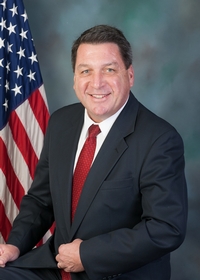
Rep. Craig Staats
Sponsored bills
Maddy summaryHB 1193 proposes a constitutional amendment to update voter qualifications in Pennsylvania. It would lower the voting age from 21 to 18, reduce residency requirements to 30 days for state and local election districts (from 90 and 60 days), and require government-issued ID for in-person voting and mail-in ballots (with signature matching). Voters must also register at least 30 days before an election, with registration requiring pre-confirmation of eligibility. The amendment must be approved by the General Assembly and then by voters in a statewide election.
Maddy summaryThis Pennsylvania House Resolution designates April 14-18, 2025, as "Local Government Week" and April 16, 2025, as "Local Government Day" within the state. It formally recognizes the role of local government units - such as counties, cities, townships, boroughs, and municipal authorities - by commending officials and employees who provide essential services to residents. The resolution highlights that Pennsylvania's local governments serve over 13 million people through nearly 166,000 employees and thousands of volunteer officials. It has no binding policy effect and serves solely as a symbolic acknowledgment of local government contributions.
Maddy summaryHB 1174 amends Pennsylvania law governing meetings for condominiums, cooperatives, and planned communities. It requires annual meetings to be scheduled with at least 21 days' notice (previously 10-60 days) and mandates written consent for electronic meeting notices. The bill also requires pre-election sessions for board candidates if more candidates apply than positions available, and allows meetings to be recorded with advance announcement, with recordings kept for six months. These changes directly affect all community associations and their unit owners by standardizing meeting procedures and enhancing transparency.
Maddy summaryHR 180 is a ceremonial resolution recognizing April 13-19, 2025, as "Public Safety Telecommunicators Week" in Pennsylvania. It honors telecommunicators who handle 911 calls, process approximately 14.5 million emergency requests annually, and provide critical support during crises. The resolution does not create new laws or funding but formally acknowledges their service through a designated week of recognition. This applies directly to Pennsylvania’s public safety telecommunicators, who serve as first responders during emergencies.
Maddy summaryThis Pennsylvania House Resolution (HR 50) symbolically designates March 25, 2025, as "Greek Independence Day" within the state. It does not create new laws or affect any policies, programs, or individuals. The resolution honors Greek heritage and historical ties between Greece and the U.S., referencing Greek-American contributions to Pennsylvania's culture and history. As a commemorative gesture, it has no binding effect or practical impact on residents or government operations.
Maddy summaryHB 1158 designates Election Day (the first Tuesday after the first Monday in November) as a legal holiday in Pennsylvania, meaning state offices and many businesses would close. It also requires county election boards to prioritize using public buildings like schools and municipal offices for polling places whenever possible, rather than private locations. If public buildings aren't available, the bill allows for portable polling places or selecting adjacent public buildings that are directly accessible. This bill directly affects all Pennsylvania voters and election officials managing polling locations.
Maddy summaryHB 1162 amends Pennsylvania's Election Code to clarify election procedures, primarily affecting county election boards, election officials, and voters. The bill specifically changes when provisional ballots can be counted (they cannot be counted if an absentee or mail-in ballot was received), updates definitions of "canvass" and "pre-canvass," and sets requirements for election materials handling. It also clarifies that county boards must ensure election materials are delivered on time or face penalties for judges of elections who fail to comply. These procedural changes aim to standardize election administration and prevent duplicate voting across in-person, absentee, and mail-in voting methods. The bill focuses on technical adjustments to election processes rather than substantive policy changes.
Maddy summaryHB 1160 requires Pennsylvania county election boards to conduct post-election verification of electronic voting systems. Specifically, it mandates a random statistical sample recount of at least 2% of votes cast (or 2,000 votes, whichever is smaller) using different devices than those used in the election. Additionally, county boards must randomly select three precincts per election for a full hand count of all ballots. These requirements apply to all general, primary, and municipal elections in Pennsylvania.
Maddy summaryThis bill designates Bridge Key 44210 on State Route 2001 over Kreutz Creek in Windsor Township, York County, as the "Private Myles Ness Memorial Bridge." It commemorates Myles Albert Ness, a York County native who served as a private in the U.S. Army during World War I and died in 1958. The bill requires the Pennsylvania Department of Transportation to install and maintain directional signs naming the bridge. This is a ceremonial resolution with no policy changes or financial impact.