

Maddy summaryHB 1688 updates Pennsylvania's unemployment compensation law to adjust the calculation method for weekly benefit amounts. It sets a minimum weekly benefit of $68 (previously lower) and revises the wage-to-benefit table, linking higher average quarterly wages to increased weekly payments (e.g., wages of $1,688-$1,712 now yield $68 weekly). This directly affects unemployed Pennsylvania workers who qualify for state unemployment benefits, ensuring their payments align with current wage levels. The bill modifies specific sections of the 1936 law governing benefit rates without changing eligibility rules or employer contributions.
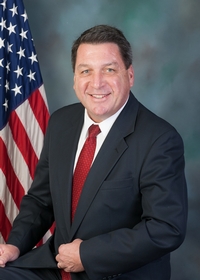
Rep. Craig Staats
Sponsored bills
Maddy summaryHB 1691 amends Pennsylvania's unemployment compensation law to adjust the earnings requirement for workers seeking benefits after certain job separations. It increases the required earnings from six to fifteen times the weekly benefit rate in the 10 weeks following a disqualifying separation (e.g., quitting for personal reasons or being terminated). The bill also adds a provision exempting workers who took a leave of absence and made reasonable efforts to return to work. This change directly affects unemployed workers who left jobs under disqualifying circumstances but meet the new earnings threshold. The bill takes effect six months after enactment.
Maddy summaryHB 1683 designates Bridge Key 12334 on State Route 2012 over McElhattan Creek in Wayne Township, Clinton County, as the Master Sergeant Robert F. Johnson Memorial Bridge. The bill commemorates Master Sergeant Robert F. Johnson's U.S. Air Force service, including his role in NASA's Gemini program recovery operations and over 350 parachute jumps. The Pennsylvania Department of Transportation will install and maintain signs displaying the new bridge name. This is a purely commemorative measure with no policy changes or direct impact on constituents beyond the bridge signage.
Maddy summaryHB 1650 establishes Pennsylvania's Home Preservation Grant Program, administered by the Department of Community and Economic Development. It provides grants to local governments (counties, cities, townships) to fund repairs and improvements on existing owner-occupied homes, targeting households earning 80-120% of the area median income. Grants can cover up to $50,000 per unit for habitability fixes, energy/water efficiency upgrades, or accessibility modifications, with local governments allowed to use up to 10% of funds for administration. Applications must demonstrate experience in housing rehabilitation and include plans for using funds per the bill's requirements, with priority given to projects leveraging additional funding sources.
Maddy summaryHB 1672 creates a $2,500 annual tax credit against individual income tax for active paid or volunteer firefighters and emergency medical service (EMS) providers in Pennsylvania. It directly affects qualifying professionals working in fire or EMS roles as defined by state law, including career responders and volunteers. The credit reduces tax owed on wages earned, applies for up to three years (the year they become qualified plus the next two), and requires proof of eligibility to the Department of Revenue. The credit expires for new applicants after 2028 and ends entirely by December 31, 2031.
Maddy summaryHB 1661 amends the Health Care Facilities Act to require licensed health care facilities - including hospitals and clinics - to report costs incurred when providing health care to individuals classified as "illegal migrants" under the bill. This reporting obligation applies directly to facilities operating under the Act, without altering existing emergency care requirements for all patients. The bill specifies a new administrative duty for facilities to document and submit these costs but does not detail reporting frequency, format, or data usage. The legislation focuses solely on tracking these expenses, with no changes to eligibility for care.
Maddy summaryHR 263 is a noncontroversial resolution expressing condolences and honoring Alec Campbell, a park resource ranger with the Department of Conservation and Natural Resources who died while on duty. It does not create new laws or policies but formally recognizes his service and sacrifice. The resolution directly affects the memory of Alec Campbell and his family by providing a formal expression of respect from the legislative body. It is purely ceremonial and does not impose any obligations or changes on government operations.
Maddy summaryHB 1649 eliminates school district property taxes on residential and commercial properties in Pennsylvania. It replaces these taxes with two new revenue sources: a 2% increase to county-level sales, use, and occupancy taxes (with some exclusions like clothing and candy removed), and a local income tax of up to 1.88% on resident taxpayers' earned income and retirement benefits (excluding Social Security). The bill establishes two funds - the School District Property Tax Elimination Fund (to distribute sales tax revenue to school districts) and the School District Emergency Fund - and requires landlords to reduce rents for tenants by the amount of eliminated property taxes. This directly affects property owners, school districts, and landlords/tenants, shifting funding responsibility from property taxes to broader consumption and income-based taxes.
Maddy summaryThis bill renames Bridge Key 28737 - located at 13th Street over Bushkill Creek in Easton, Northampton County - as the Honorable James F. Prendergast Memorial Bridge. It honors James F. Prendergast, a WWII Marine Corps veteran (Navy Cross recipient), Easton lawyer, and 20-year Pennsylvania State Representative (1958-1978). The bill requires the Department of Transportation to install signs displaying the new name on the bridge. It is a commemorative designation with no policy or funding changes.
Maddy summaryHB 704 creates a new Neurodegenerative Disease Research Program and a dedicated funding mechanism within the Department of Health to support research on conditions like Alzheimer's and Parkinson's. The bill directs the Department of Health to manage the program and administer the Neurodegenerative Disease Research Program Fund, which will provide grants for scientific studies. This legislation directly affects researchers, medical institutions, and patients seeking treatments for neurodegenerative diseases by establishing a formal structure for funding and coordinating research efforts. The bill passed the legislature in June 2025 and is now pending final action by the Governor.