

Maddy summaryThis bill creates a new criminal offense in Pennsylvania for unintentionally causing death while driving under the influence of alcohol or drugs. It directly affects drivers who kill someone while impaired, raising the penalty from a second-degree felony to a mandatory first-degree felony. The law also sets specific minimum prison terms, such as five years for a first offense and longer sentences for repeat offenders or those with prior DUI convictions.
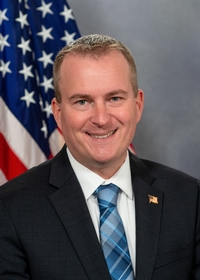
Rep. Brian Munroe
Sponsored bills
Maddy summaryHB 2131 amends Pennsylvania's electric utility law to change how customers are handled when their electricity supplier contracts expire. If a customer doesn't secure a new contract with their current electricity supplier before their existing agreement ends, the supplier must automatically transfer them back to the default service provider at the provider's standard rate. This applies to residential and business customers who fail to proactively renew their electricity contracts. The bill requires utilities to submit compliance plans within 60 days to implement this automatic reconnection process, effective 60 days after enactment.
Maddy summaryHB 41 amends Pennsylvania's Public School Code to establish a process for determining whether interscholastic athletic playoffs and championships should be separated for public schools (boundary schools) versus charter, parochial, or private schools (nonboundary schools). It requires the Pennsylvania Interscholastic Athletic Association (PIAA) to hold public meetings in each district, accept written testimony and public comments, and document all proceedings before making a decision. The bill mandates that the PIAA board must publicly discuss all relevant testimony, fiscal impacts, and sport-specific considerations before voting on the change or deciding no change is needed. The association must then provide a written decision with justification to the oversight committee within five days of the meeting. This bill affects all Pennsylvania schools participating in PIAA athletics by defining how decisions about playoff structures will be made.
Maddy summaryThis Pennsylvania House Resolution officially designates the week of May 10 through 16, 2026, as "National Police Week" and May 15, 2026, as "Peace Officers Memorial Day" within the state. The measure serves to honor law enforcement officers who have died in the line of duty and aligns with the federal observances established by the U.S. Congress. It does not create new laws or funding but rather establishes a symbolic recognition to acknowledge the service and sacrifices of police officers in Pennsylvania.
Maddy summaryThis House Resolution honors the memory of five law enforcement officers who died in the line of duty in 2025. It specifically names Patrolman Andrew Duarte and Police Officers Mark Baker, Cody Becker, Isaiah Emenheiser, and Andy Chan, listing their departments and dates of death. The measure directs the Pennsylvania House of Representatives to express sympathy to the families and friends of these fallen officers. As a commemorative resolution, it does not create new laws or change existing policies.
Maddy summaryHB 237 expands Pennsylvania's death benefits for first responders' families to include cases where a firefighter, officer, or emergency worker dies from mental health conditions linked to on-duty trauma. It creates a legal presumption of line-of-duty death if the person died while influenced by a diagnosed psychiatric disorder from traumatic events (like crime scenes or mass casualties) or within 45 days of such exposure with an undiagnosed condition. The bill adds specific definitions for "personal injury sustained in the line of duty" to include PTSD and related disorders, and clarifies that traumatic events cover incidents involving serious injury, minors, or life threats. Benefits apply retroactively to deaths occurring on or after January 1, 2019, regardless of when the trauma happened.
Maddy summaryHB 2151 requires Pennsylvania's Center for Local Government Services to create a model zoning ordinance for data centers within six months. The model must include specific rules like building size limits, minimum distances from residential areas, landscape buffers, noise restrictions, and requirements for water/energy use. This helps local governments (townships, boroughs, cities) regulate data center development to address community concerns. Municipalities can request the Center's assistance when updating zoning rules for data centers, and the model must be updated annually.
Maddy summaryHB 2150 requires data centers in Pennsylvania to annually report their energy and water usage, including monthly consumption, energy sources, water sources, efficiency measures, and waste heat recovery, starting July 1, 2027. Data centers must submit detailed reports to the Department of Environmental Protection, covering specifics like peak energy use, water for cooling, and future projections. Non-compliant data centers face daily penalties of $10,000 until reports are submitted, with collected fines funding low-income energy assistance programs. The Department will publish an annual summary of consumption trends and environmental impacts for public and legislative review.
Maddy summaryHB 980 changes the composition of Pennsylvania's State Board of Pharmacy by increasing the number of licensed pharmacists on the board from five to six and adding specific appointment requirements. It requires two pharmacist members from independent retail pharmacies, two from large retail pharmacy chains (with five or more locations), and two from hospital/acute care settings, plus one pharmacy technician position that rotates between settings. The bill also establishes term limits: pharmacy technicians serve one six-year term, while other members may serve up to two consecutive terms. This directly affects the board's membership structure and the appointment process for pharmacists and pharmacy technicians in Pennsylvania.
Maddy summaryThis bill would create a state-funded paid family and medical leave program for eligible workers needing time off for health issues, childbirth, or family care. It establishes a dedicated state fund to cover leave costs, creates an advisory board to guide implementation, and assigns oversight to the Department of Labor. The program would directly affect employees in the state who qualify for these leave types, requiring employers to provide the benefits. The bill also specifies penalties for businesses failing to comply with the new requirements.