

Maddy summaryThis House Resolution honors the memory of five law enforcement officers who died in the line of duty in 2025. It specifically names Patrolman Andrew Duarte and Police Officers Mark Baker, Cody Becker, Isaiah Emenheiser, and Andy Chan, listing their departments and dates of death. The measure directs the Pennsylvania House of Representatives to express sympathy to the families and friends of these fallen officers. As a commemorative resolution, it does not create new laws or change existing policies.
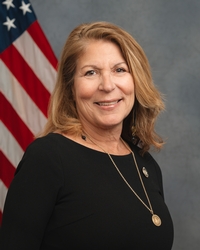
Rep. Tina Marie Davis
Sponsored bills
Maddy summaryThis bill creates a new licensing category called the "Philadelphia 250 Permit" for alcohol establishments in Philadelphia and other municipalities that choose to participate. To qualify, businesses such as restaurants and breweries must pay a $500 fee, complete a specific nighttime safety training program, and have their application details posted online. Local governments have the authority to object to individual permit applications, and the state board can revoke a permit immediately if a business operates outside its approved scope. The legislation establishes these rules within the existing Liquor Code and allows participating cities to adopt ordinances to enable the program.
Maddy summaryThis House Resolution officially recognizes the week of April 20 through 24, 2026, as "National Work Zone Awareness Week" in Pennsylvania. The resolution encourages drivers to exercise extra caution, slow down, and pay attention when traveling through roadway construction zones to improve safety for motorists, passengers, and construction workers. It does not create new laws or funding but serves as a formal acknowledgment of an existing national safety campaign aimed at reducing work zone accidents and fatalities. The resolution highlights statistics on work zone crashes and injuries to underscore the importance of the awareness initiative.
Maddy summaryThis bill proposes allowing Pennsylvania to pay for special personal care services provided by a family member to a recipient of Medical Assistance. To make this possible, the state would need to request permission from the federal Centers for Medicare and Medicaid Services to cover these costs. The law specifies that the state cannot begin paying for these services until it receives approval from the federal government. The changes would take effect 180 days after the bill is signed into law.
Maddy summaryHB 2151 requires Pennsylvania's Center for Local Government Services to create a model zoning ordinance for data centers within six months. The model must include specific rules like building size limits, minimum distances from residential areas, landscape buffers, noise restrictions, and requirements for water/energy use. This helps local governments (townships, boroughs, cities) regulate data center development to address community concerns. Municipalities can request the Center's assistance when updating zoning rules for data centers, and the model must be updated annually.
Maddy summaryHB 2150 requires data centers in Pennsylvania to annually report their energy and water usage, including monthly consumption, energy sources, water sources, efficiency measures, and waste heat recovery, starting July 1, 2027. Data centers must submit detailed reports to the Department of Environmental Protection, covering specifics like peak energy use, water for cooling, and future projections. Non-compliant data centers face daily penalties of $10,000 until reports are submitted, with collected fines funding low-income energy assistance programs. The Department will publish an annual summary of consumption trends and environmental impacts for public and legislative review.
Maddy summaryHB 2087 amends Pennsylvania's Workers' Compensation Act to extend coverage to volunteer firefighters, ambulance corps members, and rescue squad volunteers who provide regular operational support (such as fundraising, equipment maintenance, or administrative tasks) but do not respond to emergency calls. The bill adds these volunteers to the definition of "employe" under the act, requiring such support to be conducted regularly and approved by the municipality. It explicitly excludes social members who are not involved in operational duties. This change ensures these volunteers can receive workers' compensation for work-related injuries sustained while performing their support roles. The bill takes effect 60 days after enactment.
Maddy summaryThis bill amends Pennsylvania's Unfair Trade Practices and Consumer Protection Law to explicitly define "dynamic pricing" as a potential unfair practice. It specifically targets the use of artificial intelligence to vary prices for essential goods or services within a 24-hour period based on demand. The legislation includes detailed definitions for artificial intelligence, generative AI, and bona fide pricing to clarify what constitutes deceptive behavior versus legitimate pricing strategies. By adding these specific terms to the law, the bill aims to provide clearer guidance for regulators and businesses regarding AI-driven price fluctuations.
Maddy summaryThis House Resolution designates April 25, 2026, as "Diabetic Eye Screening Day" in Pennsylvania to raise awareness about diabetic retinopathy, a leading cause of blindness among people with diabetes. The resolution does not create new laws or funding but serves as a symbolic recognition of free and low-cost eye screening events organized by various medical institutions across the state. It highlights the importance of early detection for diabetic eye conditions, which often show no symptoms until vision damage becomes irreversible. The measure is sponsored by multiple state representatives and focuses on promoting public health awareness rather than implementing policy changes.
Maddy summaryThis bill updates Pennsylvania's Capital Facilities Debt Enabling Act to clarify what counts as a redevelopment assistance capital project and removes a spending cap on housing construction. It defines these projects as those that generate economic activity, have regional impact, and include at least 50% non-state funding, while explicitly excluding highways, bridges, and waste or water facilities. Additionally, the legislation repeals a specific provision that previously limited the use of funds for building housing units to $50 million. These changes aim to provide clearer guidelines for borrowing money to fund large-scale community and economic development initiatives.