

Maddy summaryThis Pennsylvania House Resolution (HR 62) symbolically recognizes April 5-11, 2025, as "Week of the Young Child" in Pennsylvania. It acknowledges the National Association for the Education of Young Children's (NAEYC) annual observance, which highlights early childhood education, development, and the importance of quality early learning opportunities for children birth through age eight. The resolution does not create new laws or allocate funding; it solely encourages public awareness and community support for early childhood programs. It aligns with NAEYC's longstanding tradition (since 1971) of focusing attention on young children's needs and their families.
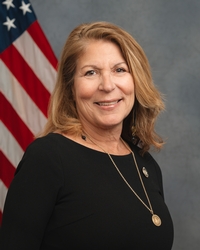
Rep. Tina Marie Davis
Sponsored bills
Maddy summaryThis bill authorizes Pennsylvania to join the National Popular Vote Interstate Compact, an agreement where participating states award their electoral votes to the candidate who wins the national popular vote. If the compact reaches 270 electoral votes (a majority), Pennsylvania would allocate its electoral votes to the national popular vote winner instead of the candidate who wins Pennsylvania's popular vote. The bill requires Pennsylvania to continue holding its usual statewide popular election for president, but the state's electors would be appointed based on the aggregated national vote totals across all compact states. This change would only take effect once the compact is operational with enough states to control a majority of electoral votes.
Maddy summaryHB 407 creates a new criminal offense for unauthorized location tracking in Pennsylvania, making it illegal to install or use technology (such as apps or devices) to monitor someone's location without their consent. Exceptions include law enforcement during investigations, parents tracking minor children, guardians monitoring incapacitated persons, and other specific scenarios like fleet vehicle tracking with proper consent. The bill does not change existing stalking laws but adds this new provision to address technology-enabled harassment. It directly affects individuals who might use location-tracking tools to harass others, while clarifying permitted uses for safety and legal purposes.
Maddy summaryThis resolution recognizes March 14, 2025, as "Black Midwives Day" in Pennsylvania. It symbolically honors Black midwives' historical and ongoing contributions to maternal health while highlighting persistent disparities, including that Black women in Pennsylvania faced nearly three times the pregnancy-related mortality rate of White women in 2020. The resolution aims to raise awareness about systemic barriers like discrimination, maternity care deserts, and preventable maternal deaths, aligning with the National Black Midwives Alliance's campaign. It does not create new laws or allocate funding but serves as a statement of recognition.
Maddy summaryHR 113 is a resolution recognizing April 26, 2025, as "Diabetic Eye Screening Day" in Pennsylvania. It highlights diabetic retinopathy - a diabetes complication causing vision loss - and encourages free eye screenings by ophthalmologists on that date to raise awareness. The resolution does not create new laws or funding but symbolically supports early detection efforts for Pennsylvanians with diabetes. It directly affects residents at risk of vision loss from untreated diabetic eye disease by promoting accessible screenings. The bill was adopted by the House on April 7, 2025.
Maddy summaryHB 1121 allows private providers of applied behavior analysis (ABA) services to work with students who have autism or developmental delays during school hours, as specified in their Individualized Education Program (IEP). Schools must permit this access without charging fees or creating barriers, provided parents give written consent and the services align with the student’s IEP. Private providers must coordinate with school staff, hold required certifications, and be supervised by a nationally certified behavior analyst. The bill requires schools to accommodate these services without disrupting classrooms and prohibits discrimination or retaliation against families using private pay services.
Maddy summaryHB 1150 raises Pennsylvania's minimum wage to $15 per hour starting January 1, 2026, with annual increases thereafter. It also establishes a phased timeline for tipped employees: requiring higher base cash wages starting in 2025 (e.g., $5.00/hour after June 2025) and mandating that by July 1, 2029, employers must pay the full minimum wage without relying on tips. The bill ensures all tips received by employees remain their property and cannot be used by employers to meet minimum wage requirements. This directly affects most private-sector employers and tipped workers in Pennsylvania, particularly in hospitality and service industries.
Maddy summaryHB 1070 requires all health insurance policies covering maternity benefits in Pennsylvania to provide 24 additional hours of elective postpartum observation and care beyond the existing 48-96 hours of inpatient coverage, starting January 1, 2026. It also prohibits hospitals from involuntarily discharging postpartum patients or newborns between 10 p.m. and 8 a.m., with billing under "observation status" if discharge is refused. The bill directly affects mothers, newborns, hospitals, and health insurers by extending coverage duration and restricting nighttime discharges. The Department of Human Services must seek a federal waiver to extend government program coverage for this additional 24-hour period.
Maddy summaryThis bill establishes a grant program to provide free menstrual products (such as pads and tampons) in Pennsylvania public schools. Schools with 25% or more students eligible for free or reduced-price lunch programs can apply for grants to purchase these products and install dispensers or disposal units. Recipients must report annual spending on products and dispenser maintenance to the state. The program is funded by a state appropriation for the 2025-2026 fiscal year.
Maddy summaryThis bill establishes a three-year pilot program (starting 2026-2027) within Pennsylvania public schools to teach students about the political, economic, and social contributions of LGBTQ+ individuals. School districts, charter schools, and nonpublic schools may apply to participate by submitting proposals to the Department of Education by May 15, 2026. The Department must develop guidelines by March 15, 2026 in consultation with LGBTQ+ organizations and prioritize curricula from groups with at least 50% LGBTQ+ leadership. Participating schools must submit annual reports on implementation, and the Department will contract an independent evaluation to assess the program's effectiveness, with results published online.