

Maddy summaryHB 1234 amends Pennsylvania's Human Services Code to require public assistance programs to cover the cost of blood pressure monitors for eligible recipients. This change directly affects individuals enrolled in state public assistance programs who need blood pressure monitoring for health management. The bill adds blood pressure monitors to the list of covered medical equipment under the public assistance program, ensuring these devices are provided without cost to recipients. It does not change eligibility requirements but expands existing coverage to include this specific monitoring tool. The bill passed final passage on July 1, 2025, and was referred to the Health & Human Services committee.
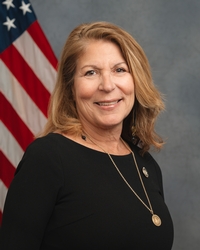
Rep. Tina Marie Davis
Sponsored bills
Maddy summaryThis resolution designates September 2025 as "International Underground Railroad Month" in Pennsylvania. It is a commemorative measure with no binding legal effect, intended to honor the historical significance of the Underground Railroad network. The resolution does not create new programs, alter laws, or directly affect any individuals or entities. It was adopted by the Pennsylvania House of Representatives on July 7, 2025.
Maddy summaryHB 1694 creates a tax amnesty program under Pennsylvania's Tax Reform Code for fiscal year 2025-2026, allowing eligible taxpayers to settle past tax debts without penalties or interest. The program applies to unpaid taxes (including interest and fees) delinquent between 2020-2024, specifically for taxpayers who filed returns but underreported, failed to file, or have unknown liabilities. Taxpayers must file required returns and pay the full tax amount during a 90-day amnesty period ending June 30, 2026, and cannot participate in future amnesty programs. Excluded are taxpayers under criminal investigation or prosecution for tax-related offenses. This bill directly affects individuals and businesses with overdue tax obligations from 2020-2024.
Maddy summaryHB 799 requires businesses with more than 50 full-time employees (working 40+ hours weekly) in Pennsylvania to display or provide online a standardized workplace posting about veteran resources. The posting must include contact information for state and federal veteran benefits, the VA Crisis Line, and local county veterans affairs offices. Employers can meet this requirement by placing the posting in a visible location or on an employee-accessible company website. The Pennsylvania Department of Labor and Industry will create and maintain this standardized posting on its public website. The law took effect on July 7, 2025, with specific provisions requiring the posting to be implemented within 180 days.
Maddy summaryHB 309 amends Pennsylvania's Osteopathic Medical Practice Act (1978) to update licensing rules for osteopathic physicians and related healthcare providers. It changes registration requirements from annual to biennial (every two years), clarifies rules for visiting team physicians at sports events, and adjusts continuing medical education requirements. The bill directly affects licensed osteopathic physicians, nonresident practitioners, medical students, and healthcare facilities employing osteopathic staff. Signed into law on July 7, 2025 (Act No. 29), it streamlines administrative processes without creating new licensing barriers.
Maddy summaryHB 865 amends Pennsylvania's military education benefit programs to clarify definitions, eligibility rules, and procedures for recovering funds. It directly affects Pennsylvania military service members and their families who use the Educational Assistance Program and Military Family Education Program for education expenses. Key changes include updating eligibility criteria and establishing clearer processes for recouping grant payments if recipients no longer meet requirements. The bill, now Act No. 32 of 2025, was signed into law on July 7, 2025.
Maddy summaryHB 354 requires Pennsylvania school entities to implement "What Is Your Pennsylvania Story" guidelines, a program designed to collect and share student and community narratives about Pennsylvania's history and culture. The bill directly affects all public and nonpublic schools, including charter schools, by mandating participation in this storytelling initiative. The Department of Education must develop and enforce these guidelines, including standards for content and submission processes. The bill became law on July 7, 2025, after receiving final approval from the governor.
Maddy summaryHR 142 requires the Joint State Government Commission to study how juvenile detention centers operate in our state and issue a report with best practices and recommendations. The study will assess current management approaches to identify effective strategies for running these facilities. This resolution directly affects juvenile detention centers by mandating a formal review of their operational standards.
Maddy summaryHB 1100 amends Pennsylvania's Human Services Code to allow public assistance recipients to use their benefits to purchase diapers and menstrual hygiene products through a new waiver program. This directly affects low-income individuals and families enrolled in public assistance programs who currently cannot use their benefits for these essential items. The key provision adds diapers and menstrual hygiene products to the list of eligible purchases under an administrative waiver, changing the existing code to expand access to basic necessities. The bill does not change benefit amounts or eligibility criteria but creates a new pathway for purchasing specific hygiene products. It passed the legislature in June 2025 and was referred to the Health & Human Services committee for implementation.
Maddy summaryHB 1650 establishes Pennsylvania's Home Preservation Grant Program, administered by the Department of Community and Economic Development. It provides grants to local governments (counties, cities, townships) to fund repairs and improvements on existing owner-occupied homes, targeting households earning 80-120% of the area median income. Grants can cover up to $50,000 per unit for habitability fixes, energy/water efficiency upgrades, or accessibility modifications, with local governments allowed to use up to 10% of funds for administration. Applications must demonstrate experience in housing rehabilitation and include plans for using funds per the bill's requirements, with priority given to projects leveraging additional funding sources.