

Maddy summaryHB 2147 updates Pennsylvania's Liquor Code to allow distilleries established before January 1, 1885, to obtain a "distillery of historical significance" license. This license permits these historic operations to manufacture and sell liquor to the Pennsylvania Liquor Control Board, licensed entities, and the public, without the previous 20,000-gallon annual production limit. Distilleries can exchange their existing distillery licenses for this new license without paying a fee, while maintaining all rights under a standard distillery license. The bill removes the requirement for continuous operation since 1885 to qualify, making it easier for historic distilleries to retain or convert their licenses.
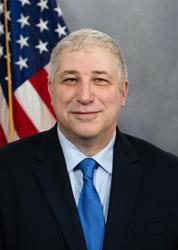
Rep. Jim Prokopiak
Sponsored bills
Maddy summaryHB 2169 amends Pennsylvania's Fiscal Code to update terminology in funding provisions for special education schools. It replaces references to "approved private school" with "approved special education school" in Section 1923(5), which governs how funds from the Public School Code (Section 2509.8) are allocated. The bill directly affects approved special education schools with day tuition under $32,000, requiring funding to be no less than 175% of the 2015-2016 allocation. This is a technical correction to align statutory language with current educational terminology, with no change to the underlying funding mechanism or eligibility criteria.
Maddy summaryHB 2167 is a purely editorial amendment to Pennsylvania's Public School Code of 1949. It updates references from "approved private school" to "approved special education school" in multiple sections (including Section 1376) that govern funding for students with disabilities. The bill makes no changes to funding formulas, payment amounts, or eligibility rules - only correcting outdated terminology to specifically reference special education schools. This adjustment ensures the law accurately reflects the type of institutions providing specialized education services.
Maddy summaryHB 2164 would create a program allowing family members of Pennsylvania medical assistance recipients to become certified complex care assistants. These family members would provide specific medical services at home - such as feeding, catheter care, and medication administration - under a registered nurse's supervision after completing 75 hours of training and passing a competency evaluation. The program targets recipients under 21, those eligible for private duty nursing, or those needing both services for medical reasons, with home health agencies reimbursed at a minimum of $45 per hour. It explicitly requires the services to supplement, not replace, existing private duty nursing under the medical assistance program.
Maddy summaryHB 1615 amends Pennsylvania laws related to sentencing, driver licensing, and traffic offenses. It requires notice to drivers when their Accelerated Rehabilitative Disposition (ARD) for a traffic offense is accepted, and updates penalties for driving under the influence (DUI), including stricter grading for repeat offenses and enhanced penalties for homicide by vehicle while driving under the influence. The bill also revises procedures for licensing when a driver's privilege is suspended or revoked. These changes directly affect drivers facing traffic-related charges, courts processing these cases, and prosecutors seeking appropriate penalties. The bill is currently under review in the Transportation committee.
Maddy summaryHB 505 proposes restructuring how electricity companies operate in Pennsylvania by amending the state's public utilities code. It requires electric utilities to implement new energy efficiency and conservation programs for customers, directly affecting both utility companies and residential/commercial electricity users. Key provisions include mandating specific energy-saving measures and updating how utility programs are funded and administered. The bill aims to modernize the electric industry framework while expanding access to efficiency resources for consumers.
Maddy summaryHB 2061 amends Pennsylvania's tax code to add new requirements for data center owners seeking tax incentives under the computer data center equipment program. It requires applicants to submit an affirmation that all contractors and subcontractors for construction, renovation, demolition, or similar work (starting July 1, 2025) will pay workers at least the Pennsylvania prevailing wage rate, as defined by the state's prevailing wage law. This applies regardless of whether the project would otherwise qualify for prevailing wage coverage under existing law. The bill directly affects data center developers planning major construction or renovation projects after July 2025 to qualify for tax incentives.
Maddy summaryHB 1664 establishes a state grant program and a dedicated fund to provide financial assistance for renovating or redeveloping older buildings. The Older Building Redevelopment Assistance Grant Program would offer grants to property owners and developers to update aging commercial or residential structures, with funding sourced from the newly created Older Building Redevelopment Fund. This bill directly affects owners of older buildings seeking to redevelop properties that may lack modern infrastructure. The program aims to support local revitalization efforts through state-funded grants, though the bill remains pending after being laid on the table.
Maddy summaryHB 2058 would amend Pennsylvania's Controlled Substance, Drug, Device and Cosmetic Act to establish a regulatory framework for kratom. This bill would directly affect businesses selling kratom products and consumers who use it by subjecting kratom to new state regulations. Key provisions would include setting product safety standards, labeling requirements, and distribution rules for kratom under the existing drug regulation system. The bill aims to bring kratom under the state's formal regulatory structure without banning its use.
Maddy summaryHB 1030 designates Hershey's Kisses as the official State candy of Pennsylvania. This symbolic bill does not impose any new laws, taxes, or regulations, nor does it directly affect any individuals or businesses. It serves solely as a ceremonial recognition of Hershey's Kisses, a candy brand produced by Hershey Foods Corporation in Pennsylvania. The bill passed through committee review and final passage in 2025 but has no practical policy impact beyond the designation.