

Maddy summaryHB 1689 creates a "Streamlining Permits for Economic Expansion and Development Program" within Pennsylvania's Department of Environmental Protection. It allows businesses or developers seeking permits to pay for expedited reviews by qualified professionals (e.g., engineers, geologists) who meet specific experience and ethics requirements. The program mandates a 10-business-day priority review timeline for eligible permits, with the qualified professional conducting an initial review and the permitting entity completing a final review within established deadlines. This change directly affects applicants for permits under the PA EDGE tax credit program by providing a faster, structured process for permit approvals.
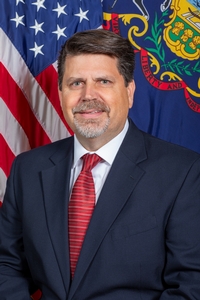
Rep. Jeff Olsommer
Sponsored bills
Maddy summaryHB 211 amends the 1996 Medical Foods Insurance Coverage Act to clarify and update the policy statement regarding insurance coverage for medical foods. It does not change coverage requirements but refines the legislative declaration of policy for insurers. This procedural amendment affects health insurance providers and patients relying on medical food coverage under existing law. The bill was enacted as Act No. 8 of 2025 after passing both chambers and receiving gubernatorial approval.
Maddy summaryHB 1666 increases Pennsylvania's minimum property damage liability coverage for auto insurance from $5,000 to $25,000 per accident. It updates definitions and requirements in vehicle insurance law, mandating that insurers offer higher coverage limits for bodily injury ($100,000/$300,000) and property damage, while requiring clear notice to policyholders about available benefits. This affects all drivers purchasing or renewing auto insurance policies in Pennsylvania, as insurers must now provide standardized disclosure of coverage options at application. The changes apply to policies issued or renewed 60 days after the bill's effective date.
Maddy summaryHB 1625 would create the Keystone Artificial Intelligence Authority within the Department of Community and Economic Development to develop and oversee AI policy. It establishes an AI Permitting System Pilot Program under the Department of Environmental Protection for reviewing AI projects and creates the Keystone AI Development Fund to support AI innovation. These provisions would directly affect state agencies implementing the Authority, the pilot program, and the fund, primarily impacting businesses and developers engaging with AI systems requiring permits. The bill focuses on structural changes for AI governance rather than regulating specific AI uses.
Maddy summaryHB 704 creates a new Neurodegenerative Disease Research Program and a dedicated funding mechanism within the Department of Health to support research on conditions like Alzheimer's and Parkinson's. The bill directs the Department of Health to manage the program and administer the Neurodegenerative Disease Research Program Fund, which will provide grants for scientific studies. This legislation directly affects researchers, medical institutions, and patients seeking treatments for neurodegenerative diseases by establishing a formal structure for funding and coordinating research efforts. The bill passed the legislature in June 2025 and is now pending final action by the Governor.
Maddy summaryHB 1601 amends Pennsylvania's Regulatory Review Act to update procedures for reviewing state agency regulations. It requires a concurrent resolution (approval from both legislative chambers) for regulations deemed economically significant and establishes clear processes for reviewing disapproved regulations or those considered "withdrawn." The bill also clarifies definitions and procedures for handling proposed, final, and omitted regulations during the review process. This directly affects state agencies creating regulations and the legislature responsible for oversight.
Maddy summaryHB 1596 exempts certain personal electronics and school supplies from Pennsylvania's sales tax during a specific annual August period. It excludes from tax the purchase of personal computers, tablets, or related devices under $1,500 for individual nonbusiness use, and school supplies like notebooks, art materials, or calculators priced at $50 or less per item. The exemption applies only to individual purchases made during the "exclusion period" (the first Saturday to the third Saturday in August), not to business purchases or items like servers, video game consoles, or music discs. This bill directly affects consumers buying eligible items during the defined August sales tax holiday.
Maddy summaryHB 1581 amends Pennsylvania law to restrict the sale and possession of solvents and noxious substances that release toxic vapors, commonly misused for inhalant abuse. It specifically prohibits retailers from selling these products to minors if they suspect the product will be used for inhalant abuse, and bans possession for such misuse. Retailers violating the minor sales rule face a second-degree misdemeanor charge, while other violations carry a third-degree misdemeanor penalty. This bill directly affects retailers selling solvents and individuals attempting to misuse these substances for inhalant purposes.
Maddy summaryHR 227 is a ceremonial resolution designating August 17-23, 2025, as "Little League World Series Week" in Pennsylvania. It recognizes the Little League World Series, held annually in South Williamsport, as a celebration of youth sports, community volunteers, and Pennsylvania’s historical role as the founding home of Little League (1939). The resolution encourages Pennsylvanians to observe the week by attending events, honoring volunteers, and supporting local youth sports. As a non-binding resolution, it does not create new laws or policies but formally acknowledges the event’s cultural and economic significance to the state.
Maddy summaryHB 1579 is a comprehensive bill that updates Pennsylvania's laws governing constables, townships, police officers, and related roles. It replaces outdated rules with new requirements for constable uniforms, bonds, debt collection, and conflict-of-interest restrictions, while repealing obsolete provisions like those for forest law arrests and impounding fees. The bill directly affects local law enforcement officials, townships, and bail bond agents by restructuring their legal duties and compensation rules. It also creates county constabulary review boards and assigns oversight duties to the Pennsylvania Commission on Crime and Delinquency. The bill was recently referred to the Judiciary Committee for review.