

Maddy summaryHB 203 amends Pennsylvania's Public School Code to require public schools to close on Veterans' Day, adding it to the list of fixed holidays (alongside Memorial Day, Fourth of July, Thanksgiving, and Christmas) when schools must be closed. It also allows school districts to designate up to five additional local holidays for closures and permits canceling these holidays during weather emergencies. The bill further mandates that schools hold special exercises on Veterans' Day as part of required observances. These changes apply directly to all public schools in Pennsylvania, affecting school calendars and holiday closures.
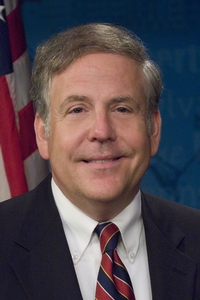
Rep. Bob Freeman
Sponsored bills
Maddy summaryHB 207 amends Pennsylvania's Tax Reform Code to clarify the definition of "compensation" for personal income tax purposes, specifically adding an exception for certain military and emergency-related income. The bill explicitly excludes income earned by active-duty U.S. military members (including their spouses living outside Pennsylvania) and income from active state emergency duty under Pennsylvania's emergency management laws. This change directly affects Pennsylvania taxpayers who receive such income, ensuring it is not taxed as regular compensation. The amendment becomes effective 60 days after enactment.
Maddy summaryHB 212 amends Pennsylvania's 1990 Charitable Solicitations Act by clarifying the definition of "contribution." It explicitly excludes membership fees for bona fide benefits (like dues for actual membership rights), payments for performances/events, and government grants from being counted as contributions. This change directly affects charitable organizations, fundraisers, and regulators by reducing the scope of activities requiring registration under the law. The bill makes no new requirements but clarifies what is legally considered a "contribution" for regulatory purposes.
Maddy summaryHB 169 creates a program allowing local and regional police departments in Pennsylvania to purchase used pursuit vehicles (police patrol vehicles) from the state at fixed prices. The Department of General Services must allocate up to 10% of the Pennsylvania State Police's used pursuit vehicle inventory for this program, requiring payment via organization check before purchase. Police departments must submit a form detailing desired vehicles, and the state will notify them when matching vehicles become available. The bill specifies that prices are set by the department and not subject to negotiation, with rules for administration to be developed by the department. This applies only to existing state-owned patrol vehicles, not new purchases.
Maddy summaryHB 182 designates Bridge Key 8377 on Pennsylvania Route 53 over Bear Rock Run in Lilly Borough, Cambria County, as the Corporal James D. Sloan Memorial Bridge. The bill requires the Pennsylvania Department of Transportation to install and maintain signs on the bridge, based on the General Assembly's findings that Corporal James D. Sloan, a Marine Corps veteran who died by suicide in 1971 due to post-traumatic stress disorder after serving in the Vietnam War, received multiple military medals including the Purple Heart and Combat Action Medal. This is a naming resolution with no direct policy changes or affected populations beyond the bridge signage.
Maddy summaryHB 184 amends Pennsylvania's Tax Reform Code of 1971 to exempt books sold at retail by public libraries from state sales tax. This policy change directly affects public libraries across Pennsylvania, removing a sales tax burden on book sales to patrons. The bill adds a new exclusion (section 204(77)) to the tax code, specifying that sales of books by public libraries are not subject to the state's sales tax. The provision takes effect 60 days after enactment.
Maddy summaryHB 185 adds a temporary sales and use tax exemption in Pennsylvania for Energy Star and WaterSense products sold or used during a specific annual period. The exemption applies to products certified by the EPA for energy efficiency (Energy Star) or water efficiency (WaterSense) during the week of April 22-29 each year, starting in 2025. This directly affects retailers selling these products and consumers purchasing them during that week, as they would not pay state sales tax on qualifying items. The change modifies the Tax Reform Code of 1971 to exclude these products from taxation during this designated timeframe. The bill takes effect 60 days after enactment.
Maddy summaryHR 10 is a resolution directing Pennsylvania's Joint State Government Commission to study how Home and Community-Based Services (HCBS) waivers can be improved to better serve individuals with disabilities. It directly affects over 2 million Pennsylvanians with disabilities who rely on HCBS waivers administered by the Office of Long-Term Living (OLTL) and Office of Developmental Programs (ODP), including those excluded from eligibility despite meeting federal disability criteria. The study will examine five key areas: whether waivers meet medical needs, compare payment rates across programs, analyze service menus, address barriers to community living, and investigate low employment rates (16% in integrated settings) for waiver participants. The goal is to identify concrete changes to improve access, affordability, and outcomes for people using these programs.
Maddy summaryHB 168 amends Pennsylvania's Taxpayer Relief Act to update the definition of "income" for senior citizens' property tax and rent rebate eligibility. It adds a provision allowing seniors who were eligible for these rebates as of December 31, 2018, to retain benefits if household income temporarily exceeds limits solely due to Social Security cost-of-living adjustments (COLAs). This replaces a previous temporary rule that expired in 2016 for seniors eligible as of December 31, 2012. The bill directly affects Pennsylvania seniors receiving property tax or rent rebates who experience automatic income increases from Social Security COLAs.
Maddy summaryHB 186 amends Pennsylvania's 1936 Unemployment Compensation Law to adjust appeal deadlines for unemployment benefit disputes. It extends the standard appeal window from 21 to 30 days for claimants and employers challenging benefit determinations, and adds a 60-day appeal period when a decision date is revised more than one year after the original notice. These changes directly affect unemployed workers (claimants) and employers who dispute benefit awards or payment decisions. The bill takes effect 60 days after enactment.