

Maddy summaryHB 464 is a constitutional amendment proposal that would ensure Pennsylvania courts remain open for lawsuits against the state government (the "Commonwealth"). It directly affects residents, businesses, and local governments who may need to sue the state for issues like contract disputes or government actions. The key provision would amend the state constitution to guarantee access to courts for such cases, removing potential barriers to filing suit. This is a procedural change to constitutional access, not a new law with specific funding or regulations.
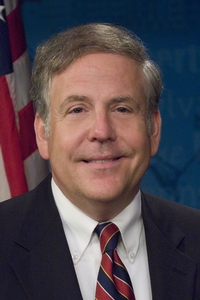
Rep. Bob Freeman
Sponsored bills
Maddy summaryThis bill expands fee exemptions in Pennsylvania for volunteers serving in fire companies or nonprofit emergency medical services agencies. Under the new provisions, these individuals would no longer pay the standard vehicle registration fee, though they would still be required to pay a $11 processing fee to cover administrative costs. The legislation also clarifies that such exemptions are limited to one passenger car or truck per volunteer, ensuring the benefit applies only to a single vehicle per person.
Maddy summaryThis bill amends Pennsylvania's Covered Device Recycling Act to update definitions and strengthen recycling requirements for manufacturers and retailers. It clarifies which electronics count as covered devices, such as computers, smartphones, and printers, while explicitly excluding items like landline phones and devices built into other appliances. The legislation also introduces a sales prohibition mechanism, requiring the Department of Environmental Protection to maintain a list of non-compliant brands that cannot be sold in the state. Additionally, the bill mandates stricter registration, reporting, and enforcement duties for companies involved in the sale of covered devices.
Maddy summaryThis Pennsylvania House Resolution designates the week of May 17 through 23, 2026, as "Emergency Medical Services Week" to honor the work of emergency medical personnel. The measure directly affects first responders, EMTs, paramedics, and other healthcare providers who deliver critical care across the state. By officially recognizing this specific time period, the resolution aims to highlight the importance of emergency medical services without altering any laws or policies.
Maddy summaryHB 95 amends Pennsylvania's Unfair Trade Practices and Consumer Protection Law to require clear disclosure when AI-generated content (like text, images, or videos) is created, distributed, or published. It directly affects businesses, creators, and platforms using AI tools to produce content for consumers in Pennsylvania. The bill adds new definitions, including that "artificial intelligence" means technology creating new content via predictive algorithms, and specifies that disclosures must be "clear and conspicuous" - meaning they must be visible upfront, easy to understand, and match the content's medium (e.g., visible text, audible audio). This change updates existing consumer protection rules to address AI-generated content transparency.
Maddy summaryHR 301 is a resolution directing the Legislative Budget and Finance Committee to study how racial wealth disparities specifically impact Black residents in the Commonwealth. The study must examine these disparities and develop concrete policy recommendations to reduce or eliminate them. This resolution does not create new laws but requires the committee to produce findings and actionable suggestions for future legislative consideration. It directly affects Black residents by focusing on systemic economic inequities within the state.
Maddy summaryThis bill amends Pennsylvania's Tax Reform Code to clarify and strengthen tax exemptions for charitable, religious, volunteer fire, and nonprofit educational organizations. It requires these groups to use tax-exempt purchases only for their qualified purposes, excluding unrelated business activities and major construction projects from the exemption. The legislation also establishes a process for the Department of Revenue to issue conditional tax-exempt status to new organizations and allows for the revocation of exemptions if an organization no longer meets public charity requirements.
Maddy summaryThis bill requires drivers under 18 in Pennsylvania to view educational materials about distracted driving and work zone safety before taking their junior driver's license exam. It also mandates that the driver's license test include at least one question about safe driving in work zones and adds a corresponding section to the official driver's manual. The law applies to all minors seeking a junior license, including those applying for motorcycle permits. These changes aim to improve safety awareness during the licensing process without altering existing permit requirements or testing procedures.
Maddy summaryHB 2252 makes it a crime to share someone's intimate image without consent, including AI-generated images that falsely depict them in nudity or sexual conduct. It directly affects individuals whose intimate images are shared non-consensually, whether the images are real or artificially created using AI or photo editing. The law establishes misdemeanor penalties (from second to first degree) based on factors like the victim's age, the sharer's intent (e.g., to harass, profit, or cause harm), and whether multiple images were shared. This bill updates Pennsylvania's sexual offenses law to specifically address the growing threat of AI-generated intimate images, ensuring they face the same legal consequences as real non-consensual image sharing.
Maddy summaryHB 37 modifies Pennsylvania's Election Code to change how counties process absentee and mail-in ballots. It requires county election boards to pre-canvass all such ballots received before election day at least seven days prior, with 48-hour public notice posted online. The bill also mandates that counties begin reviewing ballots at 7 a.m. on election day without interruption until all ballots received by that time are processed. These changes directly affect county election offices, candidates, and voters who use absentee or mail-in ballots, while aligning with funding requirements for the Election Integrity Grant Program.