

Maddy summaryHB 1321 creates a new "Military Spouse Leave and Employment Protection Act" in Pennsylvania law. It requires employers with 20+ employees to provide up to 14 paid days per year of leave for employees when their spouse is deployed to a combat zone or during a declared emergency, and up to 14 unpaid days for training deployments. The law prohibits employers from retaliating against employees who request this leave and mandates that employers maintain an employee's position, title, and accrued benefits during the leave. This directly affects Pennsylvania employees with military-connected spouses working at qualifying employers.
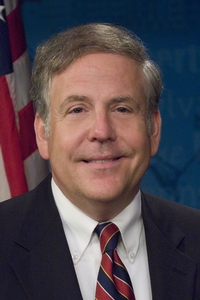
Rep. Bob Freeman
Sponsored bills
Maddy summaryHB 1327 amends Pennsylvania's Election Code to strengthen penalties for election bribery and create a new offense for paying to induce voter registration. It makes offering money, goods, or lottery chances to influence voting a felony (with penalties up to $15,000 or seven years), while paying someone to register to vote becomes a misdemeanor (up to $10,000 or five years). This bill directly affects individuals who attempt to bribe voters or pay for registration to influence election participation. The provisions aim to deter improper election practices by criminalizing financial incentives tied to voting behavior or voter registration.
Maddy summaryHB 1305 establishes an independent Office of Child Advocate within Pennsylvania's Department of Human Services to champion children's interests across state care systems. The bill sets qualifications for the Child Advocate (requiring six years in child advocacy/social work, a bachelor's degree, and no conflicts of interest), mandates a four-year term with reappointment options, and requires staff training in trauma-informed care, crisis intervention, and mandated reporter protocols. This office directly affects children in foster care, juvenile justice, early intervention programs, and residential facilities by independently monitoring their welfare and advocating for systemic improvements. The bill amends Pennsylvania’s Human Services Code to formalize this oversight role, ensuring accountability without direct program changes to existing services.
Maddy summaryHB 1325 requires health insurers in Pennsylvania offering dental coverage to report annual "medical loss ratios" (MLRs) for dental policies. This means insurers must calculate the percentage of premium dollars spent directly on dental care (not administrative costs) and submit detailed reports by April 30 each year. The bill applies to all health insurers licensed in Pennsylvania that provide dental policies, whether standalone or bundled with medical coverage. Penalties may be imposed if insurers fail to comply with the reporting requirements or meet the MLR standards.
Maddy summaryHB 269 amends Pennsylvania's Controlled Substance Act to improve access to overdose response information. It requires the Department of Health to develop free online training materials, posters, and pamphlets about recognizing opioid overdoses and using reversal medications (like naloxone), with the materials available in multiple languages upon request. Specific public entities - including Commonwealth agencies, transit authorities, municipalities, and local transportation organizations - must display the poster in conspicuous public locations, such as bathrooms or lobbies. The Department covers all printing and distribution costs, and entities already displaying equivalent materials may substitute them with prior notice. This bill focuses on education and resource accessibility, not changing drug laws or medication access.
Maddy summaryHB 643 modifies Pennsylvania's realty transfer tax provisions to establish fixed annual transfers of tax revenue. It requires $100 million in transfers for the fiscal year starting July 1, 2027, and $110 million for all subsequent fiscal years. This change directly affects individuals and entities paying real estate transfer taxes in Pennsylvania, as the specified amounts are deducted from the tax revenue pool. The bill specifies the exact dollar amounts and effective dates without altering the tax rate or adding new exemptions.
Maddy summaryHB 273 allows Pennsylvania counties to adopt a property maintenance code (either by referencing a nationally recognized standard or creating their own) to address neighborhood blight. It requires counties to follow specific notice and publication procedures for adopting the code and permits them to appoint inspectors who can collect fees for enforcement. Counties may only enforce their code in areas where municipalities lack their own property maintenance ordinance, and must have a formal agreement with a municipality to enforce it within that municipality. The bill also establishes a Municipal Codes Enforcement Grant Program and a municipal neighborhood mitigation fund to support blight-reduction efforts.
Maddy summaryThis resolution (HR 110) formally recognizes April 2025 as "National Poetry Month" in Pennsylvania. It is a non-binding ceremonial resolution, not a law, and does not create new policies or affect any specific group. The resolution acknowledges the Academy of American Poets' established observance of National Poetry Month and highlights poetry's role in education and community culture, as noted in the resolution's preamble. It has no funding, regulatory, or enforcement mechanisms.
Maddy summaryThis resolution designates April 2025 as "Community College Month" in Pennsylvania to recognize community colleges' role in the state's education and economy. It highlights that community colleges serve over 240,000 students - many from low-income or minority backgrounds - provide affordable pathways to degrees, and partner with over 2,000 employers to train workers for high-demand jobs like nursing and truck driving. The designation is ceremonial and does not create new laws or funding.
Maddy summaryThis is a commemorative resolution, not a bill with binding effects. It designates April 24, 2025, as "Pennsylvania's Day of Remembrance of the Armenian Genocide of 1915-1923" to honor the historical event where the Ottoman Empire killed approximately 1.5 million Armenians. The resolution aims to promote awareness of this genocide and its significance in preventing future atrocities, as stated in the "WHEREAS" clauses. It does not create new laws or policies, but serves as a symbolic recognition by the Pennsylvania General Assembly.