

Maddy summaryHB 1933 amends Pennsylvania's criminal code to require certain professionals (like animal control officers or veterinarians) to report suspected severe animal abuse as part of their existing duties. The bill specifically adds "aggravated cruelty to animals" to the list of offenses that must be reported, similar to how other serious crimes are handled. This change directly affects those who work with animals and have legal obligations to report abuse, making the reporting requirement more explicit for this specific violation. The bill is currently pending in committee after being referred to the Judiciary Committee.
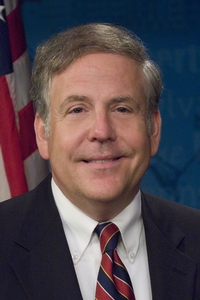
Rep. Bob Freeman
Sponsored bills
Maddy summaryHR 357 establishes a legislative Hunger Task Force to study hunger, food insecurity, and access to healthy food within the Commonwealth. The task force will analyze these issues and develop findings and recommendations for state policymakers. This resolution affects state-level planning and future policy decisions but does not create new laws or programs. It is a procedural step to guide potential future legislative action on food access.
Maddy summaryHB 1874 amends Pennsylvania's Transit Revitalization Investment District Act to expand how cities can use tax revenue generated from new development in designated transit areas. It allows redevelopment authorities to apply "incremental tax revenue" (taxes raised from new property values due to transit improvements) toward funding transit projects or infrastructure within those districts. This directly affects cities with transit revitalization districts and developers working in areas near new transit investments. The bill provides clearer rules for directing these tax increases toward transit-focused redevelopment, rather than general city funds.
Maddy summaryHR 351 is a resolution directing the Joint State Government Commission to study current electric bicycle regulations and develop recommendations for updating the state's legal and regulatory framework. It does not change existing laws but requires a formal study to identify necessary updates for e-bike rules. The Commission's report would propose specific changes to statutes and regulations governing e-bike operation, safety, and use. This resolution directly affects future regulatory decisions by state agencies and local governments managing e-bike policies.
Maddy summaryHB 1954 temporarily halts the privatization of public water and wastewater systems owned by municipalities. It creates a Water Utility Reform Working Group to develop long-term solutions for public water management. The bill also repeals a specific rule about valuing water systems acquired by public entities. This directly affects cities and towns operating public water services, preventing private companies from taking over these systems while the working group develops reforms.
Maddy summaryHB 441 amends Pennsylvania's Wild Resource Conservation Act to explicitly include wild native terrestrial invertebrates (such as insects and spiders) in conservation management. It adds definitions for these species and establishes a policy framework for their protection within the existing legal structure. The bill directly affects wildlife management practices by requiring state agencies to consider invertebrate conservation in planning. This update fills a gap in the 1982 law, which previously did not specifically address invertebrate species. The bill passed final passage on October 7, 2025, and was referred to the Environmental Resources & Energy committee.
Maddy summaryHB 1701 amends Pennsylvania's Public School Code to change how school districts handle facility projects. It requires school entities to hold voter referendums or public hearings before constructing new buildings or leasing space, directly affecting school districts and communities. The bill establishes a Public School Facility Advisory Committee to advise on facility planning and repeals outdated requirements for schools to conduct building condition assessments. It also imposes new duties on the Department of Education to oversee school facility planning and funding. (HB 1701, passed October 2025)
Maddy summaryHR 271 is a resolution directing the Joint State Government Commission to establish an advisory committee and study indoor air quality concerns affecting seniors and children in the Commonwealth. It requires the commission to conduct a formal review of current air quality standards and potential health impacts in these vulnerable groups' living environments. The key mechanism involves creating a committee to gather data, analyze risks, and recommend improvements to indoor air quality policies. This resolution does not create new laws but mandates a study to inform future policy decisions.
Maddy summaryThis resolution designates October 9, 2025, as "Ageism Awareness Day" in Pennsylvania to raise public awareness about age discrimination. It does not create new laws or impose requirements; it is a symbolic recognition intended to highlight issues affecting older adults. The resolution was adopted by the Pennsylvania legislature on October 8, 2025, after being referred to the Aging & Older Adult Services committee. It directly affects Pennsylvania residents by formally designating a day for community education and reflection on ageism.
Maddy summaryHB 1856 amends Pennsylvania's Second Class Township Code to add specific requirements for mowing roadside vegetation on township roads, streets, bridges, and highways. It directly affects second-class townships by mandating standardized mowing procedures, including timing and safety protocols. The bill establishes clear operational rules for township maintenance crews, replacing vague prior language with defined practices. This is a procedural update to existing infrastructure maintenance rules, not a new policy initiative.