

Maddy summaryHB 2098 establishes a new Office of Manufactured Home Ombudsman to help residents resolve disputes with community operators. It creates a Manufactured Home Hearing Board to handle formal disputes (like eviction cases) and sets up a Restricted Account for program funding. The bill consolidates existing manufactured home community laws under a single chapter and requires the Department of Community and Economic Development to oversee implementation. These changes apply to all Pennsylvania manufactured home communities - defined as sites with three or more homes for residential use - directly affecting residents, operators, and community owners.
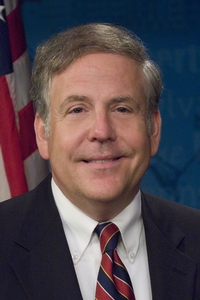
Rep. Bob Freeman
Sponsored bills
Maddy summaryHB 2065 amends Pennsylvania's pesticide law to prohibit the use of paraquat (identified by CAS number 4685-14-7 and related chemicals like methyl viologen) for any agricultural or pest control purposes within the state. This directly affects farmers, agricultural businesses, and pesticide applicators who currently use paraquat-based products. The bill explicitly bans its application, defines paraquat through specific chemical identifiers, and states that all conflicting regulations are superseded. The prohibition takes effect one year after the bill's enactment.
Maddy summaryHB 1713 amends the 1995 Economic Development Agency, Fiduciary and Lender Environmental Liability Protection Act by clarifying specific definitions within the law. It directly affects economic development agencies, fiduciaries, and lenders operating under this environmental liability protection framework. The bill's key mechanism is updating terminology to improve clarity and consistency in how environmental liability protections apply. This procedural amendment focuses on refining the legal language rather than changing substantive protections. The bill passed final passage on November 19, 2025, and was referred to the Urban Affairs & Housing committee.
Maddy summaryHB 1980 amends the MCare Act to update administrative rules related to continuing medical education (CME) requirements for licensed healthcare professionals. It directly affects doctors, nurses, and other medical practitioners who must complete CME to maintain their licenses. The bill changes how these education requirements are administered, though specific procedural details aren't provided in the context. This amendment focuses on streamlining or clarifying the CME process within the existing MCare framework.
Maddy summaryHB 1811 sets a $400 per acre maximum limit for the Pennsylvania Game Commission when purchasing land for game conservation in counties classified as sixth, seventh, or eighth class. This directly affects the Game Commission’s land acquisition costs for wildlife management in smaller counties. The bill clarifies that this price limit applies exclusively to these specific county classifications, ensuring purchases align with local market values while controlling expenses.
Maddy summaryHB 1233 requires battery manufacturers and retailers in Pennsylvania to create and implement plans for managing used portable batteries (like those in electronics and tools). It directs the Department of Environmental Protection to review these plans and enforce compliance, imposing fines for violations. The bill directly affects businesses that sell or produce portable batteries by mandating their responsible collection and recycling. If passed, it would establish new statewide requirements for handling battery waste, aiming to reduce environmental harm from improper disposal. The bill is currently pending in the Environmental Resources & Energy committee.
Maddy summaryHB 1787 amends Pennsylvania laws governing financial reporting for boroughs and cities. It requires local elected officials to complete, file, and publish annual auditor's reports and financial statements, and mandates that these reports be submitted to the Department of Community and Economic Development. The bill also establishes penalties for failure to meet these reporting deadlines. These changes directly affect borough and city governments across Pennsylvania by increasing transparency requirements for their financial operations.
Maddy summaryHB 923 amends the State Lottery Law to redirect lottery revenue toward providing pharmaceutical assistance for elderly residents. It directly affects seniors who qualify for prescription drug aid under state programs by modifying eligibility determination procedures. The key provision updates how income and asset thresholds are calculated to determine who qualifies for this assistance. The bill became law on November 24, 2025, after approval by both legislative chambers and the governor.
Maddy summaryHB 1176 amends Pennsylvania's intestate succession laws (when someone dies without a will) to adjust how assets are distributed to non-spouse relatives, such as children or parents. It specifically modifies the shares allocated to these individuals beyond the surviving spouse's portion. The bill also updates procedures for payments to family members and funeral directors during estate administration. These changes directly affect Pennsylvania residents who die without a will and their non-spouse heirs. The law became effective upon the Governor's approval on November 24, 2025 (Act No. 50 of 2025).
Maddy summaryHB 1528 establishes the Grand-family Assistance Program to provide financial support to grandparents and other relatives raising grandchildren. It creates a dedicated fund to make regular payments to local area agencies on aging, which will administer the program and assist eligible families. The bill requires the Department of Aging to manage the program and oversee fund distribution, ensuring direct support reaches affected relatives caring for children. This policy change directly affects grandfamilies and local aging services agencies through structured financial aid and administrative responsibilities.