

Maddy summaryThis bill designates April 2026 as "Sikh Awareness and Appreciation Month" in Pennsylvania to increase public understanding of the Sikh faith and honor the community's contributions. The resolution aims to reduce anti-Sikh prejudice and bullying by highlighting Sikh history, values, and charitable work within the state. By officially recognizing the month, the bill seeks to foster a more inclusive environment and educate residents about Sikh culture and practices.
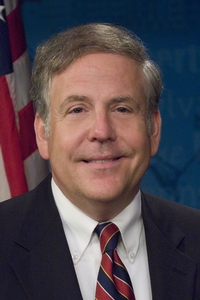
Rep. Bob Freeman
Sponsored bills
Maddy summaryThis House Resolution honors the memory of five law enforcement officers who died in the line of duty in 2025. It specifically names Patrolman Andrew Duarte and Police Officers Mark Baker, Cody Becker, Isaiah Emenheiser, and Andy Chan, listing their departments and dates of death. The measure directs the Pennsylvania House of Representatives to express sympathy to the families and friends of these fallen officers. As a commemorative resolution, it does not create new laws or change existing policies.
Maddy summaryThis resolution designates October 6, 2026, as "German American Day" in Pennsylvania to honor the state's historical German heritage and its ongoing relationship with Germany. The measure highlights key milestones, such as the founding of Germantown in 1683 and the significant role German immigrants played in the state's early development and economy. By officially recognizing this date, the House of Representatives aims to celebrate the contributions of the 2.6 million Pennsylvanians with German ancestry and the strong trade ties between the two nations.
Maddy summaryThis bill creates a new licensing category called the "Philadelphia 250 Permit" for alcohol establishments in Philadelphia and other municipalities that choose to participate. To qualify, businesses such as restaurants and breweries must pay a $500 fee, complete a specific nighttime safety training program, and have their application details posted online. Local governments have the authority to object to individual permit applications, and the state board can revoke a permit immediately if a business operates outside its approved scope. The legislation establishes these rules within the existing Liquor Code and allows participating cities to adopt ordinances to enable the program.
Maddy summaryThis bill allows boroughs and cities in Pennsylvania to cover the costs of educational training for newly elected officers before their terms begin. It authorizes municipalities to pay for necessary expenses related to this training, which is intended to help new officials prepare for their duties. The changes apply to both boroughs under Title 8 and cities under Title 11 of the Pennsylvania Consolidated Statutes. The bill takes effect 60 days after becoming law.
Maddy summaryHB 2177 updates publication requirements for proposed ordinances in Pennsylvania boroughs, cities, and counties. It mandates that when publishing a proposed ordinance, municipalities must include a detailed summary covering tax/fee changes, penalties, and fund-related provisions (like payments or restrictions), along with references to where the full text can be viewed online or at a physical location. This applies to all proposed ordinances before council votes, ensuring the public has clear access to key details. The bill does not change the content of ordinances but standardizes how they are communicated to residents.
Maddy summaryHB 2179 amends Pennsylvania's Second Class Township Code to require more detailed public notices for proposed ordinances. It mandates that notices include a brief summary detailing any changes to taxes, fees, regulations with penalties, or fund-related provisions (such as payments, restrictions, or pledges). The summary must also specify where residents can view the full ordinance in person or online. This change applies to all second-class townships and aims to improve transparency in local governance by making ordinance proposals clearer to the public.
Maddy summaryThis bill strengthens Pennsylvania's existing hazardous waste laws by creating a new chapter focused on immediate spill response and protecting residential areas. It defines hazardous substances to include petroleum products and other dangerous materials, then imposes strict liability on responsible parties to immediately contain and clean up any discharge that threatens public health or the environment. The Department of Environmental Protection gains expanded authority to issue directives, enter private property, and recover cleanup costs from those who cause spills, ensuring rapid action in residential communities.
Maddy summaryThis Pennsylvania House resolution (HR 157) urges the U.S. Congress to pass H.R. 3023 (or similar legislation) during the 119th Congress, which would require the Department of Veterans Affairs and Department of Defense to provide stellate ganglion block (SGB) therapy to veterans and military members with PTSD. SGB is a low-risk neck injection procedure that targets nerves controlling stress responses, potentially alleviating symptoms like anxiety and hyperarousal. The resolution cites that 23% of recent veterans and 12-15% of older veterans have PTSD diagnoses, with current treatments helping only 40% of patients. It emphasizes SGB's decades-long use and support from veterans' organizations as a potential treatment option.
Maddy summaryHB 2151 requires Pennsylvania's Center for Local Government Services to create a model zoning ordinance for data centers within six months. The model must include specific rules like building size limits, minimum distances from residential areas, landscape buffers, noise restrictions, and requirements for water/energy use. This helps local governments (townships, boroughs, cities) regulate data center development to address community concerns. Municipalities can request the Center's assistance when updating zoning rules for data centers, and the model must be updated annually.