

Maddy summaryHB 1600 amends Pennsylvania's Human Services Code to establish specific requirements for the Keystone STARS Program, a quality rating system for child-care facilities. The bill requires participating child-care centers and family child-care homes to display their STAR-level rating on their public website and provide it to parents at enrollment. It also mandates that the state department issue visible placards with facilities' ratings and develop a rubric outlining how providers can improve their rating through staff training, program quality, family partnerships, and leadership. This directly affects licensed child-care providers and parents seeking early childhood education services.
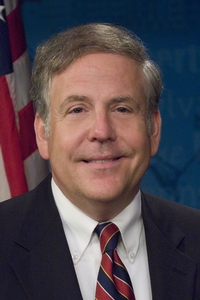
Rep. Bob Freeman
Sponsored bills
Maddy summaryThis bill introduces two main changes to Pennsylvania law: it exempts gun safes and gun locks from sales and use tax, and it creates a new criminal offense for failing to securely store firearms. Under the new provisions, firearm owners must keep their weapons locked in a designated safe or with a locking device when not in use, with stricter penalties if a minor or unauthorized person is likely to be present. The legislation also establishes civil liability for owners whose unsecured firearms cause injury or property damage and requires retailers to post notices about secure storage laws. Additionally, the bill clarifies that gun cabinets do not qualify as gun safes and defines specific terms like "securely store" and "unauthorized user" to guide enforcement.
Maddy summaryThis bill amends Pennsylvania's Tax Reform Code to exclude gun safes and gun locks from sales and use taxes. It directly affects retailers selling these security devices and consumers purchasing them for firearm storage. The legislation defines a gun safe as a self-contained enclosure with locking mechanisms that prevent unauthorized access, while explicitly excluding gun cabinets from the tax exemption. The changes will take effect 60 days after the bill is enacted.
Maddy summaryThis resolution designates July 15, 2026, as "Court Appointed Special Advocates Day" in Pennsylvania to honor the work of the state's Court Appointed Special Advocates (CASA) program. The bill directly affects CASA volunteers and staff who provide free advocacy for abused and neglected children within the court system. By officially recognizing the date of the program's incorporation, the measure aims to highlight the contributions of these trained volunteers who help ensure the safety and well-being of vulnerable youth. The resolution serves as a commemorative gesture rather than establishing new laws or funding requirements.
Maddy summaryThis bill is a House Resolution that formally recognizes May 2026 as Mental Health Awareness Month in Pennsylvania. It does not change laws or allocate funding, but instead encourages government agencies, schools, businesses, and residents to increase awareness and understanding of mental illness. The resolution calls for communities to promote accessible mental health services and reduce stigma around mental health conditions. It is a symbolic measure intended to highlight the importance of mental health without implementing new policy requirements.
Maddy summaryHB 84 amends Pennsylvania's Solid Waste Management Act to prohibit the road spreading and land application of oil and gas wastewater (including "tophole water" and "production water") for purposes like dust suppression, road deicing, or road bed stabilization. The bill directly affects oil and gas operators and municipalities handling this wastewater by banning these specific disposal methods, except for limited well-site applications under existing regulations. Key provisions include banning wastewater from being spread on roads or applied to land (except for well-site use per 25 Pa. Code § 78.60/78a.60) and prohibiting vehicles equipped to spread such wastewater. The law also clarifies that wastewater used for these purposes cannot be classified as a "coproduct" under department regulations. The bill takes effect 60 days after enactment.
Maddy summaryThis resolution directs state committees to study how Medicaid, Medicare, and private insurance pay for behavioral health crisis services in Pennsylvania. The investigation aims to understand how current payment methods affect the ability of crisis centers to operate sustainably and provide accessible care. The study will analyze specific financial data, compare reimbursement rates across different payors, and review successful models used in other states. Ultimately, the committees will develop recommendations to improve funding and ensure the long-term viability of these essential services.
Maddy summaryThis bill updates Pennsylvania laws to clarify and streamline the process for neighboring municipalities to merge or consolidate into a single entity. It establishes specific definitions for agreements between city councils and allows residents to propose mergers through a petition process if the councils do not agree. Key provisions include creating a required transitional planning committee with representatives from each involved city to manage the merger, standardizing how local laws are enforced, and setting clear deadlines and procedures for court review. The legislation also repeals older, conflicting rules regarding merger agreements and ensures that any new combined city can qualify for state grants.
Maddy summaryThis bill proposes to update Pennsylvania's vehicle laws by establishing a maximum speed limit of 35 miles per hour on dirt and gravel roads. It applies to all drivers operating vehicles on these unpaved road surfaces, regardless of the specific location. The change clarifies that these limits are maximum speeds, meaning drivers must not exceed them unless a special hazard requires an even slower speed for safety. The legislation would become effective 60 days after passage.
Maddy summaryThis Pennsylvania bill directs the Office of Attorney General to run a public education campaign aimed at increasing consumer understanding of artificial intelligence. The campaign will use various media channels to teach the public how to identify AI-generated content, avoid AI-enabled scams, protect personal data, and recognize potential biases in AI systems. Special attention will be given to vulnerable populations and children, with guidance provided on safe use of chatbots and detection of forged digital likenesses. The Office of Attorney General must submit a report on the campaign's performance within one year of its start, and funding will be provided by the General Assembly as needed.