

Maddy summaryHB 253 adds a new exemption from vehicle registration in Pennsylvania for new or leased motor vehicles (excluding motorcycles and motorized bicycles) that achieve at least 40 miles per gallon in city driving, as certified by the U.S. EPA and Department of Energy's 2024 Fuel Economy Guide. This exemption applies only during the vehicle's first two years of registration, after which standard registration rules apply. The bill directly affects owners of qualifying fuel-efficient vehicles who would otherwise need to pay registration fees during those initial two years. It modifies Pennsylvania's vehicle registration statutes to align with federal fuel efficiency standards without changing existing registration requirements for other vehicles. The exemption is limited to vehicles meeting specific EPA-defined efficiency thresholds.
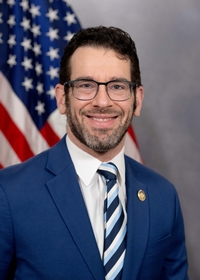
Rep. Mike Schlossberg
Sponsored bills
Maddy summaryHB 199 creates the State Emergency Supplemental Grant Program to provide additional financial assistance to Pennsylvania residents and businesses after they receive the maximum federal disaster aid. The program, administered by the Pennsylvania Emergency Management Agency, offers grants covering the gap between federal assistance and actual disaster damage (up to $10,000 for federally declared disasters) or a state-determined amount for state-declared disasters. It establishes a dedicated fund financed by an annual $5 million transfer from the Pennsylvania Liquor Control Board, with funds limited to essential items like housing, medical care, and temporary rental - excluding home improvements, luxury goods, or pre-existing damage.
Maddy summaryHR 10 is a resolution directing Pennsylvania's Joint State Government Commission to study how Home and Community-Based Services (HCBS) waivers can be improved to better serve individuals with disabilities. It directly affects over 2 million Pennsylvanians with disabilities who rely on HCBS waivers administered by the Office of Long-Term Living (OLTL) and Office of Developmental Programs (ODP), including those excluded from eligibility despite meeting federal disability criteria. The study will examine five key areas: whether waivers meet medical needs, compare payment rates across programs, analyze service menus, address barriers to community living, and investigate low employment rates (16% in integrated settings) for waiver participants. The goal is to identify concrete changes to improve access, affordability, and outcomes for people using these programs.
Maddy summaryHB 192 repeals outdated language requiring psychological services to be provided on school premises for nonpublic school students. It updates the definition of "professional employees" to explicitly include school social workers, counselors, psychologists, and nurses in Pennsylvania schools. The bill mandates that school social workers must hold a new educational specialist certificate issued by the Department of Education, which must be created within 60 days. Additionally, it adds rules requiring schools to share student health records when students transfer and to retain those records for at least two years after a student leaves.
Maddy summaryHB 195 establishes Pennsylvania's Mental Health Workforce Retention Program under the Human Services Code. It provides $5,000 grants to mental health workers who are Pennsylvania residents and have worked with adolescents for at least seven consecutive years, using a lottery system to select recipients. The program allocates up to $1 million annually from a $5 million appropriation (continuing from the General Fund), with grants exempt from income tax. The program expires on June 30, 2030, and is open to workers in psychology, counseling, social work, or human services.
Maddy summaryHB 194 creates Pennsylvania's Mental Health Professional Student Loan Forgiveness Program, targeting mental health workers serving children and adolescents. It allows eligible residents who complete qualifying degrees (like social work, counseling, or psychology) and work in early childhood-to-adolescence mental health roles to receive up to $22,500 in loan forgiveness after signing a 7-year employment contract. The Pennsylvania Higher Education Assistance Agency (PHEAA) administers the program, requiring applicants to prove residency, partial degree completion, faculty recommendations, and secure employment in the specified field. Participants must maintain employment for seven years or repay the forgiven amount if they leave the field early, fail to comply, or provide false information. This directly affects mental health professionals in Pennsylvania seeking relief from student debt while addressing workforce needs in youth mental health.
Maddy summaryHB 93 designates specific dates for Rosh Hashanah, Yom Kippur, Eid al-Fitr, and Eid al-Adha as official holiday observances in Pennsylvania, based on Jewish and Islamic calendars. The bill recognizes these dates without requiring employers to provide paid leave or treat them as legal holidays. It explicitly states that the designation does not alter existing employment policies for businesses or schools. The law takes effect immediately upon enactment.
Maddy summaryHB 108 requires all Pennsylvania municipalities (including cities, boroughs, and townships) to establish a "real property emergency services fund" financed by a $25 fee paid by both buyers and sellers during real estate transactions. The fund can only be used for specific emergency services expenses, such as purchasing/maintaining firefighting equipment, firehouse construction, firefighter and emergency medical personnel salaries, and ambulance maintenance. Municipalities must deposit the fees into the fund, impose a $250 penalty for non-payment, and annually publish reports detailing fund usage. The bill mandates biennial audits of the fund and takes effect 60 days after enactment.
Maddy summaryHB 53 waives fees for certain state documents for individuals affected by domestic abuse. It applies to people who received protection orders within 90 days or verified recent abuse (within 120 days) through a victim service provider, medical professional, or standardized form. The bill covers duplicate/corrected documents like driver's licenses, vehicle titles, and birth certificates from the Departments of Transportation and Health. Eligible individuals with dependents also receive fee waivers for their dependents' documents. The Departments of Transportation and Health must create public policies for this waiver within 90 days of the law's effective date.
Maddy summaryHB 107 amends Pennsylvania's Local Option Small Games of Chance Act to allow licensed organizations (such as nonprofits and charities) to accept electronic payments for games of chance and conduct online raffles. The bill requires organizations to verify that online raffle buyers are physically located in Pennsylvania and at least 18 years old before accepting payment. It permits credit/debit cards and mobile payment services for raffle tickets but prohibits sales outside Pennsylvania or to minors. The legislation also removes a conflicting regulation in the Pennsylvania Code to align with these new provisions.