

Maddy summaryHB 183 amends Pennsylvania's Workers' Compensation Act to increase the maximum compensation period for serious permanent disfigurement of the head, neck, or face from 275 weeks to 400 weeks. It specifically updates Section 306(c)(22) to clarify that disfigurement benefits are paid separately from disability benefits, allowing injured workers to receive both simultaneously. The change applies to injuries sustained on or after the bill's effective date (60 days from enactment), regardless of when the original injury occurred. This directly affects workers who sustain qualifying permanent disfigurement in workplace injuries.
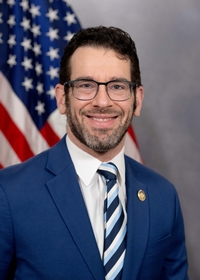
Rep. Mike Schlossberg
Sponsored bills
Maddy summaryThis Pennsylvania House Resolution (HR 50) symbolically designates March 25, 2025, as "Greek Independence Day" within the state. It does not create new laws or affect any policies, programs, or individuals. The resolution honors Greek heritage and historical ties between Greece and the U.S., referencing Greek-American contributions to Pennsylvania's culture and history. As a commemorative gesture, it has no binding effect or practical impact on residents or government operations.
Maddy summaryHB 1046 establishes the Pennsylvania Poet Laureate position and a nomination committee to select the appointee. The Governor appoints the Poet Laureate from a shortlist of three nominees provided by the committee (which includes education, arts, and humanities representatives), with the Laureate serving a two-year term and performing ceremonial duties like reading poems at the Governor's inauguration and legislative sessions, all without pay but with travel expenses reimbursed. This bill directly affects Pennsylvania residents by creating a state position to promote poetry and literary arts through official events.
Maddy summaryThis resolution recognizes March 14, 2025, as "Black Midwives Day" in Pennsylvania. It symbolically honors Black midwives' historical and ongoing contributions to maternal health while highlighting persistent disparities, including that Black women in Pennsylvania faced nearly three times the pregnancy-related mortality rate of White women in 2020. The resolution aims to raise awareness about systemic barriers like discrimination, maternity care deserts, and preventable maternal deaths, aligning with the National Black Midwives Alliance's campaign. It does not create new laws or allocate funding but serves as a statement of recognition.
Maddy summaryHB 1125 creates a permitting system for law enforcement agencies and local governments to install automated license plate reader systems on Pennsylvania roads. It requires safety features like breakaway poles in certain areas and sets specific placement rules (e.g., poles up to 15 feet from lanes without barriers). The bill establishes a 30-day review process for permit applications through the Department of Transportation. This directly affects local police departments and municipalities seeking to deploy these systems for public safety purposes.
Maddy summaryHB 1150 raises Pennsylvania's minimum wage to $15 per hour starting January 1, 2026, with annual increases thereafter. It also establishes a phased timeline for tipped employees: requiring higher base cash wages starting in 2025 (e.g., $5.00/hour after June 2025) and mandating that by July 1, 2029, employers must pay the full minimum wage without relying on tips. The bill ensures all tips received by employees remain their property and cannot be used by employers to meet minimum wage requirements. This directly affects most private-sector employers and tipped workers in Pennsylvania, particularly in hospitality and service industries.
Maddy summaryHB 1081 imposes a temporary ban on cyber charter schools and their management companies from buying, leasing, or owning new property. The ban takes effect 60 days after the bill becomes law and does not apply to property already owned or acquired before that date. This policy directly affects cyber charter schools and the educational management service providers that operate them, restricting their ability to expand physical facilities through new property transactions. The bill does not impact existing buildings or operations of these schools.
Maddy summaryHR 150 is a Pennsylvania House resolution designating April 11-17, 2025, as "Black Maternal Health Week" to highlight the disproportionate maternal health disparities affecting Black women and birthing persons in the state. It references Pennsylvania data showing Black women face maternal mortality rates twice as high as White women (148 vs. 74 deaths per 100,000 live births in 2020) and higher morbidity rates. The resolution does not create new laws or funding but aims to raise public awareness about preventable maternal health outcomes. It specifically targets state-level attention to this crisis, citing local statistics from Philadelphia and Allegheny Counties. As a symbolic resolution, it has no binding effect but seeks to spur broader discussion and action.
Maddy summaryHB 1066 amends Pennsylvania's Medical Practice Act to create a pathway for temporary medical licensees who graduated from international medical schools to obtain full, unrestricted licenses. To qualify, these individuals must have practiced medicine for at least three years outside the U.S., demonstrated competency to the State Board of Medicine, maintained good standing for two years after their temporary license was issued, and secured a job offer from a Pennsylvania healthcare facility. This provision applies only to eligible temporary licensees meeting all specified criteria, without altering general temporary license rules. The bill takes effect 60 days after enactment.
Maddy summaryThis bill establishes a grant program to provide free menstrual products (such as pads and tampons) in Pennsylvania public schools. Schools with 25% or more students eligible for free or reduced-price lunch programs can apply for grants to purchase these products and install dispensers or disposal units. Recipients must report annual spending on products and dispenser maintenance to the state. The program is funded by a state appropriation for the 2025-2026 fiscal year.