

Maddy summaryHB 282 amends Pennsylvania's Human Services Code (1967) to clarify eligibility rules for individuals receiving medical assistance under public assistance programs. The bill directly affects current and prospective recipients of medical assistance, ensuring consistent application of qualification standards. Key provisions update how eligibility is determined for medical assistance, though specific changes are not detailed in the provided context. The bill passed the House on June 3, 2025, and was referred to the Health & Human Services committee for further review.
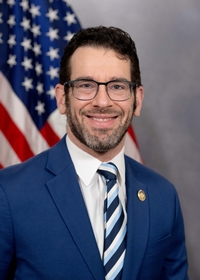
Rep. Mike Schlossberg
Sponsored bills
Maddy summaryHB 1096 creates the Pennsylvania Food Bucks Program, which provides financial assistance to low-income residents for purchasing fresh fruits and vegetables at participating retailers. The bill establishes a dedicated "Pennsylvania Food Bucks Program Account" within the state treasury to fund the program and requires the state to conduct research on the program's effectiveness. It directly affects eligible low-income Pennsylvanians and participating farmers and retailers by expanding access to healthy food options. The law, which passed on June 3, 2025, focuses on concrete policy changes: creating the program structure, securing funding through the new account, and mandating program evaluation.
Maddy summaryHB 1140 requires health insurers and Medicaid/CHIP managed care plans in Pennsylvania to cover all FDA-approved contraceptives - including prescription drugs, devices, emergency contraception (like levonorgestrel), and oral contraceptives - without any out-of-pocket costs for enrollees. It specifically prohibits prior authorization or step therapy for emergency and oral contraceptives, and mandates coverage for sterilization procedures and related services like counseling. The bill directly affects health insurers, managed care plans, and their enrollees by expanding contraceptive coverage under state insurance regulations. It exempts male condoms from coverage requirements but ensures no cost-sharing for covered contraceptive methods.
Maddy summaryHR 143 is a non-binding resolution designating March 18, 2025, as "Public Defender Day" in Pennsylvania. It symbolically honors public defenders' work but does not create new laws, impose costs, or directly affect any individuals or entities. The resolution was referred to the Judiciary Committee, amended, and ultimately laid on the table (stalled) on May 30, 2025, meaning it did not advance further. This is a ceremonial measure with no substantive policy impact.
Maddy summaryHB 1519 amends Pennsylvania's 1921 Insurance Company Law to require casualty insurance policies to cover mental illness treatments. This directly affects insurance companies writing casualty policies and policyholders seeking mental health services. The key provision mandates that insurers include mental health coverage in standard casualty policies, aligning it with other health coverage requirements. The bill focuses on expanding access to mental health care by ensuring it is covered under these specific insurance policies.
Maddy summaryThis bill updates Pennsylvania's pilot program for non-narcotic medication-assisted treatment (MAT) in prisons and parole settings. It removes outdated rules about the program's establishment, clarifies requirements for county participation, and specifies how grant funds can be used for treatment services. The Pennsylvania Commission on Crime and Delinquency gains new duties to oversee the program, and the bill includes administrative updates to the state statutes governing it. The changes directly affect counties administering the pilot program and individuals in prison or parole under the MAT initiative.
Maddy summaryHB 926 requires healthcare facilities to establish violence prevention committees to address workplace violence. These committees must develop safety plans, and facilities must report violent incidents to the Department of Labor and Industry. The Department gains authority to enforce compliance, impose fines, and issue administrative penalties for violations. This bill directly affects hospitals, clinics, and all healthcare workplaces covered under state labor regulations.
Maddy summaryHB 1062 creates a statewide system for tracking neighborhood blight by requiring municipalities to collect data on property maintenance violations. It establishes a Property Maintenance Code Serious Violations Registry to list properties with repeated severe maintenance issues and a dedicated funding account to support blight remediation efforts. The bill directly affects Pennsylvania municipalities, property owners, and landlords in areas designated as blighted, providing local governments with standardized data to target enforcement. Key provisions include mandatory data collection by cities/towns, a centralized registry for serious violations, and dedicated funding through the new account to aid property rehabilitation. If enacted, this would standardize blight reporting and funding across Pennsylvania communities.
Maddy summaryHB 1263 establishes Pennsylvania's Keystone Saves Program, creating a state-run savings initiative for low-to-moderate income residents. The bill sets up a dedicated program fund and administrative fund managed by the Treasury Department, which will handle investments while adhering to fiduciary responsibilities. An advisory board will oversee program implementation and ensure it meets the needs of participants. This program directly affects eligible Pennsylvanians by providing a structured savings option, with the Treasury Department responsible for managing funds and investments.
Maddy summaryHB 504, the Community Energy Act, establishes a framework for third-party-owned community energy projects (like solar gardens) in Pennsylvania. It requires electric distribution companies to connect these facilities, provides bill credits to subscribers (homeowners, renters, and businesses) for energy generated, and ensures guaranteed savings by linking subscription payments to bill reductions. Key provisions include setting size limits (max 5,000 kW for most facilities), mandating that at least 50% of subscriptions come from small users or farms, and requiring fair wages for construction workers. The bill directly affects electric companies (with new connection duties), community energy organizations (as owners/operators), and subscribers (who gain access to shared renewable energy).