

Maddy summaryHB 1650 establishes Pennsylvania's Home Preservation Grant Program, administered by the Department of Community and Economic Development. It provides grants to local governments (counties, cities, townships) to fund repairs and improvements on existing owner-occupied homes, targeting households earning 80-120% of the area median income. Grants can cover up to $50,000 per unit for habitability fixes, energy/water efficiency upgrades, or accessibility modifications, with local governments allowed to use up to 10% of funds for administration. Applications must demonstrate experience in housing rehabilitation and include plans for using funds per the bill's requirements, with priority given to projects leveraging additional funding sources.
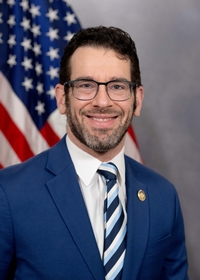
Rep. Mike Schlossberg
Sponsored bills
Maddy summaryHB 211 amends the 1996 Medical Foods Insurance Coverage Act to clarify and update the policy statement regarding insurance coverage for medical foods. It does not change coverage requirements but refines the legislative declaration of policy for insurers. This procedural amendment affects health insurance providers and patients relying on medical food coverage under existing law. The bill was enacted as Act No. 8 of 2025 after passing both chambers and receiving gubernatorial approval.
Maddy summaryHB 1564 amends the Human Services Code to change how copayments are calculated for subsidized child care programs. It directly affects low-income families who rely on state-funded child care assistance. The bill modifies the existing copayment structure but does not specify whether amounts increase, decrease, or change based on income tiers. This is a policy change to the public assistance system governing child care subsidies. (Note: The provided context does not detail the specific copayment changes, only the bill's purpose and referral history.)
Maddy summaryHR 182 is a symbolic resolution recognizing June 2025 as "Scleroderma Awareness Month" and June 29, 2025, as "World Scleroderma Day" in Pennsylvania. It does not create new laws or policies but formally acknowledges scleroderma - a rare autoimmune disease affecting skin and internal organs - as part of a broader effort to raise public awareness. The resolution cites statistics about scleroderma's impact (e.g., affecting ~300,000 U.S. residents, with higher prevalence in women and African Americans) and highlights ongoing research in Pennsylvania. As a ceremonial resolution, it has no direct effect on healthcare access, funding, or legislation.
Maddy summaryHB 994 bans the commercial trade of parts or products from specific endangered species (like elephants, rhinos, sharks, and pangolins) in Pennsylvania, affecting businesses and individuals involved in buying, selling, or possessing these items with intent to sell. Key exceptions include government law enforcement activities, antique items over 100 years old (under 200 grams), musical instruments (under 200 grams), and educational/scientific use with proper permits. Violations face civil fines up to $20,000 based on item value and repeat offenses, with seized items potentially used for education or destroyed. The law targets wildlife trafficking while allowing limited, regulated exceptions for cultural, historical, or research purposes.
Maddy summaryHB 1445 requires health insurers in Pennsylvania to cover medically necessary health services provided in schools - such as mental health care, behavioral health services, and speech therapy - without denying coverage solely because the service occurs in a school setting. It prohibits insurers from excluding coverage based on location (e.g., through "school setting" or "place of service" exclusions), applying to public, charter, cyber charter, and private schools. Exceptions allow denials if services are provided by unlicensed individuals, are not medically necessary per insurer policies, or conflict with existing legal obligations (like IEPs). This law directly affects students receiving school-based care, insurers, and school entities, ensuring coverage parity for services delivered on school premises.
Maddy summaryHB 1670 requires health insurance plans in Pennsylvania, including Medicare and Medicaid coverage, to provide hearing aid benefits. Specifically, it mandates that insurers offer at least $2,500 in coverage every three years for hearing aids sold under state registration rules, with benefits applicable to either hearing aid sellers or contracted fitters. This applies to most health insurance policies but excludes dental, vision, Medicare supplements, and other specified plans. The law takes effect 90 days after enactment, impacting insurers and enrollees in covered health plans across the state.
Maddy summaryThis Pennsylvania House resolution urges Congress to expand Medicare to cover hearing aids. Currently, Medicare does not cover hearing aids or their fittings - only limited diagnostic exams under Part B. It specifically targets the gap affecting over 48 million Americans with hearing loss who rely on Medicare. The resolution requests Congressional action to amend Medicare policy but has no legal force.
Maddy summaryHB 506 amends Pennsylvania's Human Services Code to establish a state-funded Child Care Staff Recruitment and Retention Program. It directly affects licensed child care providers and their staff by creating a new program to address staffing shortages. The key mechanism provides state funding for recruitment incentives and retention support, such as signing bonuses or professional development, for child care workers. The bill passed final passage on June 25, 2025, and was referred to the Health & Human Services committee.
Maddy summaryThis resolution formally recognizes July 25, 2025, as "World IVF Day" within Pennsylvania. It is a symbolic gesture by the state legislature to acknowledge and raise awareness about in vitro fertilization (IVF) and reproductive health. The resolution does not create new laws, alter policies, or directly affect individuals or organizations. It serves as a commemorative statement without legal force or concrete policy changes.