

Maddy summaryThis bill updates Pennsylvania laws to create new funding accounts and establish taxes on aviation fuels, including traditional jet fuel and emerging alternatives like hydrogen and electricity. It directs specific annual amounts from the Multimodal Fund to the Aviation Restricted Account and sets escalating budget caps for department activities related to aviation programs. The legislation also defines key terms such as alternative aviation fuel and grants the Department of Transportation authority to adopt zoning regulations for airports while addressing issues like abandoned aircraft. Additionally, the bill imposes new taxes on aviation fuels, outlines how distributors must report these taxes, and specifies how the collected revenue will be used and refunded.
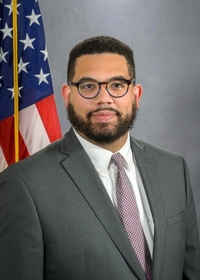
Rep. Manny Guzman
Sponsored bills
Maddy summaryHB 2633 amends Pennsylvania's Public School Code to change how school districts are funded for building construction, maintenance, and renovations. The bill repeals existing grant programs for maintenance projects and building condition assessments, replacing them with a new reimbursement system that calculates payments based on enrollment, building capacity, and local wealth factors. Under the new rules, school entities would receive reimbursement over 20 years for approved projects, with a requirement to match 50% of the cost using local funds unless the project is an emergency. These changes apply to projects seeking approval beginning July 1, 2026, while allowing districts to retroactively seek approval for projects not yet completed by that date.
Maddy summaryThis House Resolution designates the week of March 16 through 20, 2026, as "Pennsylvania Ag Literacy Week" in Pennsylvania. The bill directly affects schools, educators, and the agricultural community by formally recognizing a program that connects volunteers from the farming sector to local classrooms. It highlights the Pennsylvania Friends of Agriculture Foundation and the Pennsylvania Farm Bureau as the originators of the initiative, which aims to educate students about agriculture through volunteer storytelling and educational materials. The resolution also acknowledges the economic significance of agriculture in Pennsylvania, noting its contribution to jobs and state revenue.
Maddy summaryThis House Resolution honors the life of Pennsylvania State Police Corporal Timothy J. O'Connor, Jr., who died in the line of duty in March 2026, and extends condolences to his family. The document details his 15-year career, numerous awards, and community service, while formally recognizing his sacrifice as the 105th state police officer to die in service. It directs that a copy of the resolution be presented to his wife, Casey O'Connor, as a gesture of respect and support.
Maddy summaryThis bill updates the rules for the Nonprofit Security Grant Fund in Pennsylvania to streamline how grants are reviewed and awarded. It requires the commission to evaluate applications on a rolling basis and must decide on each one within 90 days of receiving it. The legislation also clarifies that a nonprofit's lack of financial participation cannot be used to deny an application and allows those with less than $250,000 in annual revenue to receive grants without any matching funds. Additionally, it sets specific grant amounts between $25,001 and $75,000 for applicants who can provide a 33% financial match. These changes aim to make the grant process more efficient and accessible for eligible organizations.
Maddy summaryThis bill amends Pennsylvania's Loan Interest and Protection Law to ban prepayment penalties on residential mortgages taken out on or after its effective date. It directly affects homeowners with personal, family, or household loans by allowing them to pay off their mortgages early without incurring extra fees or charges. The law ensures that borrowers can clear their debt ahead of schedule without financial penalties, and the changes will become active 60 days after the bill is passed.
Maddy summaryThis bill designates June 15, 2026, as 'Elora Joyce Khan Pediatric Brain Cancer Awareness Day' in Pennsylvania to honor a young resident and raise public attention to pediatric brain cancer. The resolution aims to promote education, compassion, and research into the disease while recognizing the Elora J. Khan Foundation's work supporting affected families. It does not change laws or allocate funding but serves as a symbolic gesture to highlight the importance of awareness and advocacy for children battling brain tumors.
Maddy summaryThis resolution directs the Joint State Government Commission to conduct a study on waste heat recovery, a process that captures excess heat from data centers to reduce energy and water usage. The study will map existing infrastructure, identify implementation barriers, and evaluate economic and environmental impacts while reviewing successful policies from other regions. To guide the research, the commission must form an advisory committee representing diverse stakeholders, including data center operators, utilities, local governments, and the public. The commission is required to hold public hearings and submit a final report to the House of Representatives within one year of the resolution's adoption.
Maddy summaryThis bill designates September 2026 as Prostate Cancer Awareness Month in Pennsylvania to highlight the importance of screening and education for men. The resolution includes background information on prostate cancer statistics, symptoms, and recommended screening ages based on risk factors. It does not change laws or allocate funding but serves as a symbolic gesture to encourage awareness and early detection.
Maddy summaryThis bill requires taxpayers with significant sales tax delinquencies or repeated failure to file returns to use an authorized third-party service provider for reporting and remitting taxes. It directly affects Pennsylvania businesses and individuals who owe more than $5,000 in delinquent sales tax or have three consecutive non-filed returns. The Department of Revenue would cover the service provider costs for the first year, after which the taxpayer pays, and could impose a $10,000 penalty for failing to enroll with an approved provider. The law takes effect 60 days after passage and allows taxpayers to continue using the service provider voluntarily after the mandatory period ends.