

Maddy summaryHouse Bill 993 creates an official logotype for veteran-owned businesses in Pennsylvania. The Department of Military and Veterans Affairs will develop this logotype and establish an application process and eligibility guidelines for businesses to use it. A veteran-owned business is defined as one where at least 51% of the ownership is held by a veteran. The bill also establishes a penalty for fraudulently claiming veteran status to use the logotype and creates a Veteran-Owned Business Coordinator to assist veteran entrepreneurs.
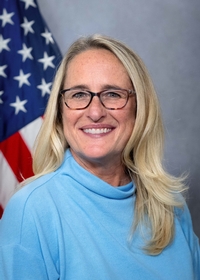
Rep. Jacklyn Rusnock
Sponsored bills
Maddy summaryHB 2210 updates Pennsylvania's vehicle registration rules to allow electronic registration cards displayed on personal devices like phones or tablets. It defines key terms like "electronic registration card" (a digital version viewable on devices) and "electronic product device" (phones/tablets used to display it). The bill requires vehicle owners to sign physical cards or display digital versions when asked by police, but prohibits police from demanding device surrender and protects against liability for accidental damage or viewing unrelated phone data. It also prevents unrelated digital information viewed during a traffic stop from being used as evidence in court. The law takes effect 60 days after passage.
Maddy summaryHB 2246 would require large data centers in Pennsylvania to report water usage and undergo environmental reviews before construction. It mandates pre-application notification to the Department of Environmental Protection (DEP), including detailed water use estimates, source assessments, and proof that withdrawals won’t harm other water users or water quality. The bill adds new permit conditions under the Clean Streams Law, requiring data centers to implement water conservation measures like closed-loop systems and water recycling. These provisions apply specifically to "covered data centers" (large facilities with significant water needs) and aim to protect local water resources while enabling data center development.
Maddy summaryHB 2176 would require Pennsylvania public and nonpublic schools to integrate social media literacy into their curriculum. The bill mandates that state academic standards include specific lessons on social media's mental, psychological, and physical impacts on students, its effects on learning, safe online behavior (including identifying cyberbullying and predatory activity), and personal device security. The Department of Education must develop educational materials and provide professional development for teachers on these topics. This bill directly affects all Pennsylvania schools, including public school districts, charter schools, and nonpublic schools, by adding concrete requirements to student learning standards.
Maddy summaryThis Pennsylvania House resolution (HR 157) urges the U.S. Congress to pass H.R. 3023 (or similar legislation) during the 119th Congress, which would require the Department of Veterans Affairs and Department of Defense to provide stellate ganglion block (SGB) therapy to veterans and military members with PTSD. SGB is a low-risk neck injection procedure that targets nerves controlling stress responses, potentially alleviating symptoms like anxiety and hyperarousal. The resolution cites that 23% of recent veterans and 12-15% of older veterans have PTSD diagnoses, with current treatments helping only 40% of patients. It emphasizes SGB's decades-long use and support from veterans' organizations as a potential treatment option.
Maddy summaryHB 2151 requires Pennsylvania's Center for Local Government Services to create a model zoning ordinance for data centers within six months. The model must include specific rules like building size limits, minimum distances from residential areas, landscape buffers, noise restrictions, and requirements for water/energy use. This helps local governments (townships, boroughs, cities) regulate data center development to address community concerns. Municipalities can request the Center's assistance when updating zoning rules for data centers, and the model must be updated annually.
Maddy summaryHB 2150 requires data centers in Pennsylvania to annually report their energy and water usage, including monthly consumption, energy sources, water sources, efficiency measures, and waste heat recovery, starting July 1, 2027. Data centers must submit detailed reports to the Department of Environmental Protection, covering specifics like peak energy use, water for cooling, and future projections. Non-compliant data centers face daily penalties of $10,000 until reports are submitted, with collected fines funding low-income energy assistance programs. The Department will publish an annual summary of consumption trends and environmental impacts for public and legislative review.
Maddy summaryHB 1964 imposes a temporary pause (moratorium) on selling or leasing public water and wastewater systems to private companies. It creates a Water Utility Reform Working Group to develop recommendations for system management and reform. The bill also repeals specific rules about how acquired water systems are valued. This directly affects communities that own public water systems and their residents, as it delays potential privatization and sets up a process for reviewing system operations.
Maddy summaryHB 879 would change Pennsylvania law to allow both state and local prosecutors to pursue charges for riot, disorderly conduct, and related offenses that currently fall under state jurisdiction alone. This bill directly affects law enforcement agencies, prosecutors, and individuals charged with these specific offenses by expanding who can bring legal action. The key provision establishes "concurrent jurisdiction," meaning local district attorneys and the state attorney general could both prosecute the same case without requiring state involvement. The bill aims to streamline enforcement for these offenses but does not alter the penalties or definitions of the crimes themselves.
Maddy summaryThis bill would create a state-funded paid family and medical leave program for eligible workers needing time off for health issues, childbirth, or family care. It establishes a dedicated state fund to cover leave costs, creates an advisory board to guide implementation, and assigns oversight to the Department of Labor. The program would directly affect employees in the state who qualify for these leave types, requiring employers to provide the benefits. The bill also specifies penalties for businesses failing to comply with the new requirements.