

Maddy summaryHB 1499 updates Pennsylvania's child custody laws under Title 23. It clarifies definitions, establishes clearer rules for awarding primary physical custody, and requires courts to consider criminal convictions when making custody decisions. The bill also mandates parenting plans and specifies factors judges must evaluate, directly affecting parents, judges, and child welfare agencies involved in custody cases. The legislation was recently referred to the Judiciary Committee on May 28, 2025.
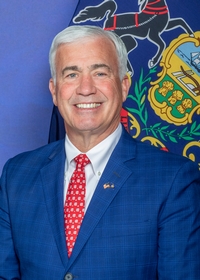
Rep. Jamie Barton
Sponsored bills
Maddy summaryHB 1472 requires Pennsylvania's State-related universities (Penn State, Pitt, Temple, Lincoln, and their branch campuses) to conduct independent economic and workforce impact studies before closing any campus. The studies must assess harm to local communities and ensure students have reasonable, affordable education alternatives. Results must be shared with state legislative committees, the Department of Labor and Industry, affected local governments, and legislators representing the campus area. Compliance with this review process is required for universities to receive state funding.
Maddy summaryHB 1473 requires Pennsylvania's state-related universities (Penn State, Pitt, Temple, Lincoln University, and their branches) to submit an alternative education plan to the state Department of Education before closing any campus. The plan must detail how students in the affected region will maintain access to higher education, including options like partnerships with community colleges, satellite classrooms, or tuition assistance. The Department must approve or disapprove the plan within 30 days, and failure to submit a compliant plan or receiving disapproval results in the university losing state funding for that fiscal year. The bill aims to ensure taxpayer-funded institutions maintain educational access, particularly in rural and underprivileged areas, before proceeding with campus closures.
Maddy summaryHB 1474 requires Pennsylvania's state-related universities (including Penn State, Pitt, Temple, and Lincoln University) to create detailed plans before closing branch campuses or significantly reducing operations. The bill mandates that universities submit plans including financial analysis, community impact studies, student impact reports, and access alternatives to the board, followed by a 90-day public comment period with at least three public hearings. Before any closure can proceed, the plan must be approved by the full General Assembly, not just the university board. This directly affects students, rural communities reliant on branch campuses, and local economies by adding legislative oversight to campus closures. The law applies to all state-related universities and their branch campuses starting with the 2025-2026 academic year.
Maddy summaryHB 1491 requires Pennsylvania's Department of Health commissioner to continually assess and revise emergency medical services (EMS) agency functions to improve service quality, adapt to community needs, and boost recruitment/retention of EMS providers. It establishes a State EMS Advisory Board to advise on system improvements and updates definitions for key EMS roles and entities. The bill directly affects EMS agencies, providers, and the Department of Health by mandating ongoing system reviews and creating a formal advisory structure. Key provisions include requiring the commissioner to address recruitment challenges and ensure EMS systems meet evolving community demands.
Maddy summaryHB 1292 requires broadband grant programs under Pennsylvania's Broadband Development Authority to comply with the state's prevailing wage law. It mandates that grant materials include prevailing wage requirements and directs the Department of Labor to create new wage classifications specifically for broadband infrastructure workers, such as teledata linemen, groundmen, and cable splicers. The department must set fair wages based on federal standards and include labor market surveys to determine rates. This affects broadband project funders and contractors receiving state grants, ensuring workers on these projects earn locally established fair wages.
Maddy summaryHB 1273 repeals Pennsylvania's requirement that taxpayers make payments of $15,000 or more electronically for personal income tax, along with related penalties for non-compliance. It replaces these rules by adding a new provision requiring the Department of Revenue to accept all payment methods without penalties for taxpayers. This bill directly affects individuals and businesses paying Pennsylvania personal income tax, removing a specific electronic payment mandate and associated fines. The changes take effect for taxable years beginning after December 31, 2025, making all payment methods equally acceptable without penalty.
Maddy summaryHB 1172 defines "utility terrain vehicle" (UTV) as a four-wheel off-road vehicle with specific size and weight limits (max 64 inches wide or 1,700 pounds), excluding ATVs, snowmobiles, and other vehicle types. The bill clarifies that state, local, and county authorities can designate roads for UTVs, snowmobiles, and ATVs, including whether these roads may share space with regular traffic. It requires helmets for snowmobile and ATV operators and passengers on shared roads but exempts UTVs equipped with bucket seats, seat belts, and roll cages. The law also directs the Department of Transportation to specify approved helmet types through regulations.
Maddy summaryHR 180 is a ceremonial resolution recognizing April 13-19, 2025, as "Public Safety Telecommunicators Week" in Pennsylvania. It honors telecommunicators who handle 911 calls, process approximately 14.5 million emergency requests annually, and provide critical support during crises. The resolution does not create new laws or funding but formally acknowledges their service through a designated week of recognition. This applies directly to Pennsylvania’s public safety telecommunicators, who serve as first responders during emergencies.
Maddy summaryHB 1156 amends Pennsylvania's Human Services Code to strengthen eligibility verification for medical assistance and food stamp programs. The bill requires the state department to regularly review data from other agencies, including monthly checks for gambling winnings over $3,000 (via the Gaming Control Board), death records (from the Department of Health), and residency changes (via out-of-state EBT), plus quarterly checks for employment and income changes (from Labor and Revenue). It also prohibits the department from accepting eligibility determinations from health insurance exchanges without verification and bans self-attestation for key factors like income, residency, or household composition without prior verification. These changes update the verification process to align with current data-sharing capabilities.