

Maddy summaryThis Pennsylvania House Resolution designates February 22, 2026, as "United States Men's and Women's Olympic Hockey Gold Medal Champions Day" to honor the state's hockey teams' achievements at the 2026 Winter Olympics. The resolution formally recognizes the athletes' gold medal victories and congratulates the teams on their performance, while also acknowledging the support of coaches, staff, and communities who contributed to their success. It is a commemorative measure intended to celebrate the accomplishments of the hockey teams rather than to change laws or policies.
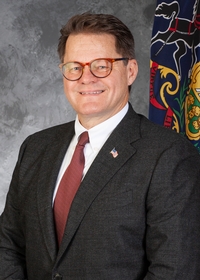
Rep. Tim Twardzik
Sponsored bills
Maddy summaryHB 2120 amends Pennsylvania's Loan Interest and Protection Law by adding two definitions: "residential mortgage" and "shared appreciation agreement." It defines a residential mortgage as a loan secured by a lien on property with two or fewer residential units (or for construction) with an original principal amount at or below a specific base figure. A shared appreciation agreement is defined as a transaction where an individual receives money in exchange for an interest in residential property secured by a lien, excluding government-backed home loans. This bill directly affects lenders, borrowers, and legal interpretations of mortgage agreements by clarifying the law's scope without changing existing interest rate rules or protections.
Maddy summaryThis bill designates July 4, 2026, as "Knoebels Amusement Resort Day" in Pennsylvania to commemorate the 100th anniversary of the Knoebels Amusement Resort, a family-owned park in Elysburg that opened on July 4, 1926. The resolution recognizes the park's history, including its origins as a picnic destination and its growth into a major attraction with over 50 rides and games. It highlights the Knoebel family's long-standing connection to the land and the park's resilience through various natural challenges, including multiple flooding events. The designation serves as a symbolic celebration of the resort's century of operation and its contribution to Pennsylvania's tourism and entertainment industry.
Maddy summaryThis bill prohibits airports and aviation businesses in Pennsylvania from using Automatic Dependent Surveillance Broadcast (ADS-B) data to charge fees to aircraft owners or operators. ADS-B is a technology that automatically shares an aircraft's location, speed, and other flight details with ground stations and other planes. The law makes it illegal for these entities to collect money based on this surveillance information and gives the state Attorney General the power to enforce the rule. The ban applies to any fees calculated or generated from this data within the state's borders.
Maddy summaryThis Pennsylvania bill creates a limited tax credit program for manufacturers of malt or brewed beverages who make specific capital investments in their production facilities. Under the new rules, eligible companies can receive a tax credit for up to $200,000 in qualifying equipment purchases made during designated time periods, with the credit potentially usable over five years. The legislation also allows these tax credits to be sold to other taxpayers, who can then apply the credit against up to 50% of their own tax liability for that year. The Department of Revenue will oversee the program, including verifying taxpayer compliance before approving credit sales and setting guidelines for the process.
Maddy summaryThis bill amends Pennsylvania's Clean Streams Law to allow specific residential construction sites to request a waiver for certain stormwater discharge permits. It directly affects developers building on land between one and three acres that causes significant ground disturbance. Under the new provision, these sites could apply to bypass standard National Pollutant Discharge Elimination System permit requirements if they meet specific federal criteria. The change aims to streamline regulatory processes for medium-sized construction projects while maintaining oversight through a formal waiver application process. The law will become effective 60 days after its passage.
Maddy summaryThis bill updates Pennsylvania's Child Labor Act to clarify how minors can participate in student-learner and apprenticeship programs, allowing them to work in these roles as long as it complies with existing federal laws. It also permits high school graduates who have finished such programs to continue working in those occupations without additional restrictions beyond federal standards. To ensure consistency, the legislation cancels specific outdated regulations and requires the Department of Labor and Industry to develop new rules within a year or have the old rules expire in three years.
Maddy summaryThis Pennsylvania House Resolution designates May 2, 2026, as Negro Leagues Day to honor African-American baseball players who contributed to the sport. The bill recognizes the historical significance of Negro League teams in Pennsylvania, such as the Philadelphia Giants and Homestead Grays, and highlights the achievements of players like Josh Gibson and Roy Campanella. By officially naming this date, the resolution aims to preserve the legacy of these athletes and acknowledge their impact on the civil rights movement in sports.
Maddy summaryHB 910 amends Pennsylvania's criminal code to elevate "dealing in infant children" from a misdemeanor to a first-degree felony. It makes it a crime to trade, buy, sell, or deal with infants under one year old, directly targeting individuals involved in illegal infant trafficking. The bill explicitly excludes legal surrogacy and adoption from this offense. This law takes effect 60 days after enactment, focusing on criminalizing the commercial exchange of very young children.
Maddy summaryThis Pennsylvania House Resolution designates October 2026 as "Polish American Heritage Month" to honor the state's Polish American community. The bill highlights historical milestones, such as the arrival of Polish settlers in Jamestown, and celebrates notable figures like General Casimir Pulaski and Marie Curie. It serves as a commemorative measure to recognize cultural contributions and does not create new laws or funding.