

Maddy summaryHR 362 is a procedural resolution that directs the House to discharge the Committee on Education from further consideration of House Bill 158, allowing HB 158 to move directly to the full House floor for a vote. This action bypasses the committee's review process, which typically requires committee approval before a bill can be debated on the floor. The resolution was placed on the calendar under Rule 53 on October 29, 2025, signaling it will now proceed to a floor vote. This change affects the legislative workflow for HB 158 but does not alter the content or policy of HB 158 itself.
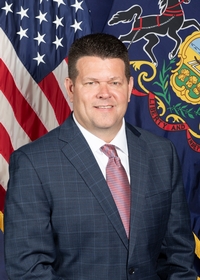
Rep. Jamie Walsh
Sponsored bills
Maddy summaryThis bill removes enrollment caps for charter schools and cyber charter schools in Pennsylvania, allowing them to accept as many students as they choose without limits set by school boards or other governing authorities. The law also declares any existing enrollment limits currently in place as invalid. Once signed into effect, the changes will take place 60 days later.
Maddy summaryThis bill amends Pennsylvania's Pharmacy Audit Integrity and Transparency Act to update definitions for "specialty drug" and "spread pricing" while establishing a new role for a State pharmacy benefits manager. The updated definitions clarify which prescription medications qualify as specialty drugs based on cost, handling requirements, and patient needs, while defining spread pricing as when a pharmacy benefits manager charges more than it pays pharmacists. The bill requires the Department of Human Services to select a single third-party administrator to manage all pharmacy benefits for Medicaid recipients by July 2026, ensuring all managed care organizations contract with this designated manager. The procurement process mandates competitive selection with strict conflict-of-interest disclosures to prevent conflicts between the manager and other healthcare entities like pharmacies, drug distributors, or managed care organizations.
Maddy summaryThis bill updates Pennsylvania's criminal law by establishing a five-year statute of limitations for prosecuting specific serious offenses. It directly affects prosecutors and defendants by setting a deadline within which these cases must be filed after the alleged crime occurs. The law covers a wide range of crimes including murder-related attempts and conspiracies, violent offenses like kidnapping and robbery, financial crimes such as fraud and bribery, and other serious violations like arson and drug delivery resulting in death. The changes apply to all listed offenses regardless of whether the crime was completed or attempted, ensuring that serious allegations can still be pursued within a defined timeframe.
Maddy summaryThis bill directs Pennsylvania's Department of Environmental Protection to remove a specific third-class county with a population between 215,000 and 216,000 from the enhanced vehicle emission inspection program within 60 days of the bill's effective date. The department must then submit a revised State implementation plan to the U.S. Environmental Protection Agency by January 1, 2027, demonstrating that the county can maintain federal air quality standards without the inspection program. The plan must comply with federal law and ensure it does not interfere with air quality goals or federal funding, with formal notifications sent to state legislative committee chairs upon EPA approval.
Maddy summaryHB 2249 amends Pennsylvania's Solid Waste Management Act to clarify the definition of "biosolid" and establish new requirements for its management. The bill prohibits land application of biosolids if levels of perfluorooctane sulfonate (PFOS) or perfluorooctanoic acid (PFOA) exceed state limits, and mandates resampling and treatment before land application if those limits are exceeded. It also creates regulations for the beneficial use of municipal waste, requiring monitoring for up to one year, notification of property changes, and departmental oversight for waste stored beyond that period. Additionally, the bill directs the Department of Environmental Protection to propose a state fund for hazardous waste site cleanup if federal funding proves inadequate.
Maddy summaryHB 2240 amends Pennsylvania's Public School Code to require charter school applications to include detailed information about each physical facility, such as its address, ownership, and lease arrangements. The bill specifies that every facility must be located entirely within a single school district's boundaries. Charter schools must also provide this facility information to the relevant school district and notify them of any changes within 10 days. This applies to all new charter school applications and updates to existing school locations.
Maddy summaryHB 2208 removes counties with populations between 168,000 and 169,000 (based on the latest census) from Pennsylvania’s enhanced vehicle emission inspection program. It requires the Department of Environmental Protection to submit a revised state plan to the EPA by January 1, 2026, proving these counties can meet air quality standards without the inspection program. The plan must comply with federal requirements and avoid negatively impacting air quality goals or funding. The department must also notify specific legislative committees about the EPA submission.
Maddy summaryHR 340 is a procedural resolution that removes Senate Bill 186 from the Committee on Environmental and Natural Resource Protection, requiring the committee to cease further consideration of the bill. This allows Senate Bill 186 to move directly to the full House for debate and a vote. The resolution was placed on the calendar under Rule 53 on October 8, 2025, as part of the legislative process to advance stalled bills. It does not change policy but addresses a procedural delay in the committee.
Maddy summaryHR 339 is a procedural resolution that removes the House Committee on Health from further consideration of Senate Bill No. 9, allowing the full House to directly debate and vote on that bill. This action bypasses the committee's usual role in reviewing legislation. The bill was added to the calendar for floor consideration under Rule 53 on October 8, 2025, moving it closer to a full vote. It does not change policy but alters the legislative process for Senate Bill No. 9.