

Maddy summaryThis bill amends Pennsylvania's Professional Nursing Law to update the legal definitions and scope of practice for certified registered nurse anesthetists (CRNAs). It allows CRNAs to perform anesthesia services under the overall direction of a physician, podiatrist, or dentist who is present and available onsite during the procedure. The legislation grants CRNAs expanded authority to prescribe and administer certain medications, order and interpret diagnostic tests, and manage patient care throughout the anesthesia process, including preoperative preparation, induction, maintenance, and post-anesthesia care. These changes formalize the professional responsibilities of CRNAs within the state's nursing regulatory framework without altering the requirement for collaborative oversight by licensed medical professionals.
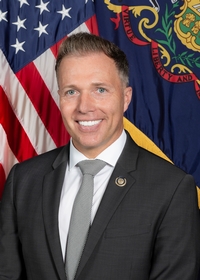
Rep. Dane Watro
Sponsored bills
Maddy summaryThis Pennsylvania bill creates a new criminal offense for interfering with religious worship, which would apply to individuals who intentionally disrupt religious services or block access to places of worship. The law defines interference as knowingly entering or remaining in a religious building after being asked to leave and disrupting activities, or using force, threats, or physical obstruction to harm or impede people exercising their religion. Violations would be classified as third-degree misdemeanors for simple disruption and second-degree misdemeanors for actions involving force or threats. The bill takes effect 60 days after passage and defines religious worship locations as buildings or grounds regularly used for religious activities.
Maddy summaryThis bill designates April 8, 2026, as "THON Day" in Pennsylvania to honor a student-run fundraising event at Pennsylvania State University that raises money to fight pediatric cancer. The resolution recognizes the event's efforts to support Four Diamonds at Penn State Health Golisano Children's Hospital, which provides treatment, research, and family support for children with cancer. It highlights the significant contributions of over 16,500 volunteers and the millions of dollars raised through the 46-hour dance marathon. The measure serves as a formal acknowledgment of the event's impact and the dedication of the students and organizations involved.
Maddy summaryHR 362 is a procedural resolution that directs the House to discharge the Committee on Education from further consideration of House Bill 158, allowing HB 158 to move directly to the full House floor for a vote. This action bypasses the committee's review process, which typically requires committee approval before a bill can be debated on the floor. The resolution was placed on the calendar under Rule 53 on October 29, 2025, signaling it will now proceed to a floor vote. This change affects the legislative workflow for HB 158 but does not alter the content or policy of HB 158 itself.
Maddy summaryThis bill amends Pennsylvania's Dog Law to require state dog wardens and department employees to complete specific training and receive certification before carrying or using firearms or stun guns while performing their duties. The legislation establishes that these officials must have approval from the Secretary of Agriculture and hold valid certification under existing law enforcement training programs or a department-approved training course. It also sets conditions for employment, allowing the department to refuse hiring, suspend, or revoke employment for wardens who fail training requirements, have disqualifying criminal records, or misuse weapons. Additionally, the bill includes provisions for grandfathering existing wardens who have completed similar training and outlines specific grounds for disciplinary action related to weapon possession and enforcement conduct.
Maddy summaryThis bill updates Pennsylvania's criminal law by establishing a five-year statute of limitations for prosecuting specific serious offenses. It directly affects prosecutors and defendants by setting a deadline within which these cases must be filed after the alleged crime occurs. The law covers a wide range of crimes including murder-related attempts and conspiracies, violent offenses like kidnapping and robbery, financial crimes such as fraud and bribery, and other serious violations like arson and drug delivery resulting in death. The changes apply to all listed offenses regardless of whether the crime was completed or attempted, ensuring that serious allegations can still be pursued within a defined timeframe.
Maddy summaryThis bill directs Pennsylvania's Department of Environmental Protection to remove a specific third-class county with a population between 215,000 and 216,000 from the enhanced vehicle emission inspection program within 60 days of the bill's effective date. The department must then submit a revised State implementation plan to the U.S. Environmental Protection Agency by January 1, 2027, demonstrating that the county can maintain federal air quality standards without the inspection program. The plan must comply with federal law and ensure it does not interfere with air quality goals or federal funding, with formal notifications sent to state legislative committee chairs upon EPA approval.
Maddy summaryHB 2209 requires all state-funded institutions of higher education in Pennsylvania to implement a mandatory one-credit course on "the dangers and realities of communism and socialism" starting in the 2027-2028 school year. The course must cover specific topics including definitions of capitalism, communism, and socialism; historical examples like China, Cuba, and the Soviet Union; comparisons between free markets and communist systems; and the impact on civil liberties. It applies to all public universities, community colleges, and state-funded private institutions as defined in the bill. The law mandates this curriculum for all students at these institutions, with no exemption for existing courses. The bill takes effect 60 days after enactment.
Maddy summaryHB 2213 establishes a regulatory framework for "skill video gaming" in Pennsylvania, directly affecting businesses that operate or distribute gaming systems. The bill requires licenses from the Department of Revenue for operators, distributors, and establishments, imposes fees, and mandates a central reporting system to track transactions like "coin in/out" and jackpots. Key provisions include banning access for people under 18, prohibiting "miniature casinos," requiring security measures for players, and creating criminal penalties for operating unlicensed systems or distributing to minors. It aims to eliminate illegal gambling devices disguised as skill-based games while leveraging the State Lottery's existing experience in retail gaming oversight.
Maddy summaryThe provided context does not include the specific policy language or provisions of HB 17. While the bill's title references amendments to the Public School Code of 1949 regarding "subjects of instruction and flag code," the details of what changes are proposed - such as which subjects would be added or modified, or specific flag-related requirements - are not described in the given information. Without these concrete details, a factual summary of the bill's mechanisms, affected parties, or policy changes cannot be created. The procedural history (e.g., committee referrals) does not substitute for the bill's substantive content. For an accurate summary, the full text of the bill or detailed explanatory materials would be required.