

Maddy summaryPennsylvania House Bill 1684 updates state laws regarding child custody by establishing clearer definitions for terms like "equal parenting time" and "supervised physical custody." The bill introduces a rebuttable presumption that shared physical custody and equal parenting time are in a child's best interest during temporary custody orders, requiring courts to maximize time with each parent unless specific factors suggest otherwise. It also outlines new procedures for obtaining temporary custody orders based on affidavits and agreements, while expanding the list of factors judges must consider, including any criminal convictions of the parents. These changes aim to standardize how courts evaluate custody arrangements and ensure that parenting plans are explicitly detailed in legal orders.
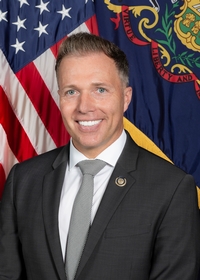
Rep. Dane Watro
Sponsored bills
Maddy summaryThis Pennsylvania House resolution urges federal leaders to address improper payments of Critical Skill Incentives at the Department of Veterans Affairs. It highlights that the Office of Inspector General found nearly $11 million was incorrectly used to give bonuses to over 180 senior executives instead of supporting employees with high-demand skills. The document calls for swift corrective action to recover these funds and improve oversight to prevent future misuse of taxpayer money.
Maddy summaryThis bill modifies Pennsylvania's tax laws by adjusting personal income tax rates and eliminating a specific tax on the gross receipts from the sale of electric energy. It requires electric utilities to pass the savings from these tax changes directly to consumers through reductions in state tax surcharges, with civil penalties of up to $5,000 for companies that fail to do so. Additionally, the legislation mandates that $6 million annually be transferred to the Alternative Fuels Incentive Fund starting in the 2024-2025 fiscal year. The bill also establishes a revenue-neutral reconciliation rule that will remain in effect until the end of 2024.
Maddy summaryThis bill updates Pennsylvania laws to better handle child custody issues when a parent is deployed for military service. It repeals older rules that restricted custody changes during deployment and replaces them with the Uniform Deployed Parents Custody and Visitation Act. Under the new provisions, courts can temporarily assign custody to family members if a deployed parent requests it, provided this arrangement does not exceed the original custody rights and serves the child's best interest. Additionally, the law ensures that a parent's absence due to deployment cannot be used as a reason to change custody or that their absence is not considered when deciding what is best for the child.
Maddy summaryThis bill authorizes electric and natural gas suppliers in Pennsylvania to issue consolidated bills that combine charges for both retail energy services and the underlying distribution and transmission fees. By enabling suppliers to directly bill customers for all energy-related costs, the legislation aims to allow providers to create customized pricing plans, such as time-of-use rates or renewable energy options, based on data from smart meters. The Pennsylvania Public Utility Commission would be responsible for overseeing the implementation of these new billing practices and enforcing penalties for non-compliance. While the bill outlines a policy to enhance competition and consumer choice, it does not mandate that all customers switch to these new billing methods.
Maddy summaryThis bill establishes a Taxpayer Dividend Program in Pennsylvania to refund a portion of state budget surpluses to resident individual taxpayers. The program would distribute funds from the General Fund and the Budget Stabilization Reserve Fund to individuals who filed and paid taxes for the 2023 tax year. Money taken from the General Fund is limited to the existing surplus, while withdrawals from the Rainy Day Fund require a two-thirds legislative vote and must leave at least 6% of the fund's value intact. The Department of Revenue is tasked with identifying eligible recipients and processing payments, with the goal of returning accumulated surplus money rather than using it for expanded government spending.