

Maddy summaryHB 949 requires health insurance policies in Pennsylvania to cover habilitative and rehabilitative speech therapy for childhood stuttering and apraxia. This applies to all health insurance policies issued, renewed, or filed with the state within 180 days of the law's effective date. The bill defines "childhood stuttering" (ages 2-6) and "apraxia" (a neurological speech disorder), specifying coverage must follow standard policy terms like medical necessity and cost-sharing. It explicitly excludes school-based therapy covered solely through an individualized education program (IEP). The law takes effect 60 days after enactment.
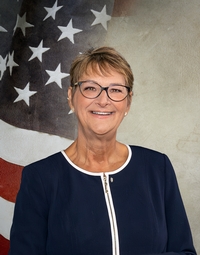
Rep. Maureen Madden
Sponsored bills
Maddy summaryHB 951 amends Pennsylvania's vehicle registration laws to replace the term "handicapped" with "accessible" in all state materials related to disability plates, placards, and parking regulations. It updates the exemption for nonprofit organizations serving individuals with disabilities to use the phrase "individuals with mental or physical disabilities" instead of outdated language. The bill also revises city parking regulations to require the use of "accessible" in signage, permit programs, and enforcement materials for cities of the first and second class. These changes apply directly to disabled individuals using state-issued plates, nonprofits serving them, and city parking authorities managing parking systems.
Maddy summaryThis resolution designates September 2025 as "Prostate Cancer Awareness Month" in Pennsylvania. It symbolically raises public attention to prostate cancer, highlighting statistics like an estimated 13,000 new cases and 1,500 deaths in Pennsylvania during 2025. The resolution also urges Congress to support federal legislation (H.R. 1300) that would require health insurance coverage for prostate cancer screenings without cost-sharing for at-risk men. It does not create new laws or funding but aims to promote awareness and encourage preventive care.
Maddy summaryHB 922 requires health insurance plans in Pennsylvania to cover fertility preservation services, such as freezing eggs, sperm, or embryos, without cost-sharing (like deductibles or copays). This applies to individuals under 45 at risk of infertility due to medical treatments (e.g., cancer therapy), including covered spouses and dependents. The bill mandates coverage for specific services like storage, consultations, embryo transfers, and related diagnostics, while prohibiting preexisting condition exclusions or arbitrary limits on coverage. It also requires storage coverage for five years (or until age 18 for minors) and aligns with medical guidelines from the American Society for Reproductive Medicine.
Maddy summaryThis bill allows Pennsylvania courts to end long-term parole supervision for eligible individuals who have been under supervision for at least five consecutive years and are at least 40 years old. The process requires a formal petition filed by either the Department of Corrections or the parolee, which must be reviewed by the sentencing court. Courts must evaluate multiple factors including community safety risks, the individual's conduct history, financial hardship, and efficient use of department resources before deciding whether to terminate supervision. The law applies to all parole cases regardless of when the sentence was originally imposed and ensures victims, prosecutors, and relevant parties receive notice and an opportunity to be heard during the review process.
Maddy summaryHB 889 amends Pennsylvania statutes to improve support for veterans, particularly those in correctional facilities. It requires the Department of Corrections to maintain a list of incarcerated veterans and send their names and addresses to county veterans affairs offices at least 30 days before release (Section 1105(a)(3)). The bill also adds duties for the Department of Military and Veterans Affairs to encourage veterans' voter registration and for the Deputy Adjutant General to assist veterans in accessing career and technical training programs. These changes directly affect veterans in prison, county veterans offices, and state agencies managing veterans' services.
Maddy summaryHB 890 amends Pennsylvania's Veterans' Trust Fund rules to restrict how funds can be spent. It prohibits using the fund for administrative staff salaries (defined as non-clinical personnel at veterans' organizations) and limits single-entity grants to $250,000 over three consecutive years. These changes directly affect the State Veterans' Commission and the Department managing the Trust Fund, ensuring funds are used for direct veteran services rather than administrative costs or large single grants. The bill takes effect immediately upon passage.
Maddy summaryHB 891 creates the Keystone State Apprenticeship Tax Credit Program, providing tax incentives to Pennsylvania businesses that hire apprentices. It directly affects employers participating in approved apprenticeship programs, with preference given to those training disadvantaged youth (low-income individuals aged 16-24) and businesses in key sectors like clean energy, healthcare, and technology. The program allocates up to $10 million annually in tax credits from 2025 to 2030, administered by the Department of Labor and Industry, which will determine eligibility and prioritize employers based on specific criteria like apprentice graduation rates and program novelty. Businesses must register apprenticeship agreements with the department to qualify for the credit.
Maddy summaryHB 899 requires Pennsylvania employers to provide workers with paid sick leave for their own health needs or to care for family members. Employees earn one hour of paid sick time for every 30 hours worked, with a minimum annual accrual of 40 hours. The law prohibits employers from retaliating against workers who use this leave and mandates clear posting of rights. It covers most private-sector employees (excluding federal workers) and applies to all employers with 15+ employees in Pennsylvania, effective upon enactment.
Maddy summaryHB 894 establishes the Veterans Entering the Sustainability Sector Program (VETSS) to help veterans enter jobs in renewable energy and environmental sectors. The bill creates a Veterans Entering the Sustainability Sector Fund to provide grants to eligible employers - businesses focused on renewable energy (like solar, wind, or bioenergy) that hire veterans who completed approved apprenticeship training in fields such as electrician work, solar installation, or environmental maintenance. The Department of Community and Economic Development will administer the program, overseeing training development and grant applications. This directly affects veterans seeking sustainability-sector careers and employers in renewable energy who hire them, with the goal of addressing environmental concerns like climate change through workforce development.