

Maddy summaryThis bill allows land banks to acquire blighted or abandoned properties under specific conditions. Municipalities must verify properties have been vacant/blighted for 5 years (with exceptions for unimproved land), have building code violations or tax delinquency, and send three certified mail notices to owners. Property owners can appeal by submitting a redevelopment plan with financing, architectural details, or developer contracts; if approved, they get 6-month extensions but must meet redevelopment timelines. Land banks must pay owners the property's appraised value minus fines or liens, directly affecting land banks, municipalities, and owners of distressed properties.
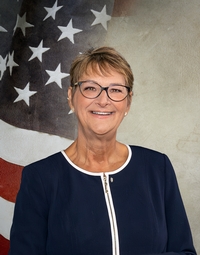
Rep. Maureen Madden
Sponsored bills
Maddy summaryHB 643 modifies Pennsylvania's realty transfer tax provisions to establish fixed annual transfers of tax revenue. It requires $100 million in transfers for the fiscal year starting July 1, 2027, and $110 million for all subsequent fiscal years. This change directly affects individuals and entities paying real estate transfer taxes in Pennsylvania, as the specified amounts are deducted from the tax revenue pool. The bill specifies the exact dollar amounts and effective dates without altering the tax rate or adding new exemptions.
Maddy summaryHB 316 allows Pennsylvania municipalities to deny building permits to property owners with specific unpaid debts or unaddressed violations. It directly affects owners of real property, particularly corporations or LLCs, who owe unpaid taxes, water/sewer bills, or have serious uncorrected code violations (like failing to fix blight) after six months of notification. The bill requires municipalities to specify the property address and court details in denial notices, prohibits denying permits needed to correct violations, and imposes a $1,000 fine on corporations that fail to disclose such delinquencies when applying for permits. It aims to prioritize blight remediation by linking permit access to property maintenance compliance.
Maddy summaryThis resolution (HR 110) formally recognizes April 2025 as "National Poetry Month" in Pennsylvania. It is a non-binding ceremonial resolution, not a law, and does not create new policies or affect any specific group. The resolution acknowledges the Academy of American Poets' established observance of National Poetry Month and highlights poetry's role in education and community culture, as noted in the resolution's preamble. It has no funding, regulatory, or enforcement mechanisms.
Maddy summaryThis resolution recognizes April 20-26, 2025, as "National Infertility Awareness Week" in Pennsylvania. It cites statistics showing infertility affects 1 in 8 couples in the U.S., with 9% of men and 11% of women experiencing fertility issues, and notes Pennsylvania lacks state laws requiring fertility treatment insurance coverage (unlike 21 other states). The resolution aims to reduce stigma and increase public understanding of infertility challenges, including emotional and financial burdens. As a symbolic recognition, it does not create new laws or funding but aligns Pennsylvania with national awareness efforts led by groups like RESOLVE.
Maddy summaryHB 1157 amends Pennsylvania's 1936 Unemployment Compensation Law to update how "agricultural labor" is defined for unemployment insurance coverage. It specifies that agricultural work counts as "employment" if employers paid $20,000+ in cash wages to agricultural workers in a calendar quarter, or employed 10+ workers across 20 different weeks (with historical exceptions). This change directly affects Pennsylvania agricultural employers meeting these thresholds and their workers, potentially expanding unemployment coverage eligibility for some farm laborers. The amendment applies to service performed after December 31, 2025.
Maddy summaryHB 1293 amends Pennsylvania's Housing Authorities Law (1937) to update the policy declaration section (Section 2), reaffirming that unsafe housing conditions harm public health, safety, and the economy, and that housing authorities are necessary to provide safe housing for low and moderate income residents. The bill does not change operational procedures for housing authorities, such as tenant selection, rental rates, or property management, but revises the foundational policy statement justifying their existence. This update directly affects housing authorities by modernizing the legal basis for their work under state law. The bill focuses on clarifying legislative intent without altering existing mechanisms for housing projects or tenant eligibility.
Maddy summaryHR 34 is a symbolic resolution designating April 2025 as "Pennsylvania 8-1-1 Safe Digging Month." It encourages excavators and homeowners to call 8-1-1 (or 1-800-242-1776) before digging to locate underground utility lines, as required by Pennsylvania's One Call Act. The resolution highlights the Pennsylvania One Call System's role in preventing injuries, environmental damage, and utility disruptions, noting it handles over 1 million annual requests. It does not create new laws or funding but promotes existing safety practices through public awareness.
Maddy summaryThis House Resolution designates May 2025 as "Nurses Month" in Pennsylvania to honor the contributions of nurses across the state. It highlights nurses' critical roles during the pandemic, their daily patient care responsibilities, and their impact on community health without creating new legal requirements or funding. The resolution serves as a symbolic gesture of appreciation for the nursing profession, which includes registered nurses, licensed practical nurses, and other specialized roles.
Maddy summaryHB 503 establishes the Pennsylvania Climate Emissions Reduction (PACER) Program, creating a state-run "cap-and-invest" system to reduce carbon dioxide emissions from the power sector. The program requires the Department of Environmental Protection to conduct Pennsylvania-run auctions for CO2 allowances, with specific rules for eligible participants, such as electricity generators and financial institutions. Revenue from these auctions will be directed into several designated accounts, including those for consumer protection, energy transformation, workforce enhancement, and low-income support. Upon the program's establishment, Pennsylvania would cease participation in other carbon auction programs related to the electric generation sector.