

Maddy summaryHB 668 would allow Pennsylvania to join the Counseling Compact, an existing agreement between states. This would let licensed counselors from other participating states practice in Pennsylvania more easily, and allow Pennsylvania counselors to practice in those states without obtaining separate licenses. The bill's key mechanism is adopting the standard compact form, creating a streamlined process for cross-state counseling licensure without changing existing state licensing requirements.
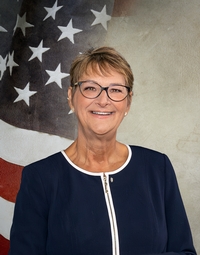
Rep. Maureen Madden
Sponsored bills
Maddy summaryHouse Resolution 513 directs the Legislative Budget and Finance Committee to study how outdated hospital regulations, which have not been updated in nearly 40 years, financially affect hospitals across Pennsylvania. The study will examine the number of overlapping rules, the administrative costs hospitals incur to comply, and the resources required to manage complex oversight structures. To assist with this review, the committee will form an advisory group that includes representatives from state agencies and hospitals of various types, including rural, urban, and suburban facilities. The committee is required to submit a report with its findings and recommendations within 12 months to relevant legislative leaders.
Maddy summaryThis Pennsylvania House Resolution designates the week of May 10 through 19, 2026, as "Go Public Gardens Days" to encourage residents to visit public gardens. The measure directly affects botanical gardens, zoos, historical homes, parks, and other horticultural organizations across the state. By officially recognizing this period, the resolution aims to highlight the economic and community value of these spaces without mandating any specific actions or spending. The text describes public gardens as important destinations for recreation, education, and conservation that support thousands of jobs and millions of visitors annually.
Maddy summaryThis resolution directs Pennsylvania's Legislative Budget and Finance Committee to study wild native terrestrial invertebrate management - including bees, butterflies, worms, and beetles - and issue a report. The study will evaluate existing state laws (like the Conservation and Natural Resources Act of 1995), compare other states' conservation approaches, and assess the ecological and economic value of these species (noting their $250+ million annual contribution to agriculture through pollination). It does not create new laws but aims to clarify agency responsibilities and identify gaps in conservation efforts. The report will inform future policy decisions affecting state agencies like DCNR, the Department of Agriculture, and wildlife commissions.
Maddy summaryHB 2218 amends Pennsylvania's Public School Code to require all school entities (including districts, charter schools, cyber charters, and career schools) to develop and implement a written comprehensive school counseling plan. The bill mandates that each plan, created by certified school counselors, must include annual reviews, K-12 systemic alignment, grade-level and building-specific strategies, and integration with existing student services plans. Key provisions define "direct services" (like individual counseling and classroom instruction) and "indirect services" (such as parent consultations), requiring plans to guide students in academic, career, and social-emotional development. The law establishes specific components for the plan - foundation, management, delivery, and accountability - without specifying funding or new programs.
Maddy summaryHB 1104 sets specific fees that must be paid to healthcare providers before they produce medical records in response to a subpoena. The bill establishes a detailed fee structure: $20.62 for searching and retrieving records, plus page-based charges (e.g., $1.39 per page for the first 20 pages of paper copies, with lower rates for additional pages), and a $200 maximum for electronic copies. These fees are adjusted annually using the consumer price index. The law directly affects healthcare providers and parties requesting medical records, requiring payment before records are released.
Maddy summaryThis Pennsylvania House Resolution designates April 28, 2026, as "Delta Day" in the state to honor the Delta Sigma Theta Sorority. The measure recognizes the organization's more than a century of commitment to social activism, academic excellence, and civic engagement. As a commemorative resolution, it does not alter existing laws or mandate new policies but serves as a formal acknowledgment of the sorority's contributions.
Maddy summaryThis bill creates a new licensing category called the "Philadelphia 250 Permit" for alcohol establishments in Philadelphia and other municipalities that choose to participate. To qualify, businesses such as restaurants and breweries must pay a $500 fee, complete a specific nighttime safety training program, and have their application details posted online. Local governments have the authority to object to individual permit applications, and the state board can revoke a permit immediately if a business operates outside its approved scope. The legislation establishes these rules within the existing Liquor Code and allows participating cities to adopt ordinances to enable the program.
Maddy summaryHB 980 changes the composition of Pennsylvania's State Board of Pharmacy by increasing the number of licensed pharmacists on the board from five to six and adding specific appointment requirements. It requires two pharmacist members from independent retail pharmacies, two from large retail pharmacy chains (with five or more locations), and two from hospital/acute care settings, plus one pharmacy technician position that rotates between settings. The bill also establishes term limits: pharmacy technicians serve one six-year term, while other members may serve up to two consecutive terms. This directly affects the board's membership structure and the appointment process for pharmacists and pharmacy technicians in Pennsylvania.
Maddy summaryHB 1558 requires public buildings to install baby diaper changing stations whenever a restroom is newly installed or renovated. This applies directly to facilities like libraries, community centers, and government offices that undergo restroom construction or updates. The bill mandates these stations be accessible and functional, with penalties imposed for failing to comply. It focuses on practical accessibility for caregivers and infants in public spaces without altering existing restroom requirements.