

Maddy summaryThis bill proposes to update Pennsylvania's vehicle laws by establishing a maximum speed limit of 35 miles per hour on dirt and gravel roads. It applies to all drivers operating vehicles on these unpaved road surfaces, regardless of the specific location. The change clarifies that these limits are maximum speeds, meaning drivers must not exceed them unless a special hazard requires an even slower speed for safety. The legislation would become effective 60 days after passage.
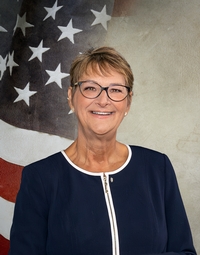
Rep. Maureen Madden
Sponsored bills
Maddy summaryThis bill allows accessory dwelling units (ADUs), such as secondary apartments or backyard cottages, to be built on properties with single-family homes across Pennsylvania. It requires every municipality to adopt a simple ordinance permitting at least one ADU per lot and mandates that applications be approved within 30 days (or 60 days with additional review), with automatic approval if deadlines are missed. Municipalities may charge a maximum $250 fee for processing and cannot require permit renewals. The law respects existing deed restrictions and planned community rules while aiming to increase housing options through standardized ADU access.
Maddy summaryHB 2254 adds Chapter 14 to Pennsylvania's Medical Marijuana Act, allowing terminally ill patients to use medical marijuana within specific care facilities (like hospitals, nursing homes, and assisted living residences) under strict conditions. Facilities must create written guidelines within 180 days covering safe storage, patient safety, allowed forms of marijuana, and documentation. The bill imposes a $500 daily civil penalty for noncompliance, with penalties deposited into the Medical Marijuana Program Fund. It does not require facilities to provide certifications, administer marijuana, or permit use in emergency departments. This directly affects terminally ill patients seeking access in regulated care settings and facilities operating under the existing medical marijuana program.
Maddy summaryThis bill amends Pennsylvania's Public School Code to allow students with asthma or severe allergies to possess and self-administer their prescribed asthma medications (including inhalers) and epinephrine auto-injectors at school. Schools must create written policies requiring students to demonstrate self-administration capability and notify the school nurse after use, while ensuring medications are stored safely and accessible only to authorized students. The bill also permits trained school staff, including bus drivers and crossing guards, to administer epinephrine auto-injectors in emergencies for students experiencing allergic reactions or asthma attacks. These changes aim to improve student safety by ensuring timely access to life-saving medications during school hours.
Maddy summaryHB 2120 amends Pennsylvania's Loan Interest and Protection Law by adding two definitions: "residential mortgage" and "shared appreciation agreement." It defines a residential mortgage as a loan secured by a lien on property with two or fewer residential units (or for construction) with an original principal amount at or below a specific base figure. A shared appreciation agreement is defined as a transaction where an individual receives money in exchange for an interest in residential property secured by a lien, excluding government-backed home loans. This bill directly affects lenders, borrowers, and legal interpretations of mortgage agreements by clarifying the law's scope without changing existing interest rate rules or protections.
Maddy summaryHB 1106 establishes a certification program for chiropractic assistants in Pennsylvania. To become certified, individuals must be at least 18, have a high school diploma, complete an approved training program, pass an exam, and meet background requirements. Certified assistants can only perform tasks delegated by a licensed chiropractor under direct on-premises supervision and must complete 16 hours of continuing education (including 8 in-person hours) every two years to maintain certification. The bill also makes minor editorial changes to the existing Chiropractic Practice Act.
Maddy summaryThis bill is a non-binding resolution that officially designates June 2, 2026, as "Cancer Action Day" in Pennsylvania to raise awareness about the state's high cancer rates. It highlights statistics on cancer diagnoses and deaths in the Commonwealth while noting disparities in access to care for various communities. The resolution urges lawmakers to support future legislation aimed at improving cancer prevention, detection, and treatment services. As a commemorative measure, the bill does not create new laws or allocate funding but serves to honor those affected by cancer and advocate for improved health outcomes.
Maddy summaryThis bill designates July 4, 2026, as "Knoebels Amusement Resort Day" in Pennsylvania to commemorate the 100th anniversary of the Knoebels Amusement Resort, a family-owned park in Elysburg that opened on July 4, 1926. The resolution recognizes the park's history, including its origins as a picnic destination and its growth into a major attraction with over 50 rides and games. It highlights the Knoebel family's long-standing connection to the land and the park's resilience through various natural challenges, including multiple flooding events. The designation serves as a symbolic celebration of the resort's century of operation and its contribution to Pennsylvania's tourism and entertainment industry.
Maddy summaryThis bill proposes to recognize March 2, 2026, as "Adwa Victory Day" in Pennsylvania to honor the 1896 Ethiopian victory over Italian colonial forces. The resolution commemorates the historical battle where Ethiopia successfully defended its independence and sovereignty against European colonization. It aims to acknowledge the heritage of the Ethiopian community in Pennsylvania and the broader African diaspora's struggle against colonialism. This is a symbolic measure that does not change laws or allocate funding, but rather establishes an official date of recognition within the state.
Maddy summaryThis resolution designates February 28, 2026, as "HIV is Not a Crime Awareness Day" in Pennsylvania. It aims to raise public awareness about HIV criminalization - where individuals with HIV face criminal charges for non-transmission behaviors - and highlights how such laws disproportionately impact marginalized groups like people of color, women, and LGBTQ+ individuals. The resolution emphasizes current public health consensus that people with HIV who have an undetectable viral load cannot transmit the virus through sex, and that HIV treatment is prevention. It is a symbolic statement, not a law, intended to encourage education and dialogue about ending outdated HIV-related criminal penalties.